
solar-installation
Hurricane-Rated Solar Mounting in Fort Myers: What to Ask Before You Sign
By UnionGrid TeamUpdated 7 min read
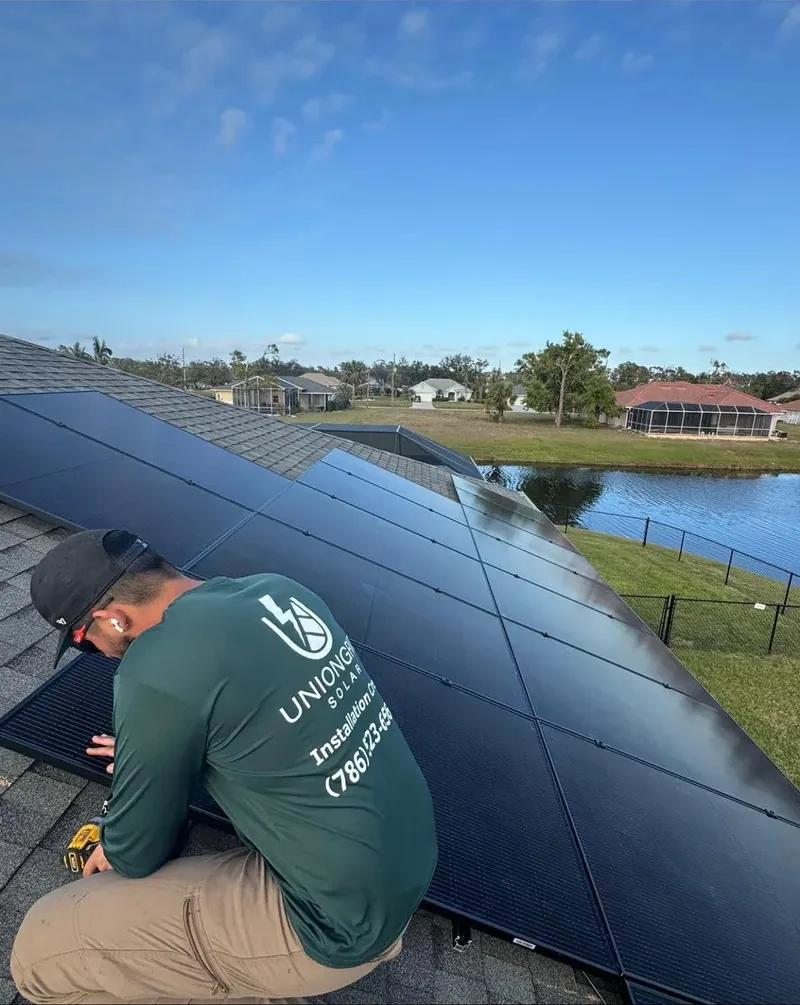
If you live in Fort Myers, you don't need a lecture on hurricanes. You've watched storms track across the Gulf, you've boarded up windows, and if you were here for Ian in 2022 you saw firsthand what Category 4 winds do to roofs, screen enclosures, and anything that isn't fastened down correctly. So when a solar salesperson tells you their system is "hurricane-rated," you're right to want more than a reassuring word.
A rooftop array changes the wind loads transferred through the modules, mounting system, attachments, roof covering, and structure. Compliance depends on the complete load path, approved documents, and installation that matches them; no seller can responsibly promise a storm-proof system. This guide explains what to ask before signing.
Fort Myers is a high-exposure wind zone — know your number
Florida's building code establishes wind criteria, while the permitted loads also depend on the structure, roof geometry, exposure, risk category, equipment, and code edition in force. The City of Fort Myers and unincorporated Lee County use different permitting offices, so first confirm the authority having jurisdiction for the address. Then review the current permit checklist and the criteria shown on the approved plans rather than relying on a number quoted in sales copy.
Here's the first question to ask any installer: "What wind speed is my system engineered to, and how did you determine it for my specific address?"
A useful answer references the project's wind criteria, exposure selected by the design professional, mean roof height, roof zones, and approved attachment plan. A vague answer such as "all our systems are rated for Florida" is not a substitute for permit documents tied to the property.
The three parts that have to be rated — not just the panels
When people say "hurricane-rated," they often picture the panels. But a solar array is a system. Three groups of documents should line up:
1. Module documentation. Confirm the exact module model and its stated mechanical-load limits, then make sure the permitted design uses that model and a compatible clamp zone.
2. Mounting-system documentation. Ask for the manufacturer, product line, installation instructions, evaluation or approval documents relied on by the designer, span limits, clamp requirements, and allowable attachment details. A Florida Product Approval or Miami-Dade NOA should be verified when a contractor represents that one applies; do not accept an unrelated approval number.
3. Project attachment plan. The approved plans should specify attachment type, location, quantity, spacing, structural connection, roof zones, and waterproofing detail for the actual roof. The installed work should match those documents.
Ask directly: "Which product and engineering documents support this exact attachment plan, and will they be included with my permit record?" If a proposal uses an FL number or NOA as proof, search that number and confirm the product, limitation, and expiration information match what is being sold.
Signed and sealed engineering for your specific roof
Product documentation does not by itself prove that an array was designed correctly for your house. The project plans and calculations connect the selected equipment to the actual structure and code criteria.
The City of Fort Myers lists a solar permit application and checklist, and Lee County publishes a photovoltaic permitting guide for properties in its jurisdiction. The submittal should contain the project documents required by the relevant office, including digitally signed/sealed plans or calculations when required. Ask for the issued permit, approved plan set, revisions, and inspection results.
Two things to confirm:
- The plans and any required engineering identify your address and your roof, not a different project.
- The attachment count and spacing on the drawing match what actually gets installed. Ask how your installer verifies this during the job.
If an installer suggests skipping a required permit to "save time," stop and confirm the requirement directly with the permitting office. Unpermitted work can create inspection, enforcement, transaction, warranty, and insurance complications.
Your roof age is the question nobody wants to bring up
Here's the uncomfortable truth a lot of solar-only companies skip past: the best hurricane-rated mounting in the world is only as strong as the roof it's attached to.
If your shingles are deteriorated, storm-damaged, or nearing the end of their service life, bolting a long-lived solar array on top may create avoidable work later. When that roof needs replacing, you'll pay to remove every panel, redo the roof, and reinstall. A qualified inspection is more useful than an age-only rule.
UnionGrid can coordinate both assessments and sequence the work if the roof needs attention before solar. The written proposal, permits, and warranties should identify the appropriately licensed contractor responsible for each scope and for the roof penetrations. If you're not sure where your roof stands, a roof assessment is the right first step.
Questions worth asking:
- "How old is my roof, and how many good years does it have left?"
- "If I need a roof soon, should we do that before the solar goes up?"
- "How do you flash each penetration so my roof warranty stays intact?"
That last point is critical. The waterproofing method must be compatible with the roof assembly, attachment product instructions, approved plans, and written warranty terms. Ask for the exact detail rather than assuming one flashing or sealant method fits every roof type.
What happens if you need a re-roof after panels are installed
Even with a serviceable roof today, future storm damage or replacement may require panel removal and reinstall. Ask who is licensed for the electrical and roof scopes, who stores equipment, whether new attachments are required, how warranties are preserved, and who retests the array. UnionGrid can coordinate a documented panel removal and reinstall scope, with the responsible parties identified in the project documents.
Batteries: staying powered when the grid goes down
Solar panels alone generally do not power a home during a grid outage: ordinary grid-tied systems shut down unless equipment designed for intentional backup isolates the supported loads from the grid. Backup duration depends on usable battery capacity, power limits, selected loads, solar conditions, system configuration, and starting state of charge.
If keeping selected equipment running during an outage matters, ask about battery storage during design. Whether adding it now or later is preferable depends on equipment compatibility, electrical scope, cost, and backup goals. Ask for both paths in writing if future storage matters.
Questions to bring to every quote
Print this list and ask every installer the same things. The answers will separate the professionals from the door-knockers:
- What design wind speed is my system engineered to, and how did you determine it for my address?
- Which mounting-system instructions, evaluation documents, or represented approvals support the design?
- Which project-specific plans or calculations does the permitting office require, and will I receive them?
- Are you pulling permits with the City of Fort Myers or Lee County, and who handles inspection?
- How old is my roof, and do you recommend replacing it first?
- How do you flash each penetration, and does the method protect my roof warranty?
- If I need a re-roof later, who handles and warranties panel removal and reinstall?
- Which Florida-licensed contractor is responsible for each scope, and whose name will appear on each permit?
The bottom line for Fort Myers homeowners
Solar is a long-term decision in Southwest Florida. Wind performance depends on engineering, documentation, roof condition, equipment, and installation quality. Those details should appear in product data, contracts, approved plans, inspection records, and warranty terms—not just a sales pitch.
Ask the hard questions. Insist on the project documents required by the permitting office and verify any approval number a seller cites. Make sure the roof is evaluated before anything is attached. If an installer cannot explain which document supports a claim, slow down.
When you're ready for a coordinated roof and solar assessment, request a free quote or learn more about solar in Fort Myers. We'll look at your roof and your goals and explain which scope, contractor, permit, and warranty applies — storm season and all.
Official sources checked
- City of Fort Myers permits and solar application resources
- Lee County solar-photovoltaic permitting guide
- Florida Building Commission code resources
- Florida DBPR contractor license search
Reviewed August 21, 2026. Permit, code, product, utility, warranty, and insurance requirements can change; verify the current documents for the property before signing.
Frequently asked questions
What wind speed does solar mounting in Fort Myers need to withstand?
The applicable Ultimate Design Wind Speed depends on the address, exposure category, structure, and code edition used for the permit. The approved design should document the site-specific wind loads for the modules, racking, clamps, and attachments rather than relying on a generic statewide number.
Does adding solar panels void my roof or hurricane warranty?
Warranty effects depend on the roof product, existing warranty, attachment method, installer qualifications, and written terms. Ask the roof manufacturer or warranty provider and each responsible contractor to confirm compatibility, penetration responsibility, exclusions, and claim handling before work begins.
Should I replace my roof before installing solar in Fort Myers?
Not based on age alone. Have a qualified contractor inspect its condition, remaining service life, damage, material, and warranty. If replacement is already needed, doing it before solar can avoid a later panel removal-and-reinstall project. UnionGrid can coordinate both assessments and scopes under one schedule.
How can I verify a solar mounting system is truly hurricane-rated?
Ask for the design criteria, approved permit plans, mounting-system instructions, engineering or calculations required for the project, and final inspection record. If a seller claims a Florida Product Approval or Miami-Dade NOA applies, verify that exact number and scope rather than assuming every mounting component must have one.
Related reading
Fort Myers Solar Installation
Hurricane-conscious solar design and installation for Lee County homes.
Learn moreFort Myers Roof Repair
Roof assessment and repair options before panels go up.
Learn moreSolar Battery Storage in Fort Myers
Keep the lights on when the grid goes down after a storm.
Learn moreFree Quote
Request a coordinated roof and solar assessment.
Learn moreReady to talk about your project?
Tell us what you need and our team can help you take the next step with solar, roofing, battery storage, or roof-related solar work.