UnionGrid Solar

Solar, in plain English

Follow one ray of sunlight into your home.

Solar panels turn sunlight on your roof into electricity your home can use. Here is the complete story—one easy step at a time.

No physics lesson required. No promise that every home gets the same result.

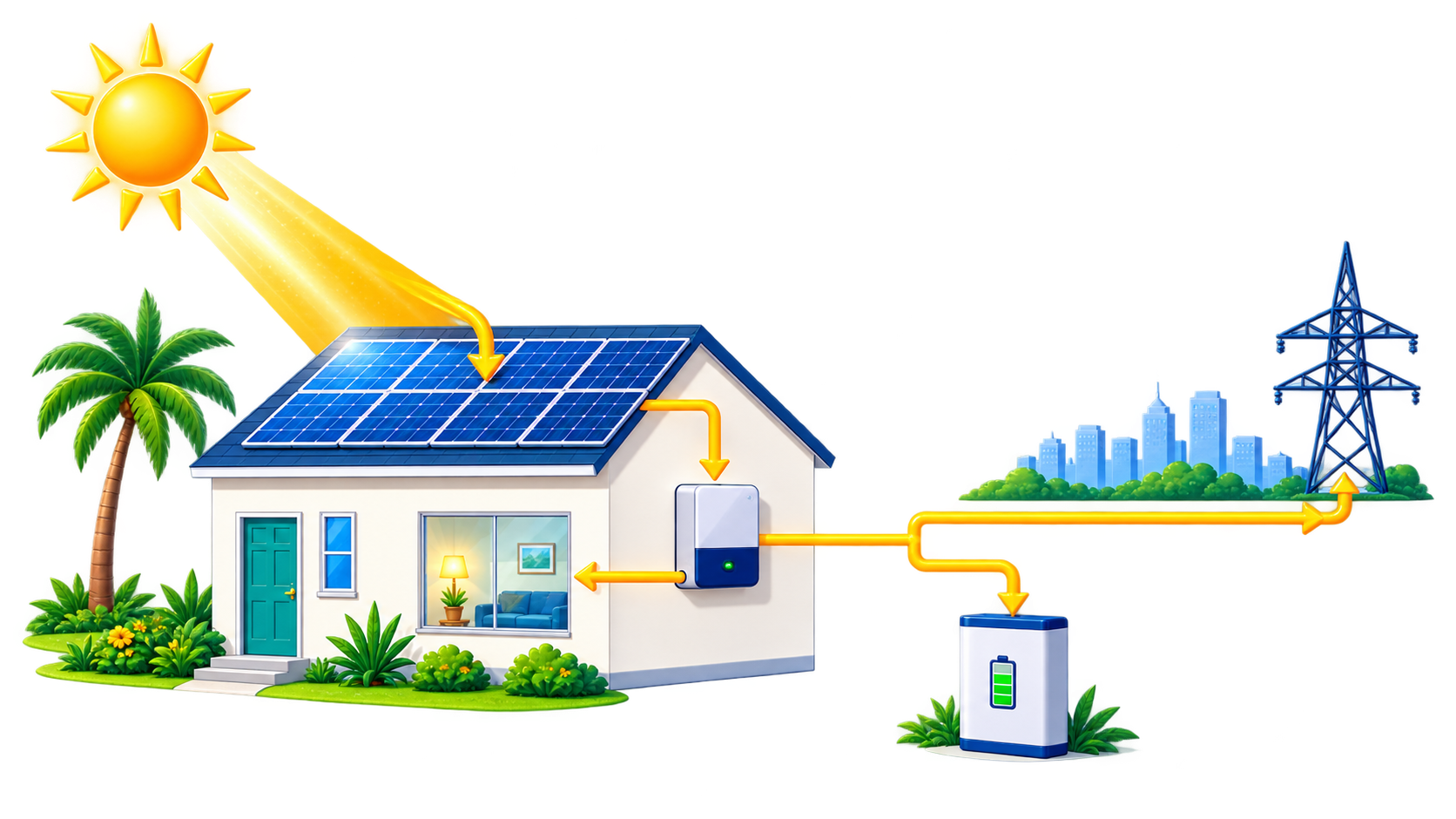
A Florida home showing the complete solar journey from sunlight to panels, an inverter, the home, a battery, and the grid

The whole story in 30 seconds

Make it. Use it. Save or share the rest.

  1. 01

    Sunlight

    brings energy

  2. 02

    Panels

    make electricity

  3. 03

    Inverter

    prepares it

  4. 04

    Home

    uses it first

  5. 05

    Battery

    can save extra

  6. 06

    Grid

    can take extra

  7. 07

    Later

    battery or grid helps

Part one · From the Sun to your rooms

Four small steps. One useful flow.

You do not need to manage the electricity as it moves. The equipment does that work for you.

01

Sunlight

Sunlight carries energy.

The Sun sends light to Earth. Some of that light reaches your roof.

You may hear the word photon. It simply means a tiny packet of light energy. You do not need to remember it to understand solar.

Easy way to remember it

Sunlight brings the energy.

Sunlight traveling toward a blue solar panel under a Florida sky
02

Solar panels

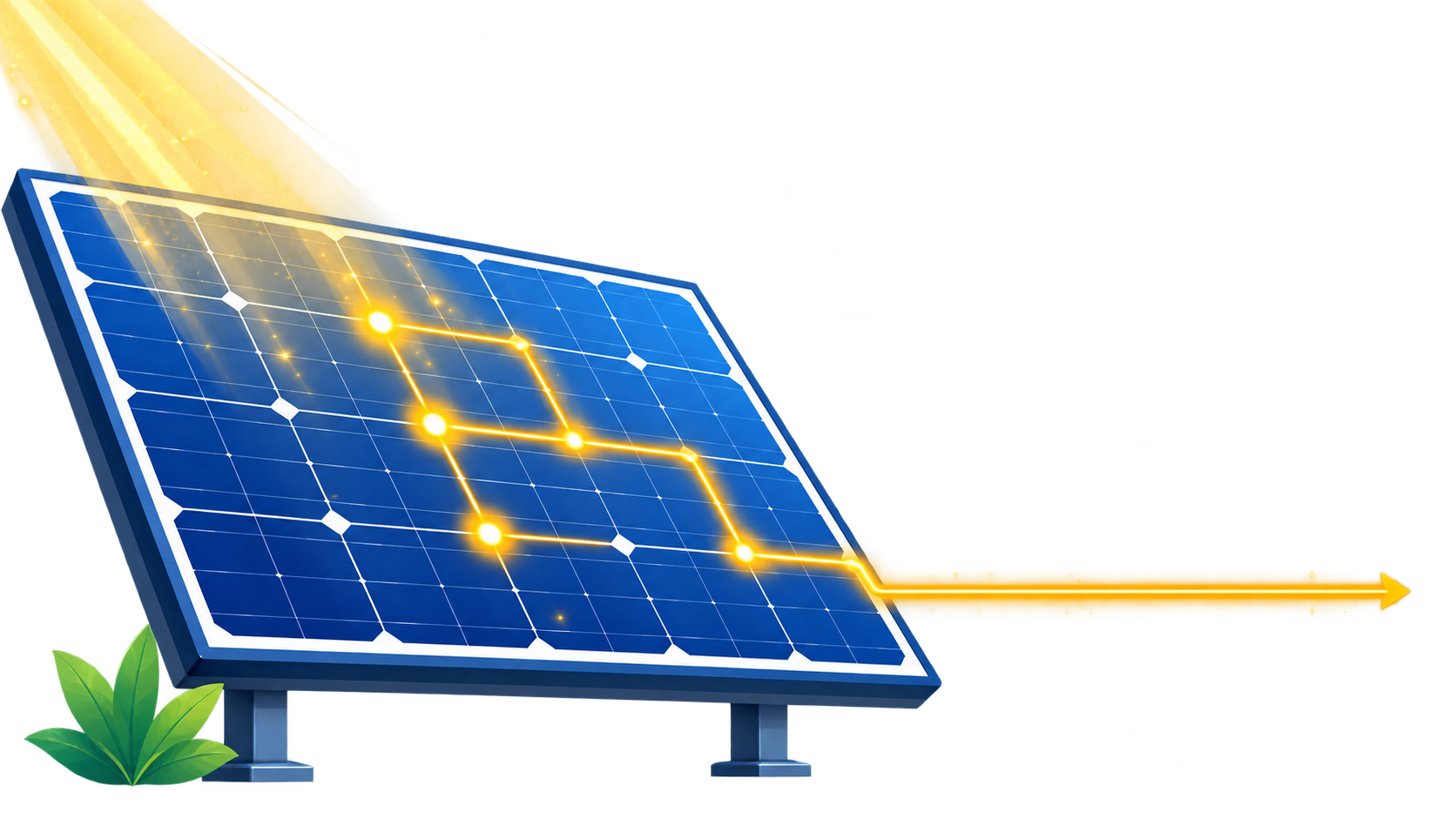
Panels turn light into electricity.

A panel is made of many small solar cells. Light gives tiny electrical charges a push inside each cell.

The panel guides those moving charges in one direction. That movement is electricity.

Easy way to remember it

Light goes in. Electricity comes out.

Close view of a solar panel turning sunlight into a glowing flow of electricity
03

Inverter

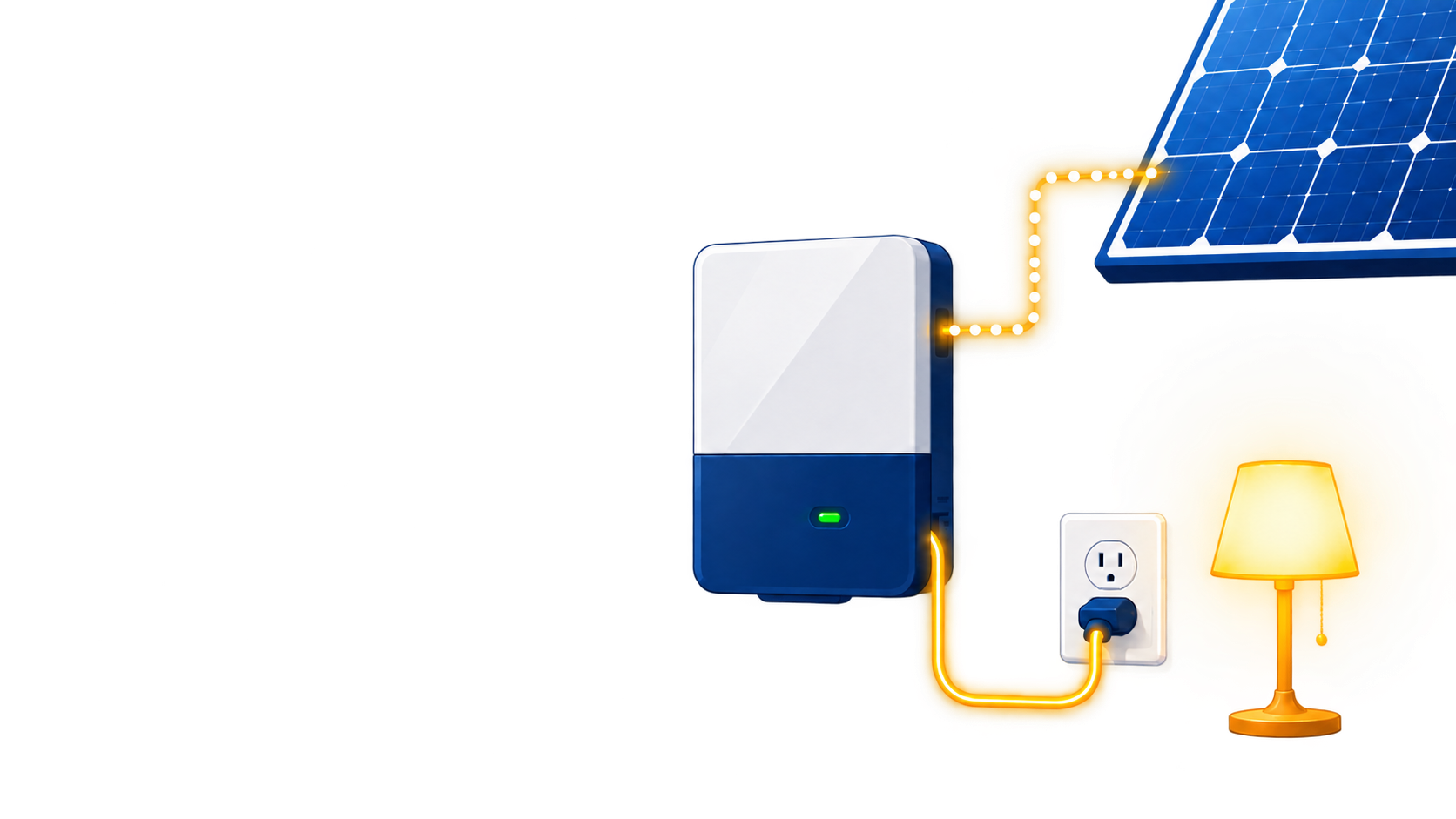
The inverter prepares it.

The electricity from the panels is not yet ready for normal home wiring.

Think of the inverter as a translator. It changes the panel's electricity into the form your home uses.

Easy way to remember it

The inverter prepares the electricity for your home.

Solar electricity flowing through an inverter and toward a home outlet and lamp
04

Your home

Your home uses solar first.

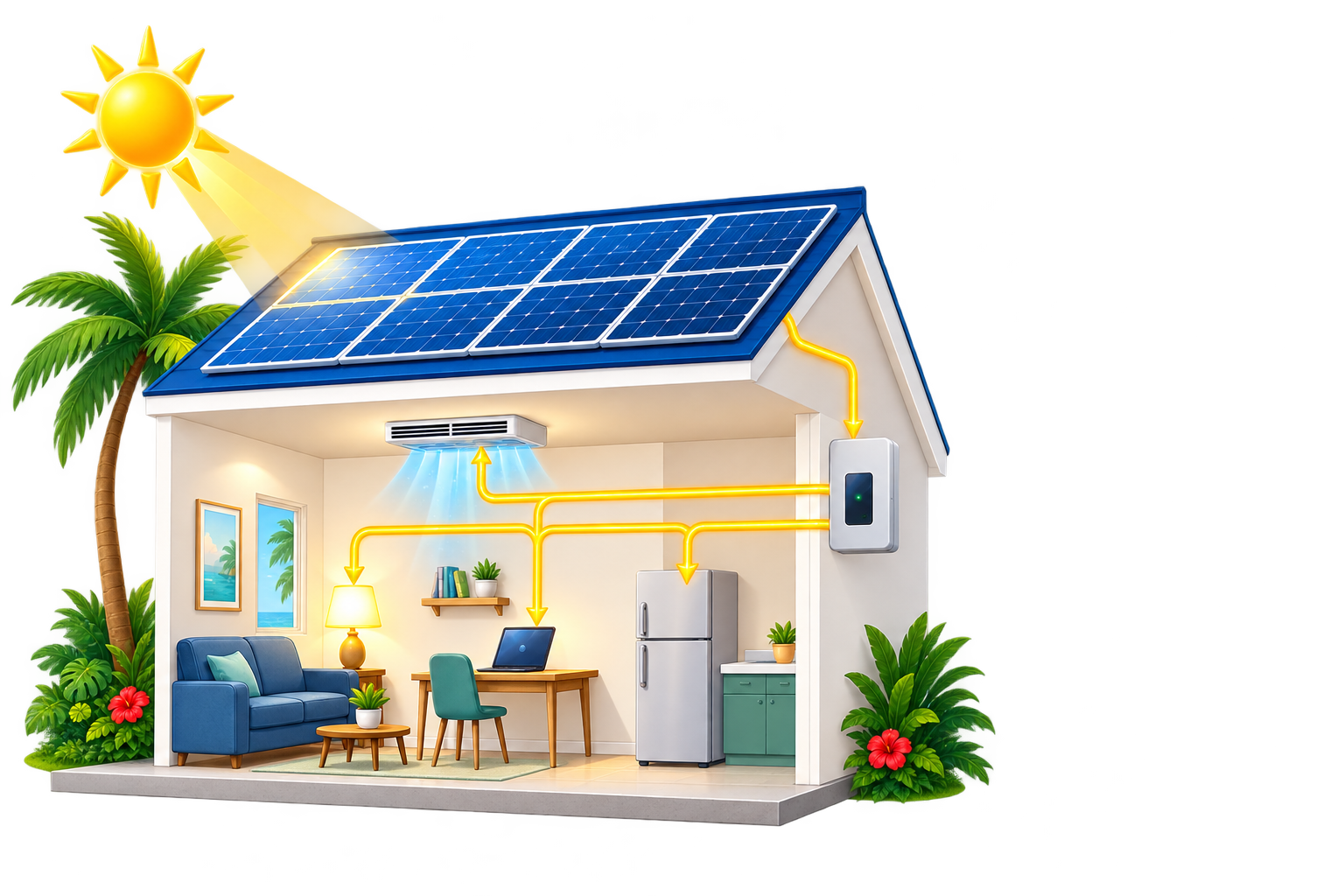
Solar electricity enters your home's electrical system. It can run lights, appliances, electronics, and air conditioning.

If solar makes less than the home needs, the grid fills the gap automatically. You do not need to flip a switch.

Easy way to remember it

Solar first. Grid when needed.

Cutaway Florida home using solar electricity for lights, a refrigerator, a laptop, and air conditioning

Part two · Extra energy

Your home takes what it needs first.

If the panels make more electricity than the home is using at that moment, the extra has two common places to go.

Battery: save it

A battery stores energy during the day so the home can use it later. The battery does not make energy—it only saves and releases it.

Grid: send it

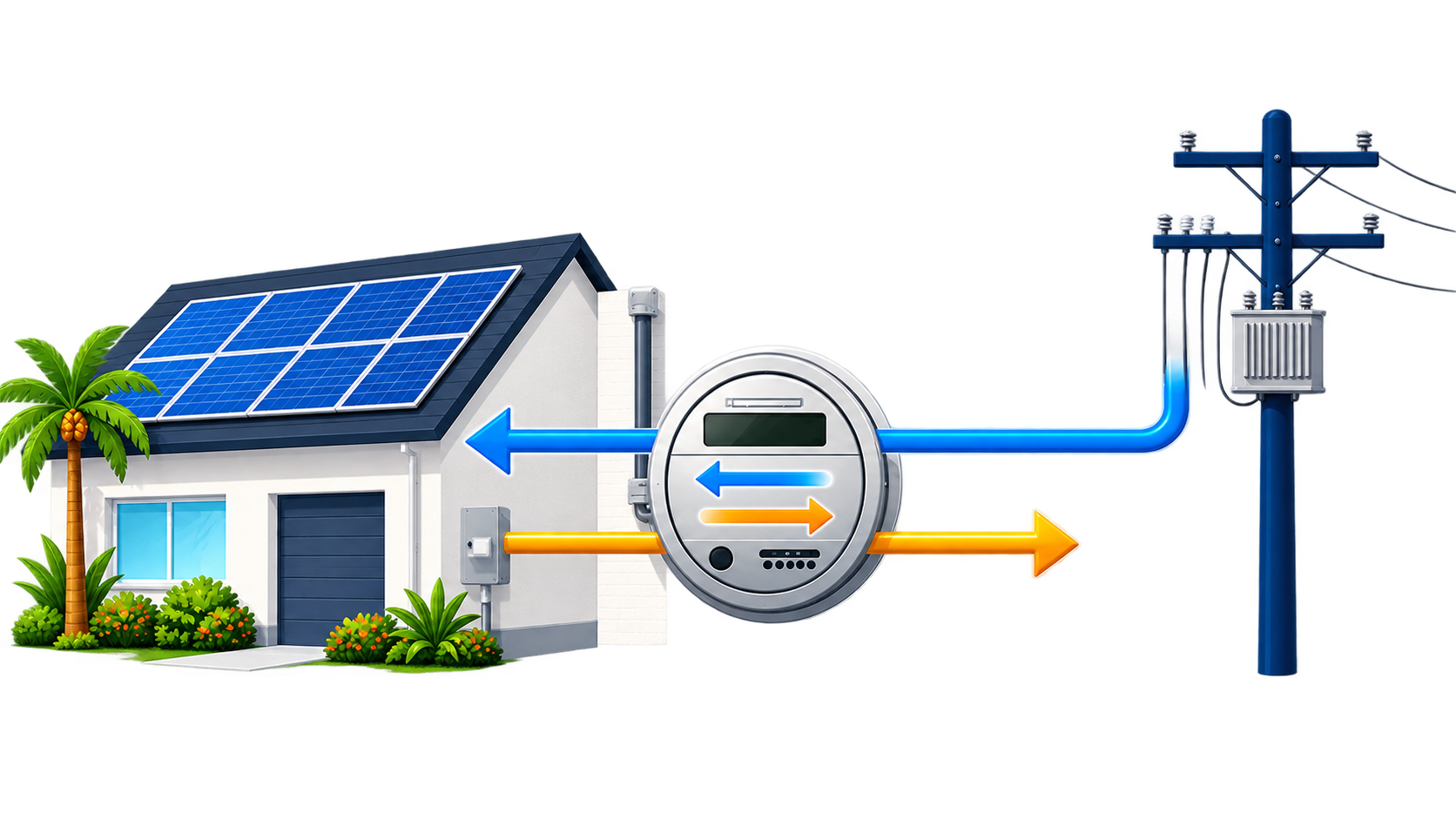
Extra energy can pass through a bidirectional meter to the utility grid. Credits and rules depend on the utility and its current program.

Solar energy flowing from the roof to the home, with extra energy branching toward a battery and the utility grid
The simple order: your home uses solar first. Extra energy can charge a battery or move to the grid.
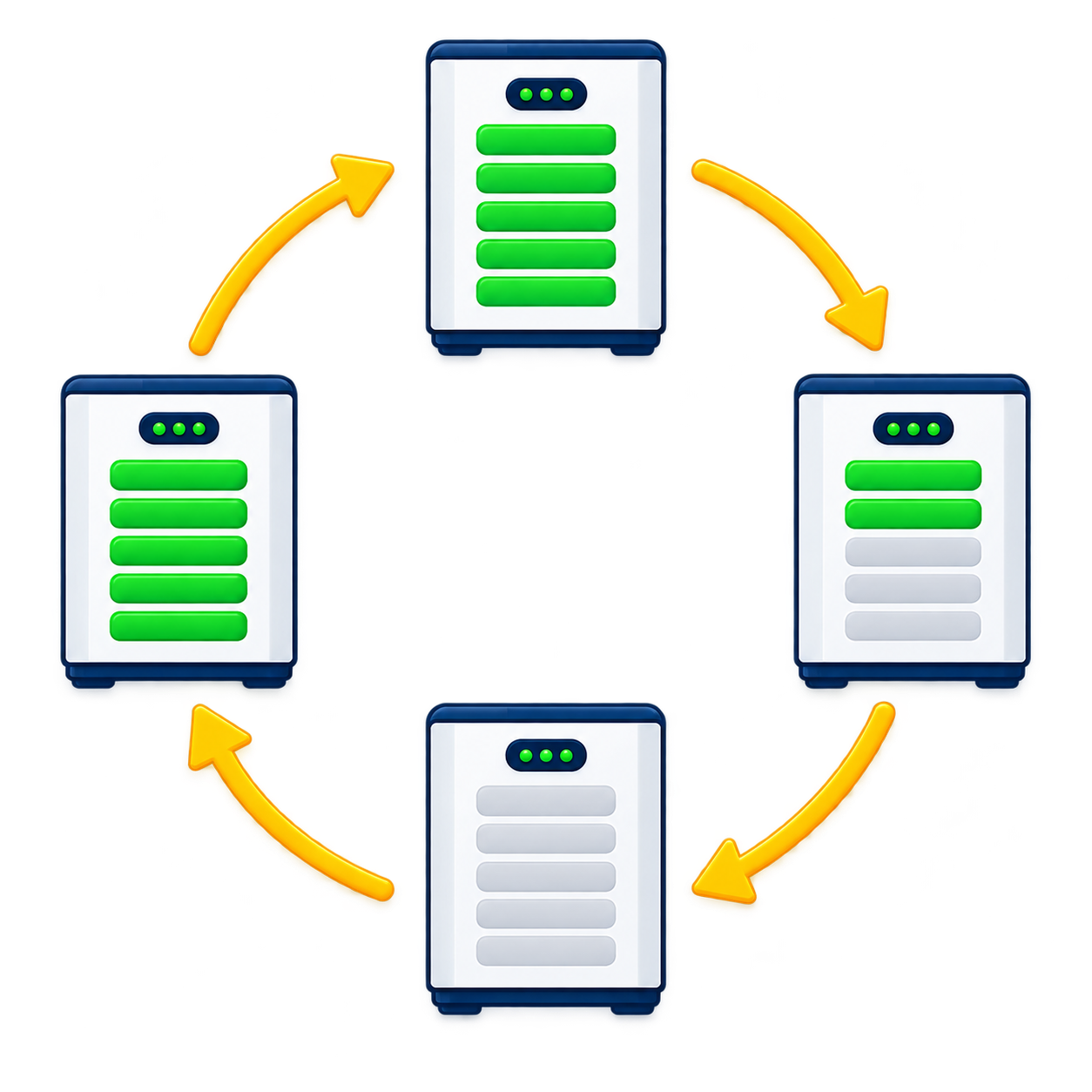
A battery shown full, half full, empty, and recharged to explain one battery cycle

Battery basics

A cycle is one full battery's worth of use.

It can happen all at once, from 100% to 0%. Or it can happen in smaller pieces. Two uses of 50% add up to about one cycle.

A battery does not suddenly stop at its rated cycle count. It normally holds less energy little by little as it ages. The actual warranty matters.

A simple runtime estimate

usable kWh ÷ kW in use ≈ hours

A 10 kWh battery serving a steady 1 kW load could last roughly 10 hours before normal losses. Large appliances use it faster.

Part three · The real world

Solar follows the light.

Production changes through the day and with the weather. That is normal.

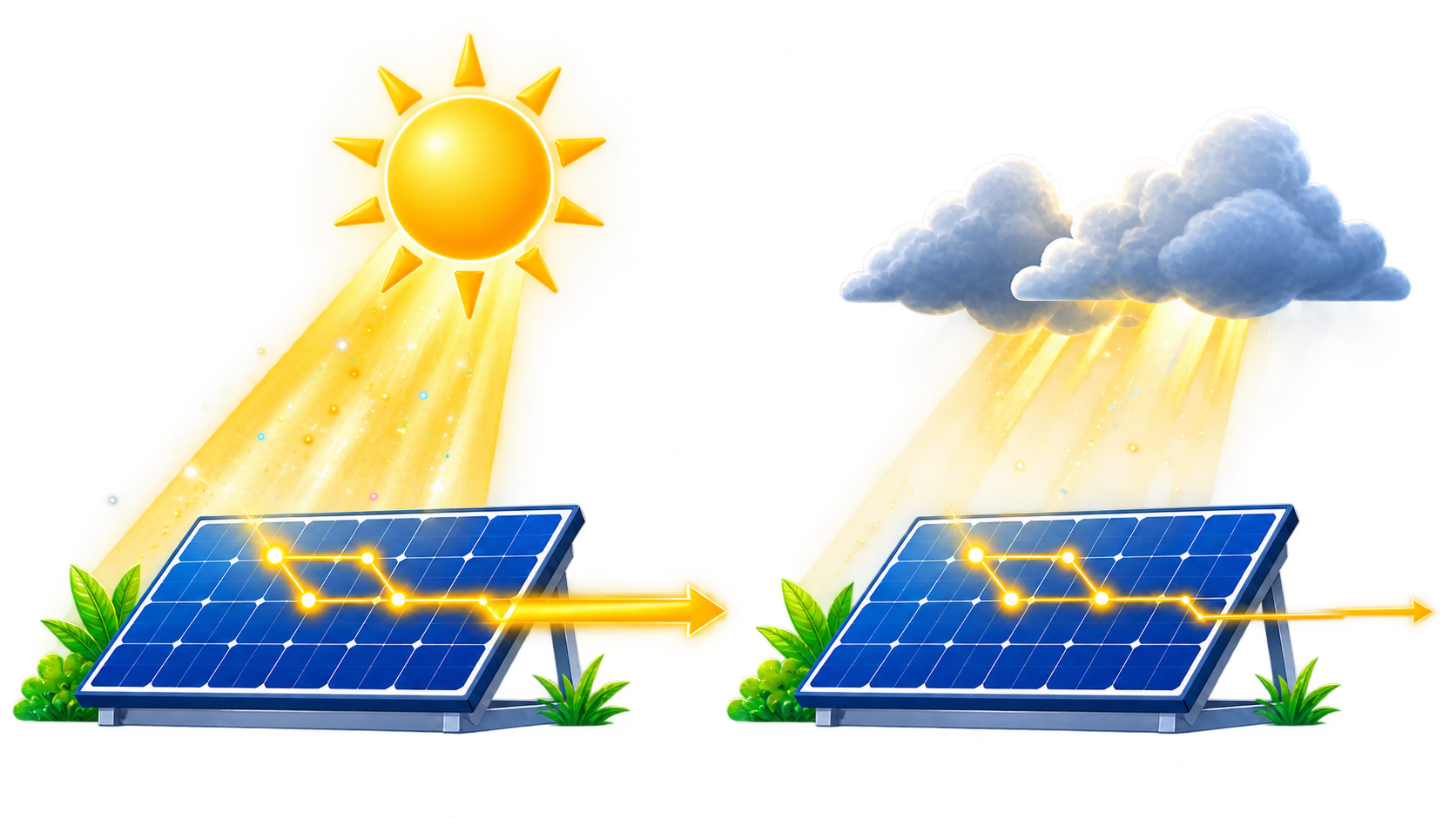
Solar panels making more electricity in bright sun and less electricity under clouds

Sunny and cloudy

Bright sun usually means more production. Panels can still work under clouds, but they usually make less.

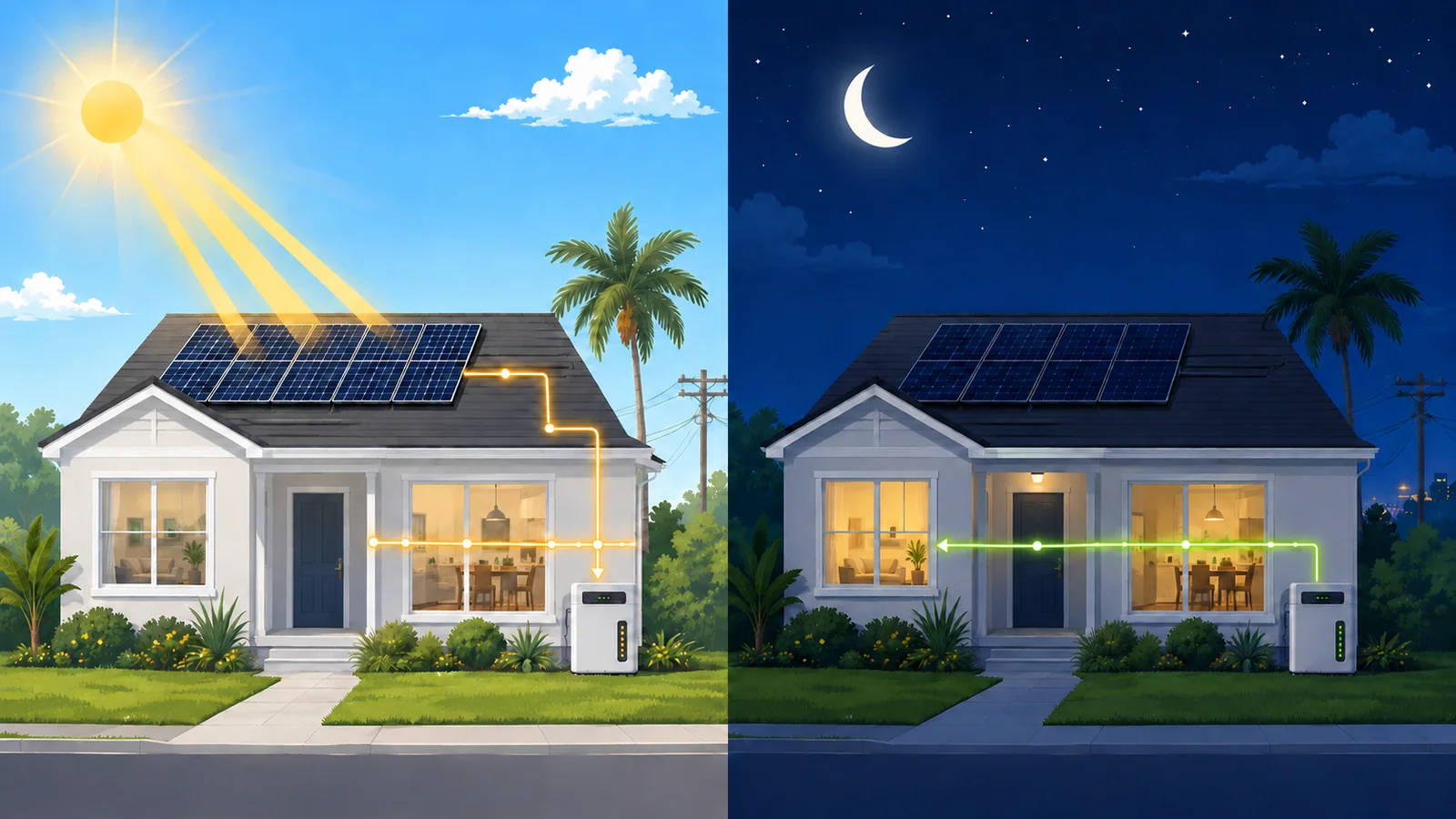
The same solar home during the sunny day and at night with a battery supplying energy

Day and night

Panels produce when light is available. At night, stored energy or the grid supplies the home.

One Florida detail

Bright sunlight helps production, but very hot panels can be a little less efficient. A good estimate uses local weather—not a perfect-day promise.

A bidirectional meter counting energy moving from the grid to a solar home and extra solar moving back to the grid

The meter and grid

Energy can move both ways.

A bidirectional meter can count energy taken from the grid and extra solar sent to the grid.

  • Grid to home: electricity the home needs when solar is not enough.
  • Home to grid: extra solar the home is not using at that moment.

For FPL customers, the home uses its solar production first and the meter records only the extra sent out. Other Florida utilities can use different rules. Check the current program for your address.

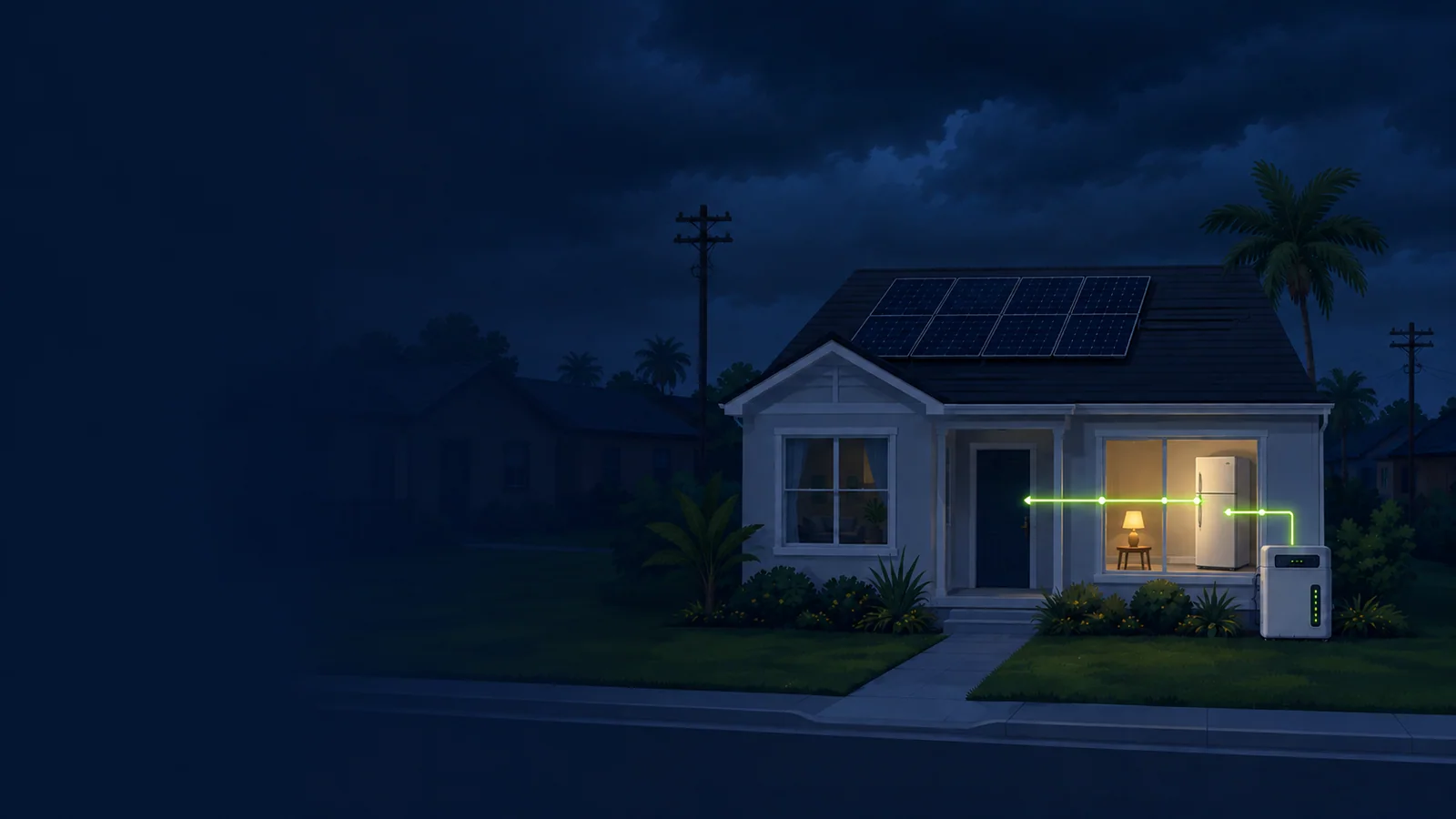
A Florida neighborhood during an outage, with selected lights and a refrigerator powered by a home battery

The honest outage answer

Panels alone usually turn off.

Grid-connected solar normally shuts down during an outage. This helps protect utility workers who are repairing the lines.

A properly designed solar-and-battery system can disconnect from the grid and power selected parts of the home. Backup depends on the battery, inverter, switchgear, system design, and what you choose to run.

A battery is not unlimited power.

A refrigerator, a few lights, and internet use much less energy than central air conditioning, a water heater, or a pool pump.


Read the Florida backup guide
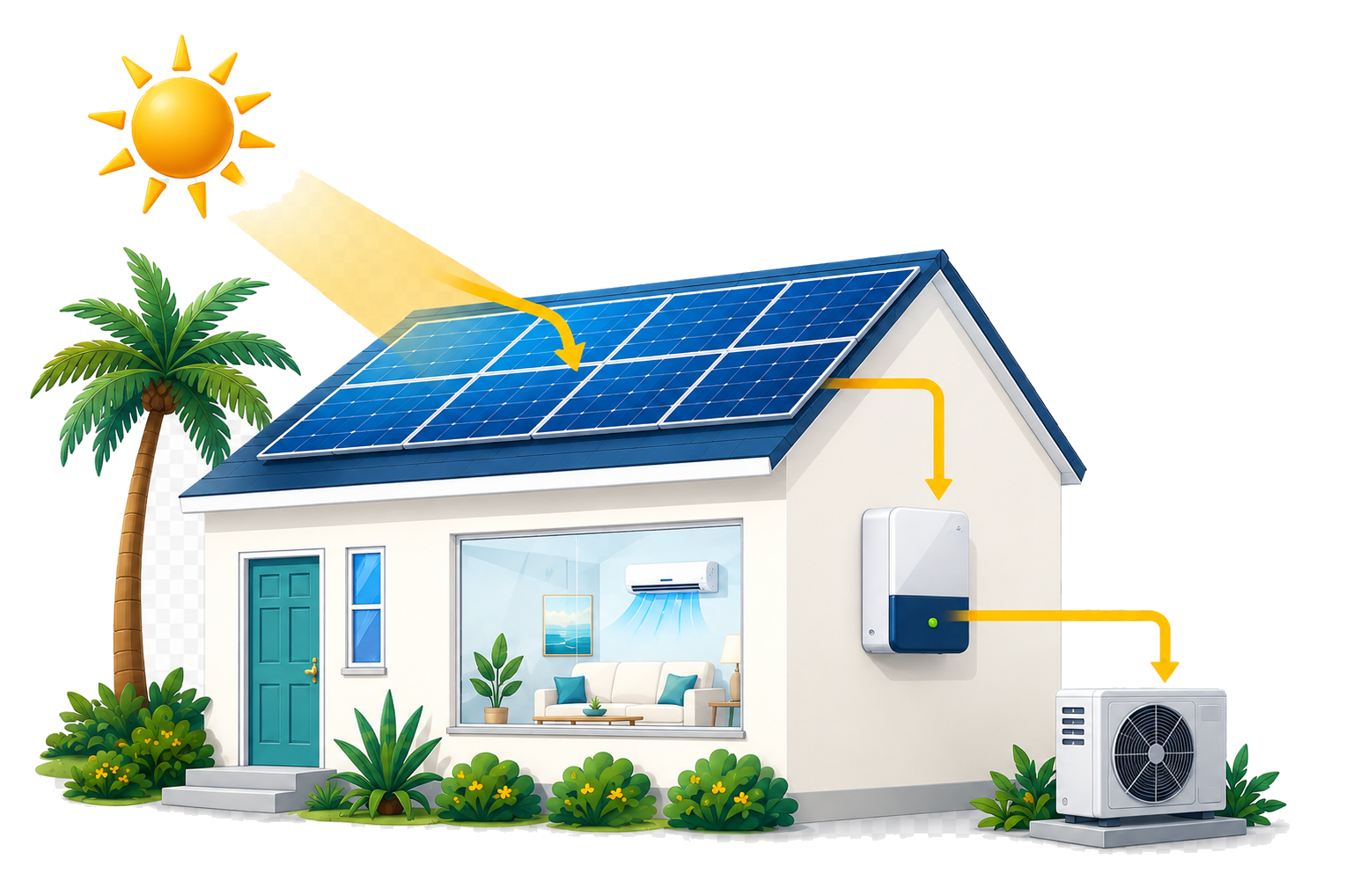
A sunny Florida home using rooftop solar electricity for daytime air conditioning

Why Florida homeowners look at solar

Your roof can work while your home is busy.

Florida homes often use a lot of daytime electricity for cooling. Solar can produce at the same time the home is using energy.

  • Buy fewer kWh from the utility
  • Use empty roof space
  • Save energy for later with a battery
  • Add selected-load backup when designed for it

The fit still depends on roof age, shade, weather, energy use, equipment, utility rules, price, and payment terms.

Keep these eight words nearby

The no-jargon solar glossary

Solar panel
A group of solar cells that turns light into electricity.
Inverter
The translator that prepares solar electricity for the home.
Battery
A device that saves energy for later. It does not create energy.
Grid
The shared electricity network used by homes and businesses.
Meter
The device that counts energy moving between the home and grid.
Cycle
Using energy equal to one full battery capacity.
kW
How fast energy is being used or produced right now.
kWh
How much energy was used or produced over time.

Simple answers to common solar questions

The short version first. We can always go deeper when it helps.

Do solar panels work on cloudy days?

Yes. Panels can still make electricity from the light that reaches them, but output is usually lower than on a bright, clear day.

Do solar panels work at night?

No. Panels need light to produce electricity. At night, the home uses energy from a battery or the grid.

Do solar panels store electricity?

No. Panels make electricity. A battery is the part that saves energy for later.

Is a battery required for home solar?

No. Many solar homes stay connected to the grid without a battery. A battery can add stored energy and backup capability when the system is designed for it.

Will solar work during a power outage?

Panels alone usually shut down during a grid outage to protect utility workers. A properly designed solar-and-battery system can disconnect from the grid and power selected parts of the home.

Can one battery power the whole house?

Not always. Runtime depends on the battery's usable energy, its power output, and what the home is running. Large loads such as central air conditioning may need more capacity and a compatible system design.

Will solar make my electric bill disappear?

That is not guaranteed. The result depends on the roof, shade, weather, home energy use, system size, utility rules, fixed charges, equipment, and payment terms.

The honest ending

What can this roof produce—and what can this home actually save?

Every roof and every power bill is different. Start with your address, your energy use, and a clear estimate built for your home.