
solar cost
How Much Does Solar Cost in Clearwater, FL in 2026?
By UnionGrid TeamUpdated 8 min read
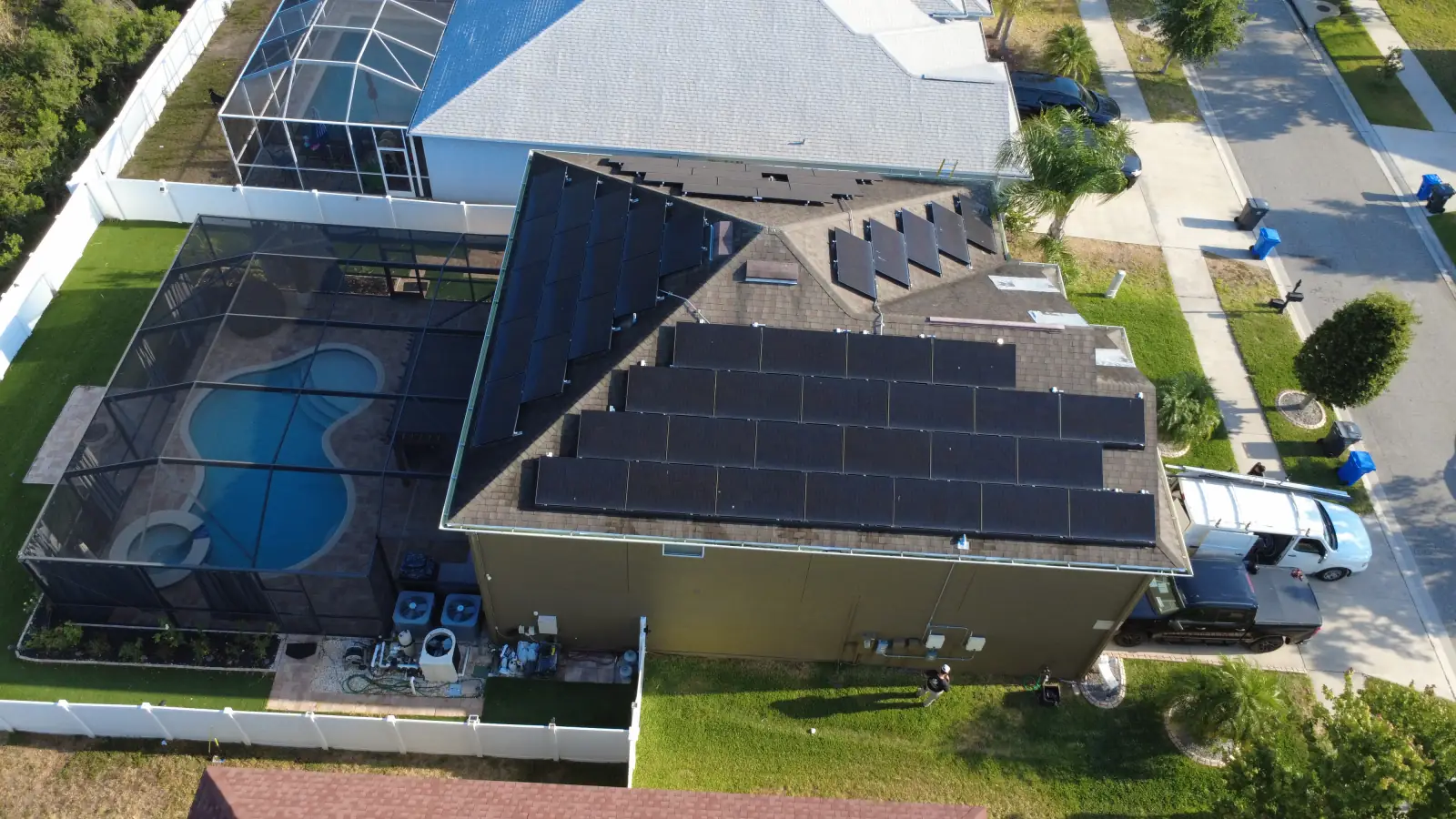
If you live in Clearwater and you've watched your Duke Energy bill climb every summer, you've probably wondered what it would actually cost to put solar on your roof. The honest answer is that "solar cost in Clearwater, FL" isn't a single number — it's a range that shifts based on your roof, your electric usage, and a few choices only you can make. This post walks through those numbers in plain English so you can size up the decision before anyone tries to sell you anything.
What a Clearwater solar system costs in 2026
There is no authoritative public dataset for a Clearwater-only 2026 average. The latest DOE-led Q1 2025 residential benchmark modeled a representative 8 kW rooftop system at $2.78 per watt as a minimum sustainable price and $2.95 per watt as a modeled market price, both in 2024 dollars. That works out to roughly $22,000 to $24,000 for the modeled 8 kW system before site-specific adders, storage, or financing.
System size, measured in kilowatts (kW), is one of the biggest price inputs. Scaling the benchmark rate gives consistent planning examples, though it does not determine the correct size for a particular home:
- 8 kW: roughly $22,000–$24,000 at the benchmark rates
- 10 kW: roughly $28,000–$30,000 at the benchmark rates
- 12 kW: roughly $33,000–$36,000 at the benchmark rates
These are national modeled costs, not Clearwater quotes. Roof complexity, equipment, electrical upgrades, engineering, installer overhead, storage, and financing can move the actual figure. The federal Section 25D residential credit is not available for expenditures after December 31, 2025, according to the current IRS guidance, so a 2026 proposal should not subtract it.
Where does your home fall in the range? That comes down to a handful of factors, so let's break them down.
What drives the price of a solar system
Two houses on the same Clearwater street can get very different quotes, and it's usually for good reasons rather than sales games.
System size. This is the biggest lever. The more electricity you use — big AC loads, a pool pump, an EV — the more panels you need, and the higher the total. A home that runs the air conditioning hard from May through October needs more production than a snowbird's part-time condo.
Panel and inverter design. Higher-efficiency panels can fit more capacity into limited roof space. Microinverters, optimizers, and string inverters have different equipment, service, and shade-management tradeoffs; compare the proposed layout and production model instead of assuming one architecture is always better.
Roof complexity. A simple, single-plane shingle roof is quick to work with. A cut-up roof with multiple facings, dormers, steep pitch, or a tile surface takes more labor and specialized mounting, and that shows up in the price.
Electrical work. Older Clearwater homes sometimes need a main panel upgrade before solar can safely tie in. If your panel is maxed out or outdated, budget for that as a separate line item.
Permitting and interconnection. Pinellas County permitting and the Duke Energy interconnection process are routine, but they're real steps that take time and paperwork. A reputable installer folds this into the quote rather than surprising you later.
None of these are hidden fees — they're just the difference between a clean estimate and a realistic one. When you look at our Clearwater solar installation process, you'll see we quote against your actual roof and bill rather than a generic price-per-watt.
Should you add a battery in Clearwater?
This is the most common upgrade question we get, and Clearwater's location on the Gulf coast makes it a fair one. Hurricane season is real here, and a standard grid-tied solar system shuts off during a grid outage for safety — meaning solar alone won't keep your lights on when a storm knocks out power.
A battery changes that. It stores daytime production so you can run essentials — refrigerator, some lights, a few outlets, maybe a window AC — through an outage.
The tradeoff is cost. In the same 2025 federal benchmark, adding a modeled 13.5 kWh battery to the representative 8 kW system increased modeled cost by roughly $12,000–$13,000. Actual quotes vary with usable capacity, output power, backup gateway, critical-load panel, electrical work, and the number of units. The useful question is which loads you want supported and for how long.
A few ways to compare configurations:
- No battery: lower upfront project cost, but a standard grid-tied array has no outage backup.
- One battery: may support selected critical loads for a modeled period, subject to capacity and inverter limits.
- Multiple batteries: may support larger loads or longer runtime, with substantially higher cost; whole-home capability still requires load and startup analysis.
If storm resilience is your priority, our Clearwater-area battery storage options walk through sizing. If pure bill reduction is the goal, you may not need a battery at all — which brings us to net metering.
How net metering shapes your real cost
Sticker price isn't the whole story. What makes solar pencil out in Clearwater is net metering, Florida's rule that lets Duke Energy customers earn credits for excess power their panels send back to the grid.
Here's how it works in practice. On a sunny afternoon, panels may produce more than the home is using. That surplus flows to the grid, and kilowatt-hour credits can offset usage and roll forward during the calendar year under the investor-owned-utility rule. Fixed charges remain, and unused credits at annual reconciliation are handled under the Duke tariff rather than paid at the full retail rate.
That's why a right-sized system matters more than a big one. Excess annual production may be worth less than energy that offsets your own consumption, and utility size limits also apply. A good design starts with actual annual usage and the current tariff rather than a generic offset promise.
You can get a rough sense of your own numbers with our solar savings calculator before ever picking up the phone.
Roof condition: the factor people forget
Here's the part that catches homeowners off guard: the roof's remaining service life affects the solar schedule and long-term cost.
Solar panels are built to last 25 years or more. If you bolt them onto a shingle roof that has 5 years of life left, you'll eventually pay to remove and reinstall those panels when the roof needs replacing — a real cost that a solar-only company might not mention up front.
Before you spend on solar, get a qualified look at the roof underneath. Clearwater's sun, rain, salt exposure, and storms make condition especially important. Review:
- Curling, cracked, or missing shingles
- Granule loss collecting in gutters
- Any history of leaks, repairs, storm damage, or soft decking
- Material, installation quality, warranty, and documented remaining service life
If the roof needs replacement, doing it before the original solar installation can avoid a later removal and reinstall. If it is in good condition, unnecessary replacement only adds cost. UnionGrid can coordinate the scopes, while your proposal, permits, and warranties should identify the appropriately licensed contractor responsible for each. If you already have panels on a roof that needs work, our panel removal and reinstall service explains the process.
Putting the Clearwater numbers together
Let's tie it back to a realistic Clearwater example. Say you've got a single-story home, a Duke Energy bill averaging $220 a month, a healthy shingle roof, and you're not chasing full backup power.
- A 10 kW reference at the federal benchmark rates: roughly $28,000–$30,000 before site-specific adders.
- No battery, since bill savings is the goal.
- Net metering offsets the nighttime and cloudy-day power you pull back.
- No new federal Section 25D residential credit for 2026 expenditures.
Change the assumptions and the number moves. Add a modeled 13.5 kWh battery and the federal benchmark rises by roughly $12,000–$13,000; actual backup designs may differ substantially. Roof replacement, electrical upgrades, shade, layout complexity, and financing are separate variables.
The point is that there's no single "solar cost in Clearwater, FL" — there's your cost, built from your roof, your bill, and your priorities. Anyone who quotes you a firm number over the phone without seeing your roof is guessing.
The straightforward next step
If you want a real figure instead of a range, the fastest path is a site-specific quote. We'll look at your roof, pull your usage, size a system to your actual needs, and flag anything about the roof that should come first. No pressure, no scripted upsell — just the numbers.
Start with the solar savings calculator to get oriented, then request a free quote when you're ready for specifics. And if you're weighing whether the roof needs work before panels go up, tell us — that conversation is a lot cheaper than finding out afterward.
Sources checked
Frequently asked questions
What is the average cost of solar in Clearwater, FL in 2026?
There is no authoritative government dataset for a Clearwater-only 2026 average. The latest DOE-led Q1 2025 benchmark modeled a representative 8 kW residential system at $2.78 to $2.95 per watt, or about $22,000 to $24,000 in 2024 dollars, before site-specific work, storage, or financing. Treat that as a national reference point, not a local quote.
Does adding a battery change the cost a lot?
Yes. In the same DOE-led benchmark, adding a modeled 13.5 kWh battery to the 8 kW system increased modeled cost by roughly $12,000 to $13,000. Actual quotes vary with usable capacity, output power, backup hardware, electrical work, and the number of units. Solar-plus-storage must be designed for backup operation if outage power is the goal.
How does net metering affect what I pay in Clearwater?
Duke Energy Florida customers participate under the state's investor-owned-utility net-metering framework. Exported kilowatt-hours can offset usage and roll forward during the calendar year; unused credits at annual reconciliation are handled under the utility tariff and are not the same as a cash payment at the full retail rate. Confirm the current tariff before relying on a savings estimate.
Do I need a new roof before going solar?
Not always. Material, installation, storm history, leaks, repairs, warranty, and remaining service life matter more than an age-only rule. UnionGrid can coordinate a roof assessment with the solar design, while the proposal and permits should identify the appropriately licensed contractor responsible for each scope.
Related reading
Clearwater Solar Installation
See how UnionGrid designs and installs residential solar systems for Clearwater homes.
Learn moreSolar Savings Calculator
Estimate your system size and potential savings before you talk to anyone.
Learn moreGet a Free Quote
Request a no-pressure quote tailored to your roof and electric bill.
Learn moreFlorida Solar Incentives 2026
A deeper look at the incentives and net metering rules that shape Florida solar economics.
Learn moreReady to talk about your project?
Tell us what you need and our team can help you take the next step with solar, roofing, battery storage, or roof-related solar work.