
solar cost
How Much Does Solar Cost in St. Petersburg, FL in 2026?
By UnionGrid TeamUpdated 7 min read
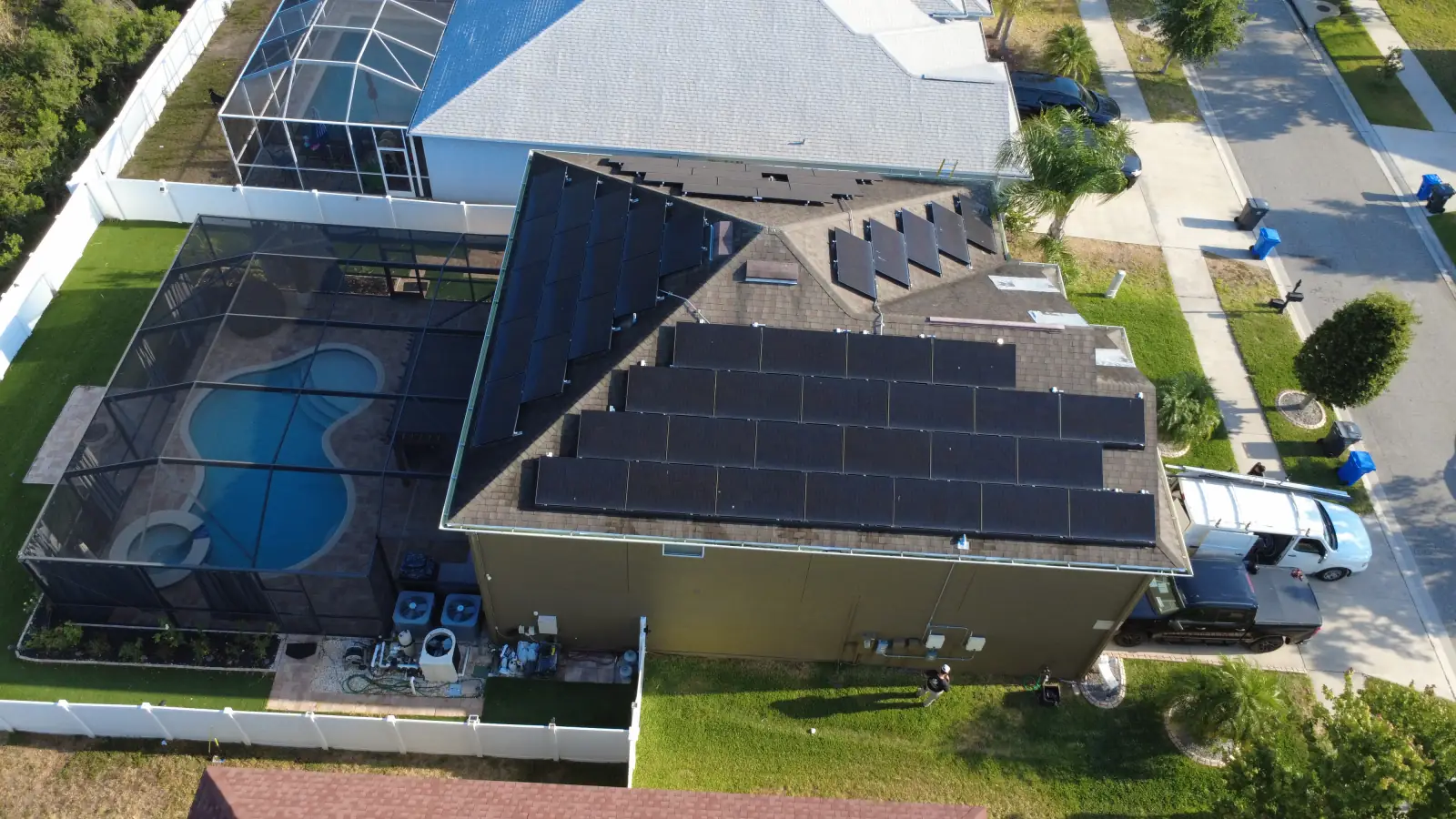
If you live in St. Petersburg and you've started pricing out solar, you've probably noticed that the numbers are all over the map. One source shows a low national benchmark, another quote includes financing or a battery, and neither may match your roof. This post explains a defensible planning reference, what moves the price, and how to compare quotes on the same scope.
We'll keep it plain. No hype, no pressure — just the numbers and the reasoning behind them.
What a St. Petersburg solar system typically costs in 2026
There is no authoritative public dataset for a St. Petersburg-only 2026 average. The latest DOE-led Q1 2025 residential benchmark modeled a representative 8 kW rooftop system at $2.78 per watt as a minimum sustainable price and $2.95 per watt as a modeled market price, both in 2024 dollars. That works out to roughly $22,000 to $24,000 for the modeled 8 kW system before site-specific adders, storage, or financing.
Scaling a per-watt benchmark is only a planning exercise, but it gives internally consistent reference points:
- 8 kW: roughly $22,000–$24,000 at the benchmark rates
- 10 kW: roughly $28,000–$30,000 at the benchmark rates
- 12 kW: roughly $33,000–$36,000 at the benchmark rates
These are not St. Petersburg quotes. Roof type and pitch, electrical upgrades, engineering, equipment, installer overhead, financing charges, and storage can move the actual figure. The benchmark also does not mean every home should target 8, 10, or 12 kW.
The federal Section 25D Residential Clean Energy Credit is not available for expenditures after December 31, 2025, according to the current IRS guidance. A 2026 proposal should not subtract that credit from the projected cost.
For scale, the benchmark's 8 kW design uses twenty 400-watt modules. Your home may need fewer or more depending on the last 12 months of electricity use, module wattage, shade, usable roof area, and the production target. A pool, EV, electric water heating, or heavy air-conditioning use can materially change the load.
One thing to be skeptical of: any price quoted before someone has looked at your last 12 months of electric bills and your actual roof. A real number comes from real usage data, not a ZIP code. You can get a rough sense of your own size and savings using our solar savings calculator, then refine it with a site visit.
What drives the price of a solar system
When you compare materially different quotes for the same house, one or more of these factors is often doing the work:
System size (kW). This is the biggest lever. Panels and the labor to mount them scale with size, so a 12 kW system simply costs more than an 8 kW one. Bigger isn't automatically better — an oversized system produces more than you can use or bank, and in Florida that extra production isn't worth much once you've covered your bill.
Panel and inverter design. Higher-efficiency panels can fit more capacity into limited roof space. Microinverters, optimizers, and string inverters have different equipment, service, and shade-management tradeoffs; the right comparison uses the proposed layout and production model rather than a blanket claim that one architecture is always better.
Roof complexity. A simple, single-plane shingle roof with a clean south exposure is the cheapest to work on. A cut-up roof with multiple facets, dormers, skylights, or a steep pitch takes more rails, more flashing, and more labor. Tile roofs cost more to mount on than shingle because tiles have to be carefully removed and reset around each mount.
Electrical work. Older St. Pete homes — and there are plenty of them — sometimes need a panel upgrade before they can safely take on solar. If your main service panel is undersized or dated, budget for that as part of the project rather than a surprise.
Shading and orientation. Direction, pitch, and hourly shade affect annual production. Heavy shade from trees or a neighboring building may require a different layout, selective trimming where appropriate, or a lower production target.
None of these are upsells. They're just the physical realities of your specific roof, which is why a walk-and-measure visit matters more than an over-the-phone quote.
Roof condition and why it matters here
This is the part St. Pete homeowners can miss. If a qualified inspection finds limited remaining roof life, you may be setting up a future project: the array may have to come off before roof replacement and be reinstalled afterward. That removal and reinstall is a separate quoted scope that may be avoidable with better sequencing.
So before you commit to solar, get a qualified inspection that addresses:
- roof covering, installation, leaks, repairs, and storm damage;
- deck condition and any structural work relevant to attachments;
- remaining service life and existing warranty terms; and
- how the proposed mounts affect roofing responsibility and documentation.
Living on the Gulf Coast adds wind, rain, heat, and salt exposure to the assessment. If the roof needs work, coordinating roofing with the solar schedule can avoid a foreseeable future removal and reinstall, but compare itemized scopes rather than assuming a bundle is always cheaper.
UnionGrid can coordinate the roofing and solar scopes. The written proposal, permits, and warranties should identify the appropriately licensed contractor responsible for each scope and who handles attachments or a future leak.
Should you add a battery in St. Pete?
Batteries are the most misunderstood line item in a Florida solar quote, so let's be clear about what they do and don't do here.
For many St. Petersburg homeowners, a battery is primarily a resilience purchase. Duke Energy Florida customers are covered by the state's investor-owned-utility net-metering framework: exported kilowatt-hours can offset usage and roll forward during the calendar year, while annual leftover credits are reconciled under the utility tariff. A battery savings case still depends on the current rate, load pattern, losses, and installed price.
What a battery actually buys you in St. Pete is resilience. When a hurricane or a summer storm knocks out the grid, a standard grid-tied solar system shuts off for safety — meaning no power, even in full sun. A battery lets you keep essentials running: your fridge, some lights, fans, a CPAP, internet, maybe a window AC unit. For a lot of Pinellas homeowners who've sat through multi-day outages, that peace of mind is the whole point.
In the same 2025 federal benchmark, adding a modeled 13.5 kWh battery to the representative 8 kW system increased modeled cost by roughly $12,000–$13,000. An actual quote can move significantly with capacity, output power, backup gateway, critical-load panel, electrical work, and the number of units. Ask what loads the design supports and for how long.
How to read a quote without getting spun
A few habits that protect you:
Compare cost per watt on the same scope. Divide the cash PV price by system watts, excluding roof work, storage, and financing charges before comparing it with another PV quote. Use the federal benchmark as context, not as a promise of local retail pricing.
Watch for financing math dressed up as a price. Some sales pitches quote you a monthly payment instead of a system cost, which makes it hard to compare apples to apples. Always ask for the cash price of the system, then evaluate financing separately.
Make sure the size matches your usage. A quote should reference your actual annual kWh. If it doesn't, it's a guess.
Confirm the roof plan. A good installer tells you upfront whether your roof needs work — before the panels go on, not after they find a soft deck.
Get it in writing. Equipment brands, warranties, the production estimate, and who's responsible for roof penetrations should all be on paper.
The bottom line for St. Petersburg homeowners
Solar in St. Pete in 2026 is a site-specific investment. The latest federal model puts a representative 8 kW system around $22,000–$24,000 in 2024 dollars, while larger systems, roof or electrical work, storage, and financing can move the project well above that reference. A firm proposal should be based on the roof, the utility account, and a defined equipment and warranty scope.
The smartest first step is a site-specific look at your roof and a system sized to your real power bills. If you want that, request a free quote and we'll walk your roof, check its condition, and give you a number you can actually plan around — no pressure either way.
Sources checked
Frequently asked questions
What is the average cost of solar in St. Petersburg, FL in 2026?
There is no authoritative government dataset for a St. Petersburg-only 2026 average. The latest DOE-led Q1 2025 benchmark modeled a representative 8 kW residential system at $2.78 to $2.95 per watt, or about $22,000 to $24,000 in 2024 dollars, before site-specific work, storage, or financing. Treat that as a national reference point, not a local quote.
How many solar panels does a St. Petersburg home need?
There is no reliable citywide count. For scale, the federal benchmark's 8 kW example uses twenty 400-watt panels. Your count depends on annual electricity use, module wattage, usable roof area, orientation, shade, and the production target, so it should be based on bill history and a site design.
Does adding a battery change the cost a lot?
Yes. In the same DOE-led benchmark, adding a modeled 13.5 kWh battery to the 8 kW system increased modeled cost by roughly $12,000 to $13,000. Actual quotes vary with usable capacity, power output, backup hardware, electrical work, and the number of units. Runtime and resilience should be modeled separately from bill savings.
Does my roof need work before solar in St. Petersburg?
Only a qualified inspection can answer that. Material, installation, storm history, leaks, repairs, warranty, and remaining service life matter more than an age-only cutoff. UnionGrid can coordinate roof and solar scopes, while the proposal and permits should name the appropriately licensed contractor responsible for each.
Related reading
St. Petersburg Solar Installation
See how UnionGrid handles residential solar in St. Petersburg and Pinellas County.
Learn moreSolar Savings Calculator
Estimate your system size and savings before you talk to anyone.
Learn moreFlorida Solar Incentives 2026
A rundown of the incentives and net metering rules that affect your bottom line.
Learn moreGet a Free Quote
Request a site-specific solar and roofing quote for your St. Pete home.
Learn moreReady to talk about your project?
Tell us what you need and our team can help you take the next step with solar, roofing, battery storage, or roof-related solar work.