
commercial solar
Commercial Solar in Florida: What Business Owners Should Know Before Requesting a Quote
By UnionGrid Team8 min read
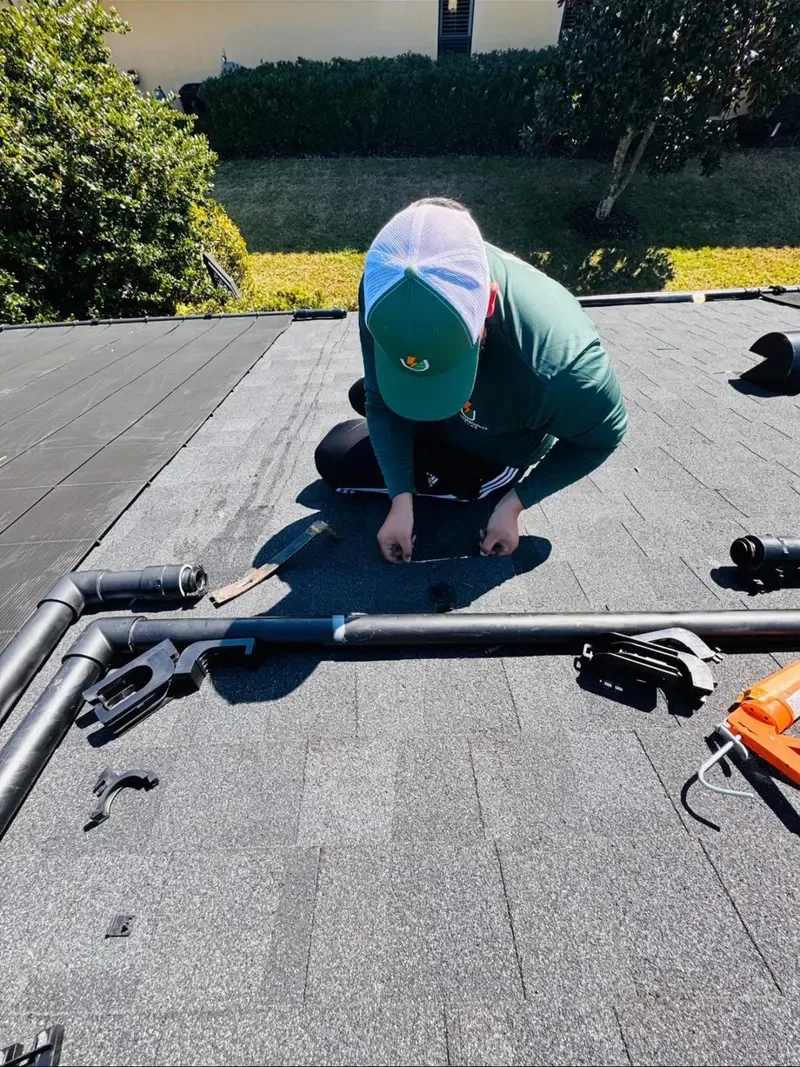
If you own or manage a commercial property in Florida, solar probably keeps coming up — in conversations with other owners, in cold calls, maybe in a line item on a proposal someone dropped off. The pitch is usually simple: your building has a big flat roof, the sun shines most of the year, so why not put that roof to work? It's a fair question. But commercial solar is a bigger, more technical decision than a residential rooftop system, and the smartest thing you can do before requesting a quote is understand what actually drives the design, the cost, and the coordination.
This is an intro-level walkthrough — no hard sell — of what matters when a business owner starts looking at commercial solar in Florida, and the questions worth asking before you sign anything.
Start with your actual electric usage
Both residential and commercial designs benefit from understanding when electricity is used. For a business, the load profile and tariff can be especially important alongside total consumption. A warehouse that runs machinery from 7 a.m. to 4 p.m. has a very different daytime demand curve than a restaurant that peaks in the evening or a self-storage facility that barely uses power at all.
Solar produces most of its energy in the middle of the day. The more of your consumption happens while the sun is up, the more directly solar offsets what you'd otherwise buy from the grid. So the first thing to gather is data:
- Twelve months of electric bills, at minimum.
- Your rate schedule name — commercial accounts are often billed on rates that include demand charges, not just energy charges.
- Interval or demand data if your utility makes it available, which shows when your usage peaks.
That last point is important. If your tariff includes demand charges, check its measurement interval, peak definition, and any minimum or ratchet provisions. Those details determine how a change in demand affects the bill. Solar can help with energy charges but doesn't automatically reduce a demand charge unless the timing lines up — and sometimes battery storage is what actually addresses the peak. A good design conversation starts with your real numbers, not a generic per-square-foot estimate.
The roof comes first
On a commercial building, the roof is usually the whole ballgame. Commercial buildings can have low-slope roofs with single-ply membranes such as TPO or EPDM, modified-bitumen assemblies, or other roof systems. Modified bitumen is a different category from those single-ply membranes; the Department of Energy roof guide describes the distinctions. That changes how panels get mounted, and it changes the risk conversation entirely.
A few things every owner should think through:
Roof age and remaining life. Solar racking is meant to stay put for a long time. If your membrane has only a few years left, you generally don't want to install a full array on top of it and then have to remove everything to re-roof. The order of operations matters, and it's cheaper to sort out before panels go up.
Existing roof warranty. Many commercial roofs carry a manufacturer or workmanship warranty. Penetrating or loading that roof incorrectly can jeopardize it. Before work begins, ask the roof warranty provider how the proposed attachments and work affect coverage, and document the required details. Correct installation does not create a blanket promise that every future issue will be covered.
Attachment method. Flat-roof solar is often ballasted (weighted down) or mechanically attached (fastened through the membrane). Ballasted systems add weight your structure has to support; attached systems create penetrations that must be flashed and sealed correctly. Either way, the structural and waterproofing questions are real and worth answering up front.
This is where licensing matters, and we want to be direct about it. An electrical contractor license is not a roofing license. Check the parties named in the project through the Florida DBPR license search. On projects that involve roofing work — a tie-in with a reroof or a membrane repair around mounts, for example — the project documents should identify the appropriately licensed roofing party separately. When you evaluate any solar company, ask plainly: Who is performing the roof scope, and what is their license? If the answer is vague, that's a signal to slow down.
Wind design is not optional in Florida
Florida's building code treats rooftop equipment as something that has to survive high winds, and commercial solar is no exception. Rooftop arrays have to be engineered so the mounting system, the roof structure, and the attachment or ballast all work together against uplift and other wind loads for your specific site.
The design needs building-specific inputs rather than a generic wind rating. As reviewed September 20, 2026, Tampa's commercial photovoltaic permit guide calls for structural design criteria, mounting details, and signed and sealed plans. Confirm the requirements of the authority serving your building and the code edition applicable to its permit.
Understand how your system connects to the grid
How your solar connects to the utility affects both the design and the economics. Commercial services are frequently larger than residential and may be three-phase, which influences inverter selection and interconnection.
Two things to understand here:
Interconnection. Your utility has an application process to connect a generating system to the grid. For commercial-scale systems, that process can be more detailed than the residential path and may include additional review depending on system size. Timelines and requirements vary by utility.
Net metering and how excess energy is credited. Florida's Rule 25-6.065 applies to investor-owned utilities. Municipal and cooperative utilities establish their own interconnection and net-metering programs under section 366.91. The PSC does not approve every Florida utility's retail net-metering program on the same basis.
For the utility serving your building, verify eligibility, system-size limits, export credits, and remaining fixed or demand charges. Use the current tariff for your rate class in the proposal, with its review date recorded. These sources were checked on September 20, 2026; the project still needs account-specific confirmation.
The practical takeaway: a system that's oversized relative to your daytime usage may send a lot of energy back to the grid, and how much that's worth depends entirely on your utility's current rules. That's a design question worth getting right, not guessing at.
Where battery storage fits
Batteries aren't automatic on a commercial project, but they solve specific problems. A properly designed backup system may support selected loads during an outage, subject to its power, usable energy, state of charge, controls, and transfer behavior. Loads that cannot tolerate any interruption need a separate continuity assessment; adding a battery does not automatically provide uninterrupted operation. In some cases, storage also helps manage demand charges by discharging during your peak periods.
Storage adds cost and complexity, so it earns its place based on your goals, not as a default add-on. If backup or demand management matters to you, say so early; it changes the design from the start.
Plan the roof and solar together
One of the most common regrets we hear is from owners who installed solar on an aging roof, then had to pay to remove and reinstall the array a few years later to re-roof. If your commercial roof is approaching the end of its service life, it's usually worth deciding on the roof before — or in coordination with — the solar.
Roofing work on these projects should be assigned to the appropriately licensed roofing party clearly identified in the documents, separately from the electrical and solar scope. Structural reinforcement may need its own design and responsible contractor. Our role is to coordinate the solar and electrical work around that, so the sequencing makes sense and you're not paying twice. If you're weighing timing, our overview on when to bundle roof and solar work versus keeping them separate walks through the trade-offs.
Questions worth asking before you sign anything
When a proposal lands on your desk, these questions cut through the noise:
- What usage data was this design based on? A design built on your interval data is more trustworthy than one built on a rough estimate.
- Who holds the roofing license for any roof work, and how is my existing roof warranty protected?
- Is there stamped wind-design engineering for my specific building?
- What are my utility's current interconnection and net-metering terms, and who confirmed them?
- What's the plan if my roof needs replacement in the next few years?
- What, exactly, is being warranted — the panels, the inverters, the workmanship — and by whom?
Any contractor worth working with will welcome these questions and answer them specifically. Vague, urgent, or too-good-to-be-true answers are worth a pause.
Preparing for a building-specific proposal
Commercial solar in Florida can be a sound decision — but it's an engineering and coordination decision first, and a financial one second. The buildings where it works best are the ones where the roof has life left in it, daytime usage is strong, the wind design is done properly, and the utility rules are confirmed rather than assumed.
If you're gathering information, the best next step is simple: pull your last twelve months of bills, note your rate schedule, and find your roof's age and warranty documents. With those in hand, you can request a quote that's grounded in your actual building — or reach out with questions first. You can also read more about our solar approach and how we handle projects across our Florida service areas.
Sources checked
Reviewed September 20, 2026. Confirm the requirements and product documents that apply to your project before work begins.
Frequently asked questions
Is commercial solar different from residential solar in Florida?
Yes, in several practical ways. Commercial buildings often have flat or low-slope roofs that use ballasted or mechanically attached racking rather than the pitched-roof mounts common on homes. The electrical service is usually larger and may be three-phase, the interconnection paperwork with your utility can be more involved, and the roof structure and its warranty need closer attention. The underlying physics of turning sunlight into electricity is the same, but the engineering, permitting, and coordination are typically more complex.
Who is responsible for the roof work on a commercial solar project?
The project documents should identify who performs and warrants the roofing scope separately from the solar and electrical work. UnionGrid coordinates those scopes with the appropriately licensed roofing party. Verify the responsible contractors, the proposed attachment method, and any existing roof warranty requirements before work begins.
Does net metering apply to commercial solar in Florida?
Eligible commercial systems may participate, but the applicable program depends on the utility and project. Florida Rule 25-6.065 governs investor-owned utilities; municipal and cooperative utilities establish their own programs under section 366.91. Confirm the current eligibility, system limits, rate class, export treatment, and fixed or demand charges with the utility serving your building.
What should I have ready before requesting a commercial solar quote?
Gather twelve months of electric bills or interval data if your utility provides it, your rate schedule name, roof age and any existing roof warranty documents, and a rough idea of your goals — offsetting daytime load, adding backup for critical circuits, or planning around a future roof replacement. Having this information ready lets a contractor give you a design and estimate grounded in your actual building rather than generic averages.
Related reading
Commercial & Residential Solar
See how UnionGrid approaches solar design and installation across Florida.
Learn moreSolar Battery Storage
Learn how battery storage can back up critical loads for a business.
Learn moreRoof & Solar Coordination
How roof scope and solar scope get coordinated on a single project.
Learn moreRequest a Quote
Send us your building details and we'll build an estimate around them.
Learn moreReady to talk about your project?
Tell us what you need and our team can help you take the next step with solar, roofing, battery storage, or roof-related solar work.