The short answer
- NOAA puts Florida's odds of a wetter-than-normal winter above 70%, and the Tampa Bay weather office expects more severe weather into early spring.
- Since 1980, Florida's most significant tornadoes came in its two extreme El Niño winters, 1982-83 and 1997-98, the National Weather Service says.
- Before January, check shingles, flashing, gutters, flat-roof drains, overhanging limbs and the attic, from the yard or inside.
- Most homeowners insurance does not cover flood damage, and a new NFIP policy typically takes 30 days to start (FEMA, as of Nov. 22, 2026).
In this guide
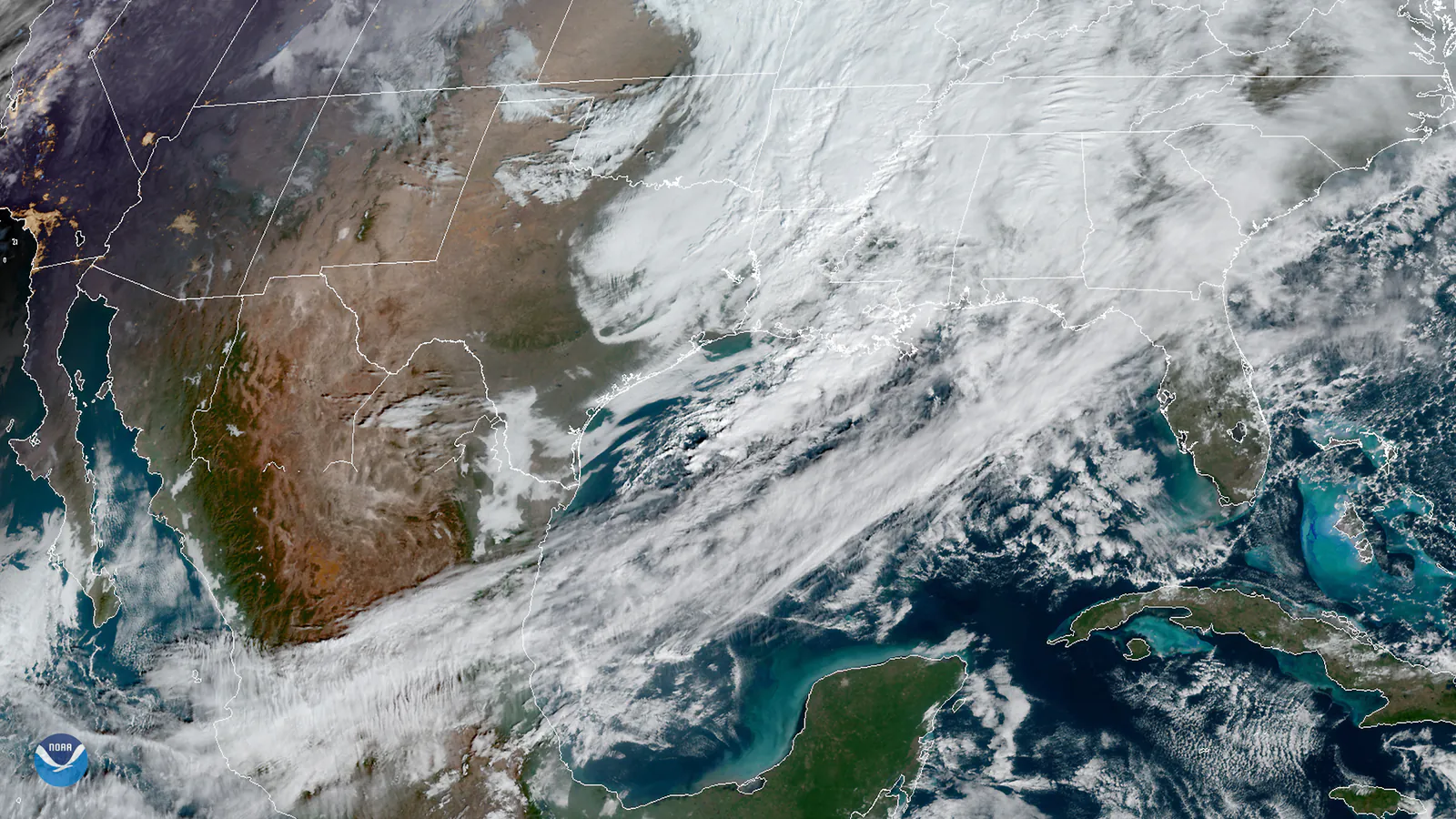
NOAA's Climate Prediction Center puts Florida's odds of a wetter-than-normal winter above 70%, the highest odds on its December-to-February map. The reason is El Niño, which the center expects to stay strong to very strong through March.
For a roof, an El Niño winter on the Florida peninsula means a cold front nearly every week and more severe weather before the dry months return.
The National Weather Service office for Tampa Bay says it "could be an active winter into early spring." The forecasts and insurance rules below are as of Nov. 22, 2026.
What will El Niño do to Florida's winter?
The Climate Prediction Center kept its El Niño Advisory in place on Nov. 12, 2026. It gives a strong-to-very strong El Niño better than a 79% chance of lasting through January-March 2027, and about a 60% chance of reaching historic strength this fall and early winter.
Its winter outlook, issued Nov. 19, puts the odds of above-normal rain above 70% across Florida. Near-normal temperatures are favored for parts of the Southeast.
The Tampa Bay office says a stronger, more southerly jet stream in El Niño winters spreads rain more widely across the peninsula.
Since the winter of 1969-70, very strong El Niño winters have produced more than double the severe weather events in its forecast area compared with every other phase of the cycle. Those events include tornadoes, severe wind and hail.
These are odds, not a promise. The center says El Niño makes its usual effects more likely, "though not guaranteed." Its next update is due Dec. 10, 2026.
What did the last strong El Niño winters do to Florida?
They brought tornadoes.
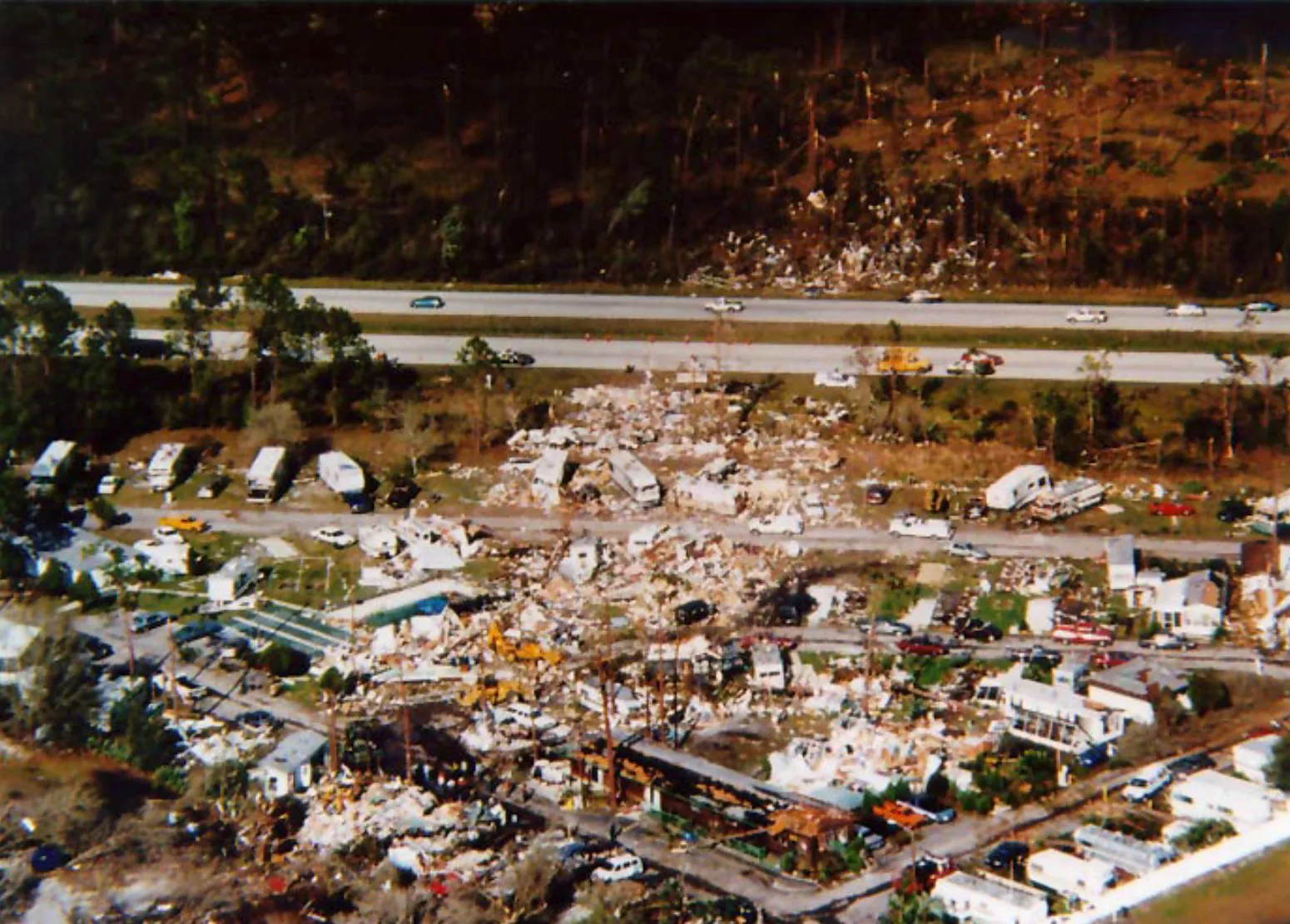
The weather service office in Melbourne says that since 1980, Florida's most significant tornadoes came in its two extreme El Niño winters, 1982-83 and 1997-98. Those were the two most active tornado seasons in state history, the office says.
The worst night came on Feb. 22-23, 1998. Seven tornadoes in east-central Florida killed 42 people and injured more than 260, according to the weather service's assessment of the deadliest outbreak in state history. More than 3,000 structures were damaged and more than 700 were destroyed.
The Melbourne office also counted 17 storms on its storminess index in the 1997-98 dry season, against 5 in the La Niña dry season of 1999-2000.
Florida's flood emergency already covers 21 counties
Heavy rain has already flooded parts of the state this fall.
Gov. Ron DeSantis widened a flood emergency on Nov. 18 to 21 counties, from Duval to Monroe, in an order that does not mention El Niño. It says more than 10 inches of rain fell within 12 hours in parts of Broward County on Nov. 17.
Alejandra Garcia, a meteorologist with the National Weather Service in Miami, told The Associated Press that El Niño is "helping bring these low pressure systems down toward the southeastern United States."
Six roof checks to do before January
Do these from the yard and from inside the house. The National Roofing Contractors Association does not encourage homeowners to go up on the roof.
The list follows guidance from the Insurance Institute for Business & Home Safety (IBHS) and the U.S. Department of Energy.
- Check the roof covering. IBHS lists curling, loose, missing or torn shingles; on tile, cracked or loose tiles; on metal, loose screws and worn washers.
- Look at the flashing where the roof meets a wall and around pipes and skylights. Loose or wavy flashing is a warning sign, as are stains running down a wall below a roof line.
- Clear the gutters and downspouts, check that straps hold the gutters to the house, and make sure downspouts carry water 3 to 4 feet from the foundation.
- On a flat porch roof or carport, clear the drains and scuppers. FEMA lists that step before a hurricane.
- Keep tree limbs trimmed back. IBHS says to hire an arborist for branches that hang over the roof and for dead or dying trees.
- Look at ceilings and in the attic for water stains or damp wood. Water in attics can lead to mold and rot, the Department of Energy says.
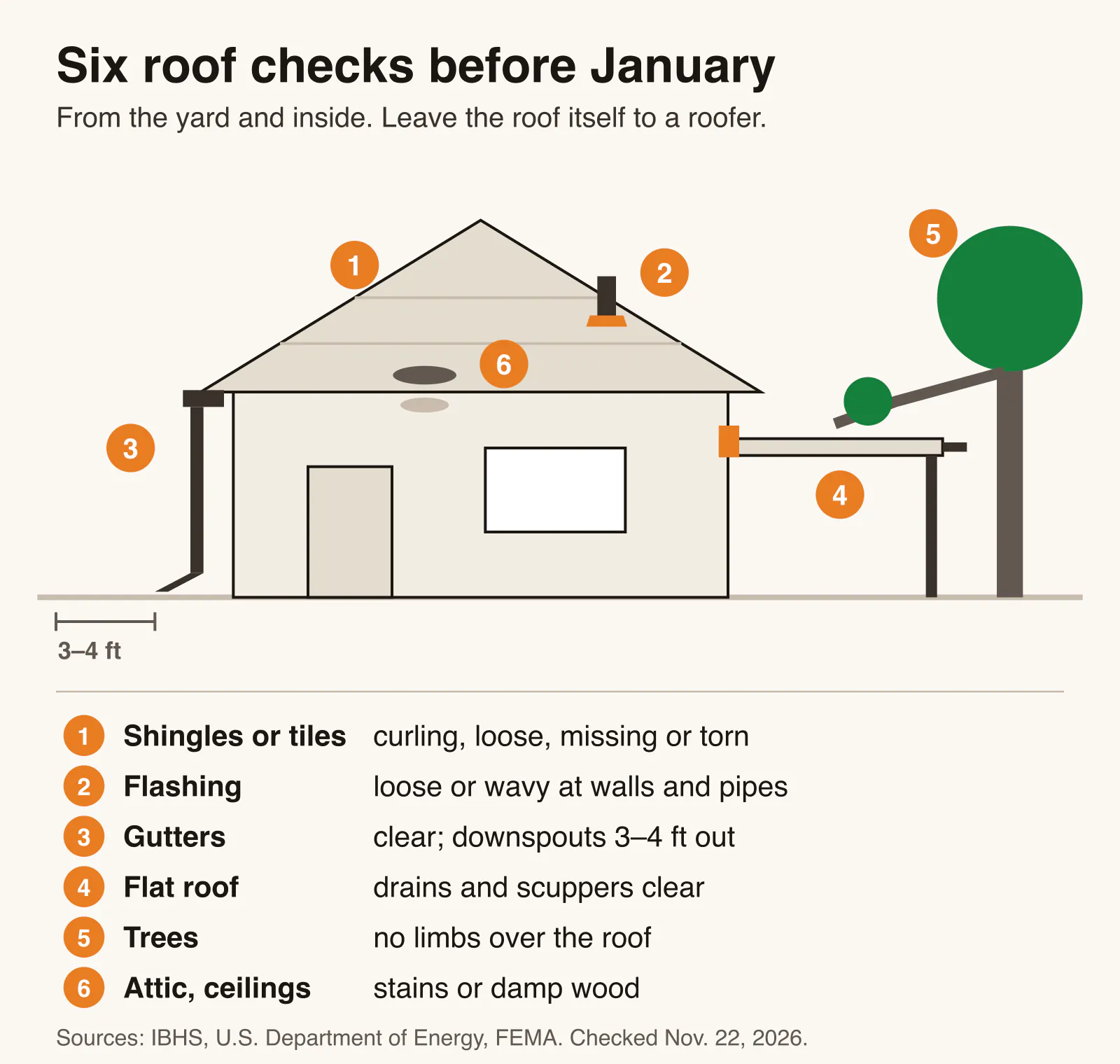
Anything you find should go to a roofer before the fronts line up. IBHS warns that aging asphalt shingles can fail at wind speeds far below hurricane force. Start with a Tampa roof repair assessment, or see our Fort Myers and Pensacola roof repair pages.
Solar panels on the roof? Add these checks
Leave the array alone.
Underwriters Laboratories found that parts of a solar system stay energized as long as light hits it, and that no single switch shuts a whole array down.
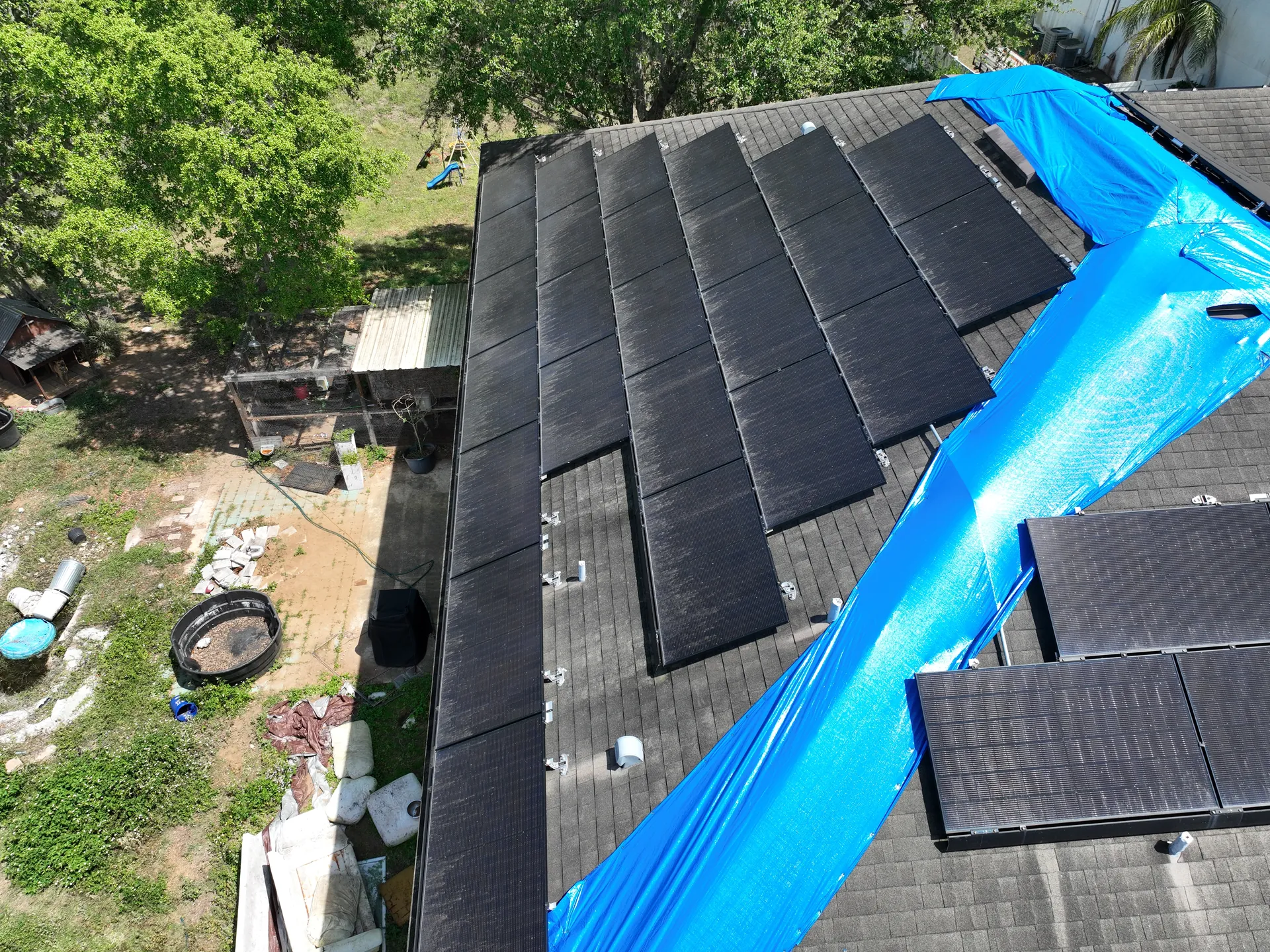
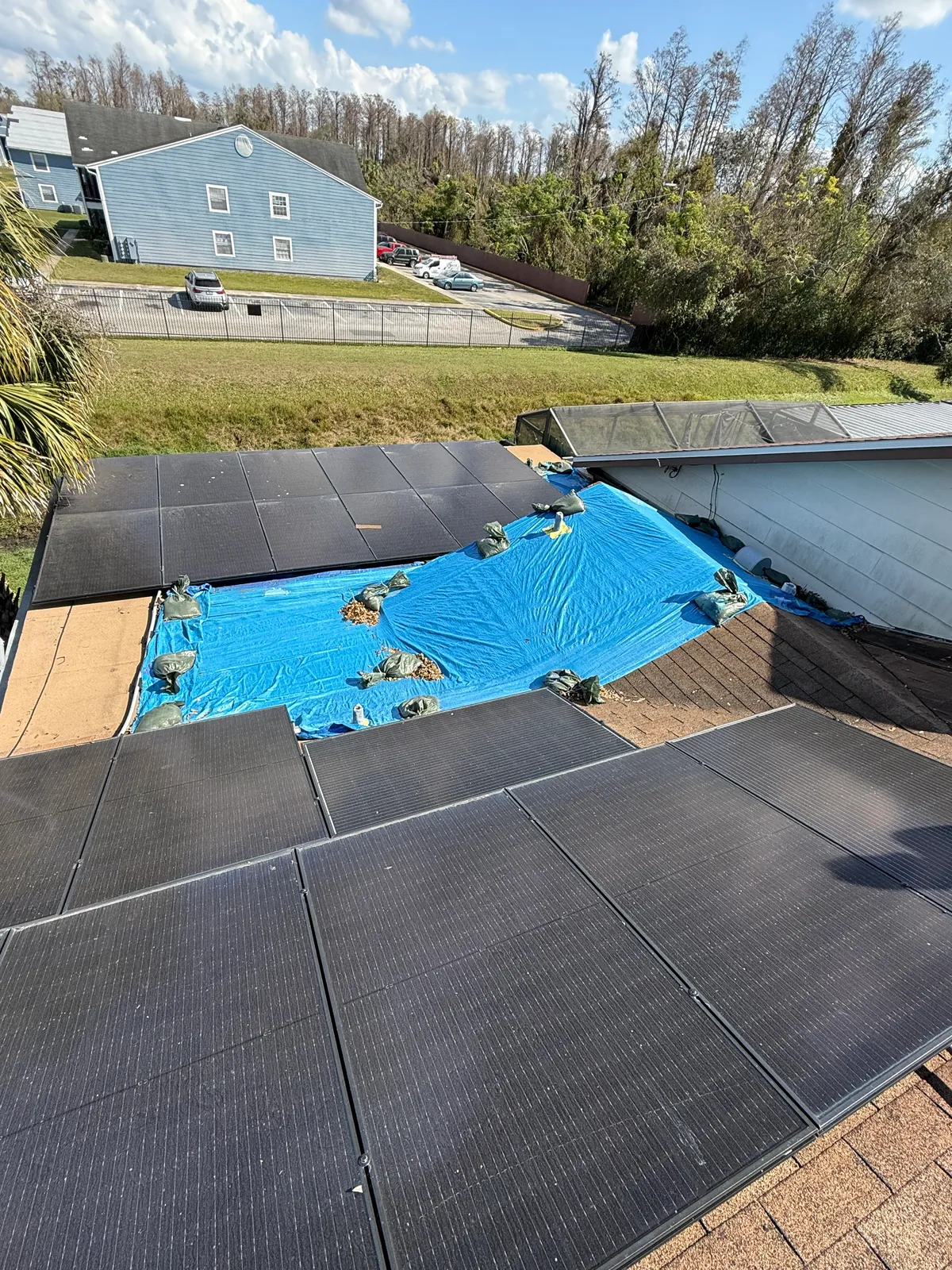
FEMA's hurricane guidance for rooftop solar asks owners to have a contractor check the array's bolted connections every year with a torque wrench. It also calls for conduits and pull boxes that keep out wind-driven rain, and for a professional roofing contractor to flash the roof penetrations. After a severe wind storm, it says to check the array for loose panels and the roof covering for debris damage.
If a leak sits under the panels, the panels and hardware over the work area generally come off for the repair and go back on afterward. Our solar panel removal and reinstall service handles that part.
UnionGrid holds Certified Electrical Contractor license EC13015579 for the solar and electrical scope. The project documents must name the appropriately licensed roofing party for the roof itself.
Does homeowners insurance cover El Niño flooding?
Usually not. "Most homeowners insurance does not cover flood damage," FEMA says.
A National Flood Insurance Program policy typically has a 30-day waiting period before it takes effect, with exceptions such as coverage a lender requires.
So a flood policy bought this week would typically start in late December. Ask your agent now what your current policy covers.
Book the roof check now
Walk the yard with the six checks and photograph anything that looks off. Then request a roof assessment with your roof's age and your photos, and say whether panels are on the roof.
NOAA's next El Niño update is due Dec. 10.
Sources checked
Sources reviewed Nov. 22, 2026.
- NOAA Climate Prediction Center: ENSO Diagnostic Discussion (Nov. 12, 2026)
- NOAA Climate Prediction Center: Prognostic Discussion for Long-Lead Seasonal Outlooks (Nov. 19, 2026)
- National Weather Service Tampa Bay Area: Winter Outlook 2026-27 and ENSO's Effect on Our Weather
- National Weather Service Melbourne: ENSO and Florida Dry Season Tornadoes
- National Weather Service Melbourne: ENSO and Florida Dry Season "Storminess"
- NOAA National Weather Service: Service Assessment, Central Florida Tornado Outbreak, Feb. 22-23, 1998 (June 1998)
- State of Florida: Executive Order 26-232, 2026 Fall Flooding (Nov. 18, 2026)
- The Associated Press via WLRN: Rainfall supercharged by El Niño floods roads (Nov. 19, 2026)
- IBHS: Thunderstorm Ready Home
- IBHS: Ahead of Hurricane Season, IBHS Urges Homeowners to Prepare Now (April 28, 2026)
- U.S. Department of Energy, Building America Solution Center: Pre-Retrofit Assessment of Attics, Ceilings, and Roofs
- U.S. Department of Energy, Building America Solution Center: Look for Missing Roof and Wall Flashing
- ISHN: A guide to checking your roof, from the National Roofing Contractors Association (July 17, 2014)
- FEMA: Rooftop Solar Panel Attachment, Recovery Advisory 5 (April 2018)
- UL: Firefighter Safety and Emergency Response for Solar Power Systems, executive summary (2011)
- FEMA: Flood Insurance (updated Oct. 20, 2026)