The short answer
- The average Florida home used 1,103 kWh a month in 2025, about 36 kWh a day, according to EIA.
- That is 26% above the U.S. average of 874 kWh, and the gap opens up in the warm months.
- Compare your bill with the same month: Florida averaged 1,451 kWh in August 2025 and 855 kWh in November.
- A solar estimate starts from 12 months of kWh; a battery estimate starts from the circuits you need in an outage.
In this guide
The average Florida home used 1,103 kWh of electricity a month in 2025, according to final figures the U.S. Energy Information Administration released Oct. 7, 2026. That is about 26% more than the U.S. average of 874 kWh. Only five states averaged more per customer: Louisiana, Mississippi, Tennessee, Alabama and Texas.
How much electricity a house uses also depends on the month. Before you decide yours is an energy hog, check which month your bill covers. The same EIA data put the average Florida customer at 1,451 kWh in August 2025 and 855 kWh in November. A summer bill held up against the yearly average will look high even when it is normal for the season.
How much electricity does a house use in Florida?
Spread over a year, 1,103 kWh a month comes to about 13,240 kWh, or roughly 36 kWh a day. The national average works out to about 10,490 kWh a year and 29 kWh a day.
Florida's figure has barely moved since EIA's 2024 table, which showed 1,104 kWh a month for Florida and 863 kWh for the U.S.
The average counts every residential account, so apartments and condos sit in the same pool as houses. EIA says single-family detached homes in the South use the most electricity. A detached house with central air will often land above 1,103 kWh. Homes with rooftop solar can look lower than they are, because the bill shows only the power bought from the utility, a gap EIA points out in its own FAQ.
Why Florida bills climb in summer
Air conditioning drives the summer climb. In EIA's 2020 Residential Energy Consumption Survey, 96% of Florida homes used air-conditioning equipment and 90% had central air. Cooling made up 28% of all the energy Florida homes used, compared with 9% for U.S. households overall.
The 2025 monthly numbers show the effect. In January the average Florida customer used 1,057 kWh, almost exactly the U.S. figure of 1,058. By August, Florida was at 1,451 kWh, about 47 kWh a day, while the national average was 1,072.
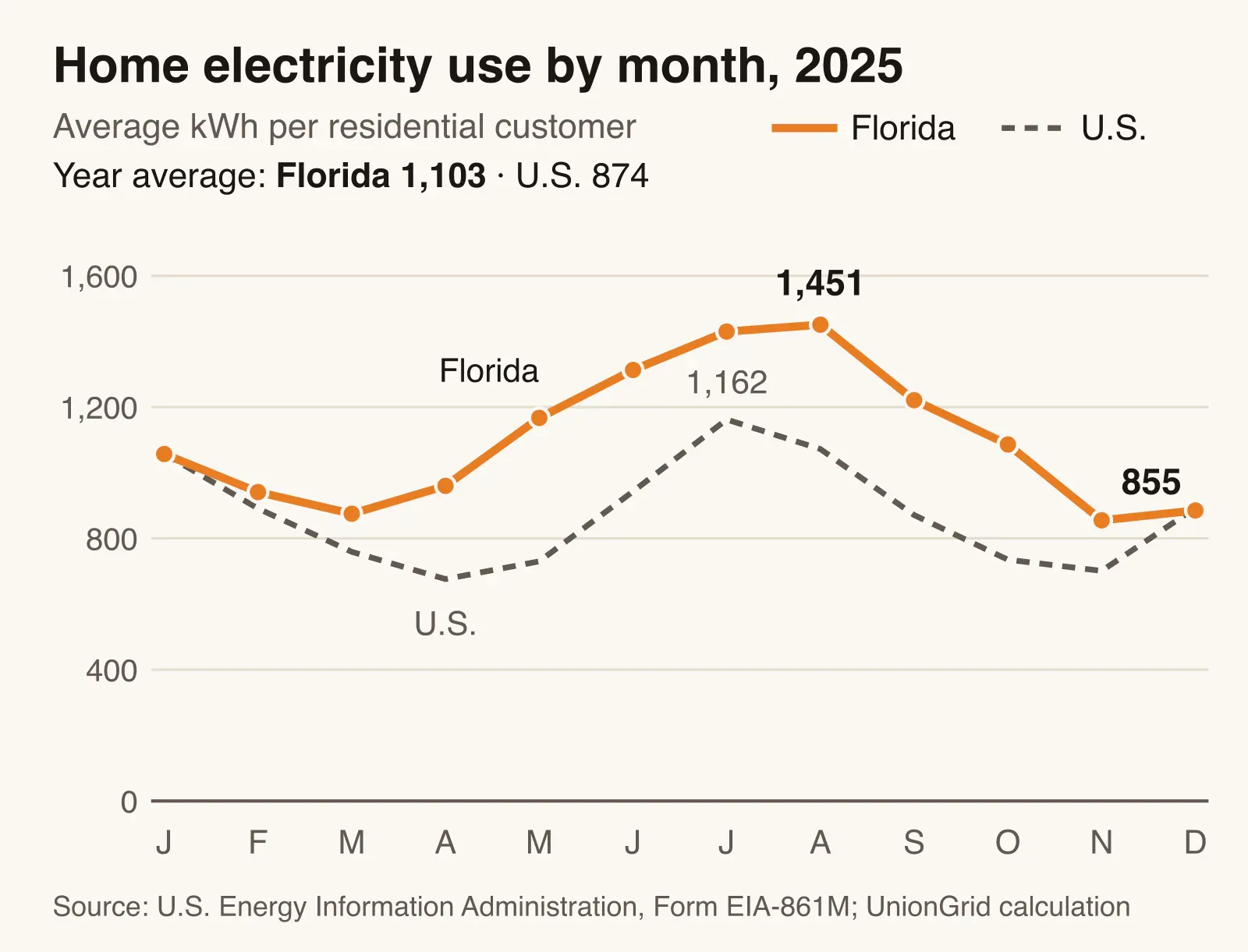
Florida stayed above 1,300 kWh from June through August. Duke Energy Florida made the same point in a March 20, 2026, release, saying air conditioning accounts for a large portion of residential electricity use in the state.
Is your house an energy hog? Compare the same month
Hold your bill against the Florida average for the same month, not the yearly number. These are the 2025 averages for one month in each season, calculated from EIA's monthly sales and customer counts.
Scroll to compare all columns
| Month (2025) | Florida average | Per day |
|---|---|---|
| January | 1,057 kWh | 34 kWh |
| April | 960 kWh | 32 kWh |
| August | 1,451 kWh | 47 kWh |
| November | 855 kWh | 29 kWh |
A home can run above those figures for ordinary reasons, and it helps to rule them out first:
- It is a detached single-family house, the type EIA says uses the most electricity in the South.
- It has electric heat as well as AC. EIA says Southern homes are more likely to heat with electricity.
- The billing period ran long. FPL and Tampa Electric both say the number of days shifts with weekends, holidays and the meter-read date.
- The reading was estimated. Tampa Electric prints "estimated" in the current reading area when it could not read the meter, and bases the bill on past use.
Where to find your kWh on an FPL, Duke or TECO bill
FPL's bill guide points to three places. The Energy usage history chart shows your monthly kWh for the last 13 months. The Meter summary subtracts the previous reading from the current one to get the kWh used. The Energy usage comparison sets this month against last month and the same month a year ago, with kWh per day. FPL says customers with smart meters can also see monthly, daily and hourly use online.
Duke Energy Florida emails a Usage Alert around the middle of each billing cycle. It shows the electricity used so far, what it costs and a projected bill if you keep the same pace. Customers with a smart meter and an email address on file are enrolled automatically, but Budget Billing customers don't get the alerts. You can also track use on Duke Energy's website or mobile app.
Tampa Electric's online Interactive Bill, reached through TECOaccount.com, has a daily and monthly usage graph that can show temperature, usage or cost. It also compares month over month and year over year.
On a budget billing plan, read the kWh line rather than the payment. Tampa Electric says Budget Billing averages past use into more predictable monthly payments, so the amount due can stay level while your kWh climbs. Bill sections and tools are described here as the utilities' own pages showed them as of Nov. 6, 2026.
How to calculate your kWh per day
- Find the kWh used for the billing period on your bill.
- Find the number of days in that billing period.
- Divide the kWh by the days. FPL's sample bill shows 1,000 kWh over 29 days and lists it as 34 kWh a day.
- Compare the result with the Florida average for the closest month in the table above.
- Add 12 months of kWh together for your yearly total, the figure a solar estimate starts from.
What your kWh means for solar or a battery
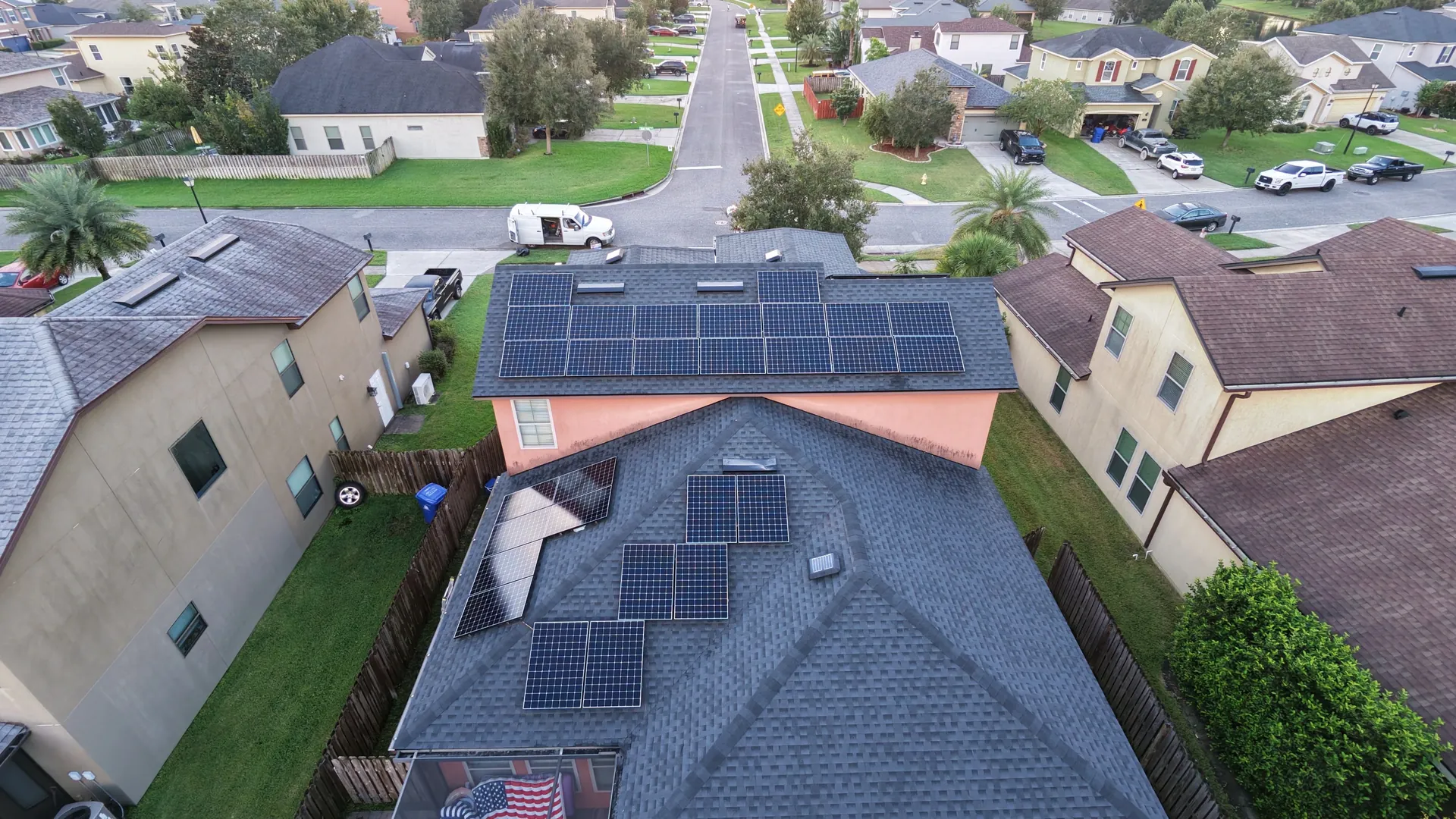
For solar, the yearly total is the starting point. The U.S. Department of Energy's homeowner guide to solar says the amount you can save depends on how much electricity you consume. The kW vs. kWh guide walks through how a year of kWh turns into a system size. UnionGrid's solar savings calculator starts from your address and a roof analysis, and you can adjust its estimate to your bill.
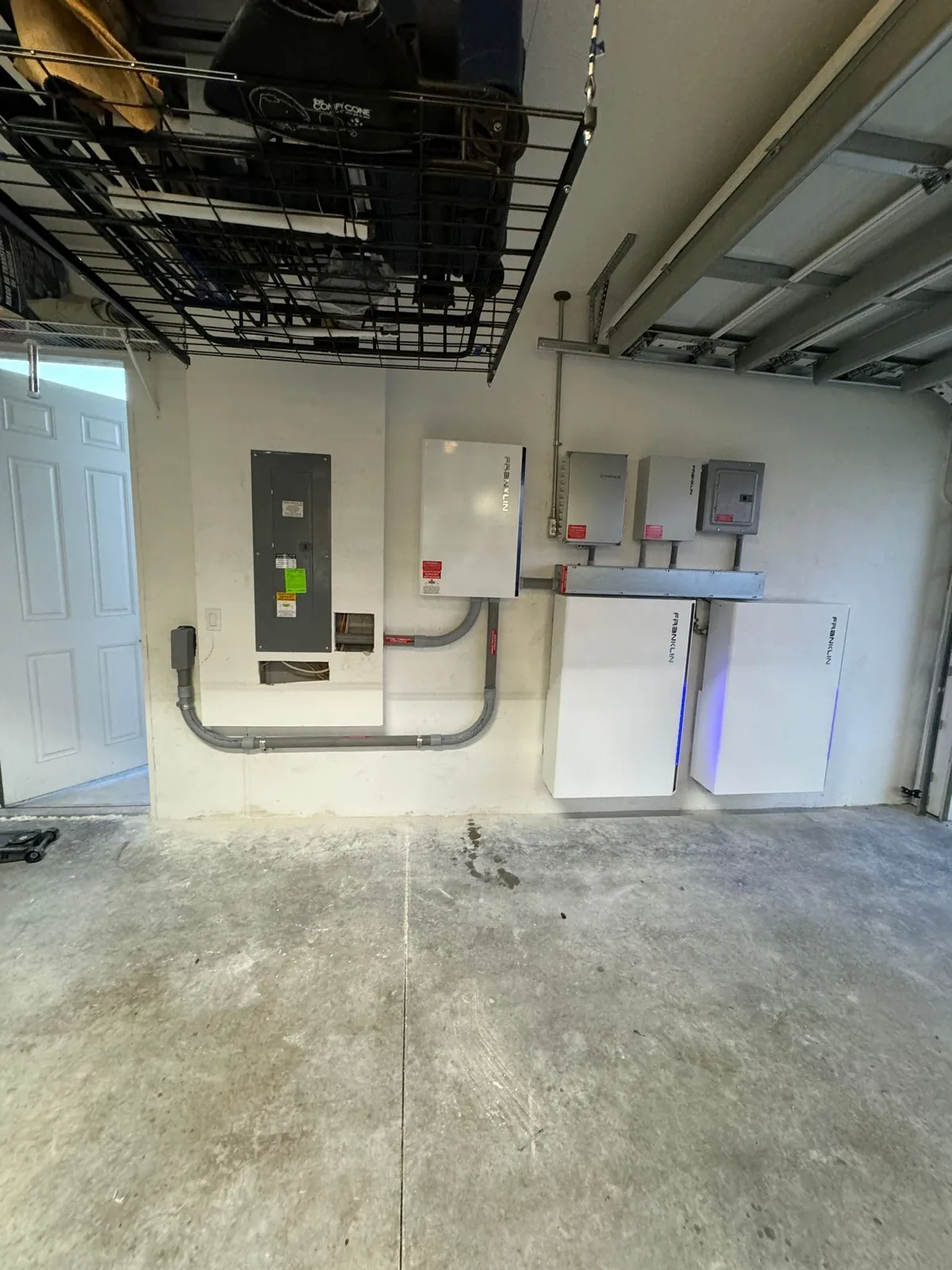
A battery estimate starts from a different list, the circuits you need during an outage and how many hours each must run. The battery backup guide shows how that list shapes the design.
Pull the last 12 months of kWh from your bill or online account and set them beside the Florida averages above. Then run the solar savings calculator, or bring those numbers when you ask UnionGrid for a solar quote.
Sources checked
- U.S. Energy Information Administration: Form EIA-861 detailed data, 2025 final data (Average Monthly Bill, Residential), released Oct. 7, 2026
- U.S. Energy Information Administration: 2024 Average Monthly Bill, Residential (Table 5A)
- U.S. Energy Information Administration: Form EIA-861M monthly sales and customers
- U.S. Energy Information Administration: Air conditioning in U.S. homes by state, 2020 RECS
- U.S. Energy Information Administration: 2020 RECS end-use release, June 15, 2023
- U.S. Energy Information Administration: Electricity use in homes
- U.S. Energy Information Administration: How much electricity does an American home use?
- U.S. Department of Energy: Homeowner's Guide to Solar
- FPL: How to read your bill
- FPL: Smart meter FAQ
- Duke Energy Florida: Usage Alerts release, March 20, 2026
- Tampa Electric: Understanding Your Bill
Sources reviewed Nov. 6, 2026. Monthly averages are UnionGrid's calculation from EIA's published monthly sales and customer counts.