The short answer
- Turn off power to wet circuits only if you can reach the breaker without standing in water, and keep everyone out from under a sagging ceiling.
- Photograph the damage, then dry wet areas within 24 to 48 hours, the window the EPA gives for preventing mold.
- Report the loss the same day. As of Nov. 6, 2026, Florida bars a property claim noticed more than 1 year after the date of loss.
- If solar panels are on the roof, touch nothing. Parts of an array stay energized whenever light hits it.
In this guide
If your roof is leaking, the clock that matters most is the one inside the house. The EPA says water-damaged areas and items should be dried within 24 to 48 hours to prevent mold, and that in most cases mold won't grow if wet materials dry in that window.
What to do with that time comes down to order. Make the room safe and catch the water, photograph the damage, start drying, then call your insurer and get a written assessment from a roofer licensed in Florida.
Scroll to compare all columns
| When | Do this | Skip this |
|---|---|---|
| Right away | Turn off power to wet circuits if you can reach the breaker without standing in water | Touching wet switches or fixtures |
| First hour | Catch the drips and photograph the damage | Throwing out damaged items before they are on camera |
| First 48 hours | Dry wet areas and report the loss to your insurer | Climbing a wet roof to tarp it |
| First week | Get a written roof assessment and compare estimates | Signing with a contractor who knocked on your door |
Cut the power and stay out from under a sagging ceiling
Water coming through a light fixture or near outlets is an electrical problem first. Ready.gov says to turn off the electricity to prevent shock if it is safe to do so, and never to touch electrical equipment that is wet or while you are standing in water.
If the breaker panel sits in a wet spot, leave it alone and call your utility or an electrician.
The American Red Cross says a sagging ceiling means it got wet, which makes it heavy and dangerous, and that striking the center of the bulge can bring the whole ceiling down. Keep people and pets out of that room.
Ready.gov adds that people with asthma, other lung conditions or a weakened immune system should stay out of buildings with indoor leaks or mold.
Catch the water, then document before you clean
Put buckets and towels under the drips and move electronics clear, then record the damage before anything is thrown out.
Florida's Department of Financial Services (DFS) tells you to document damage with photos, video or notes. Log each call, each person you talk to and each expense, and keep the receipts.
What to do in the first 48 hours after a roof starts leaking
Run fans and a dehumidifier and pull up wet rugs to beat the EPA's 24-to-48-hour window.
Some materials will not come back. The EPA says porous materials such as ceiling tiles and carpet may have to be thrown away if they become moldy. A homeowner can usually clean a moldy patch smaller than about 10 square feet, while larger growth calls for the EPA's more detailed cleanup guidance.
DFS also lists mold limits among the policy sublimits that can cap a claim payment.
Should you tarp the roof yourself?
DFS counts covering a roof opening as an emergency repair to prevent further damage, and says to hire a professional when necessary and keep receipts.
Do not climb a wet roof. OSHA says falls are the leading cause of death in construction, with 389 fatal falls to a lower level among 1,034 construction deaths in 2024.
Report the leak to your insurer the same day
Call your agent or insurance company directly. As of Nov. 6, 2026, Florida law gives you 1 year after the date of loss to notify your insurer of a property claim, or 18 months for a supplemental claim. After that, the claim is barred under section 627.70132 of the Florida Statutes.
Once you report, DFS says the insurer has 7 days to acknowledge the claim and 60 days to pay any undisputed portion, and you can ask for the adjuster's detailed estimate. You have to cooperate with the investigation or the claim can be denied.
Whether a policy pays depends on the leak's cause and the policy's terms. The DFS helpline, 1-877-693-5236, takes insurance questions from 8 a.m. to 5 p.m. Eastern on weekdays.
Get the roof assessed in writing
Ask for a written assessment that names the cause of the leak and the affected area. It should separate temporary work from permanent repair and say whether it recommends repair or replacement.
DFS says a contractor must give you a good-faith estimate that itemizes services and materials. Check the roofer's license on MyFloridaLicense.com, the state's license lookup, and get at least three estimates.
UnionGrid's license, EC13015579, is an electrical license, not a roofing license, so project documents must name the appropriately licensed roofing party. Start with our Tampa roof repair or Pensacola roof repair page.
Who is knocking? Florida's rules for roof sales pitches
As of Nov. 6, 2026, section 489.147 of the Florida Statutes bars contractors from offering a gift, cash or a deductible waiver in exchange for inspecting your roof or making a roof claim.
DFS adds that a contractor cannot interpret your policy unless they are also a licensed public adjuster. Signing over your claim benefits to a contractor, called an assignment of benefits, has been banned for homes since Jan. 1, 2023. A contractor who asks you to keep your insurer away until the work is done is showing what DFS calls a red flag.
If your home is in the area of a Governor's emergency declaration and you signed a roof contract within 180 days of that event, you can cancel without penalty. You have 10 days from signing or until the official start date, whichever comes first. That start date can be the day a permit is issued or a temporary roof repair is made. Send the notice by certified mail, return receipt requested, to the address in the contract.
After a storm, our Pensacola storm damage checklist also covers fences and permits.
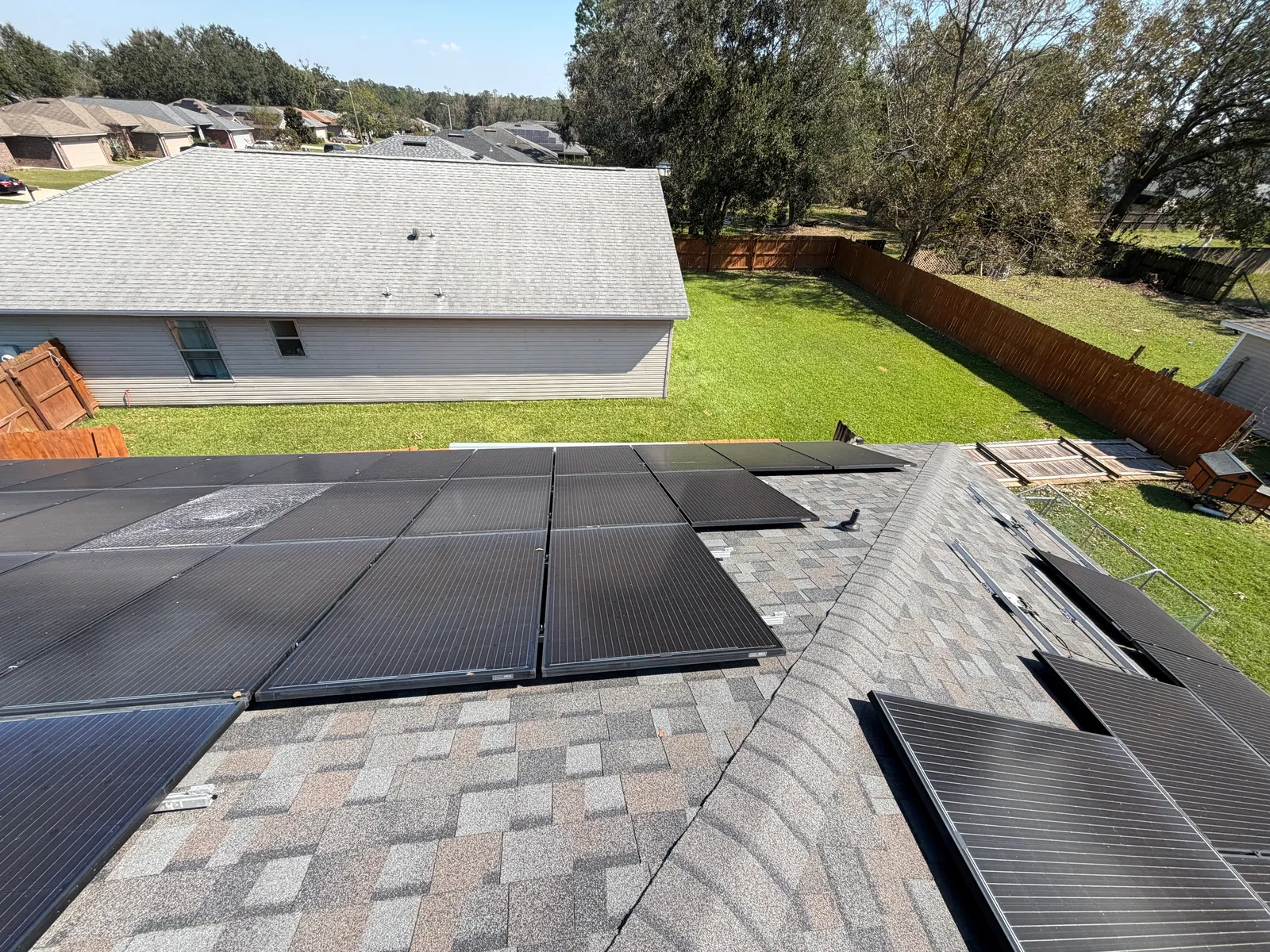
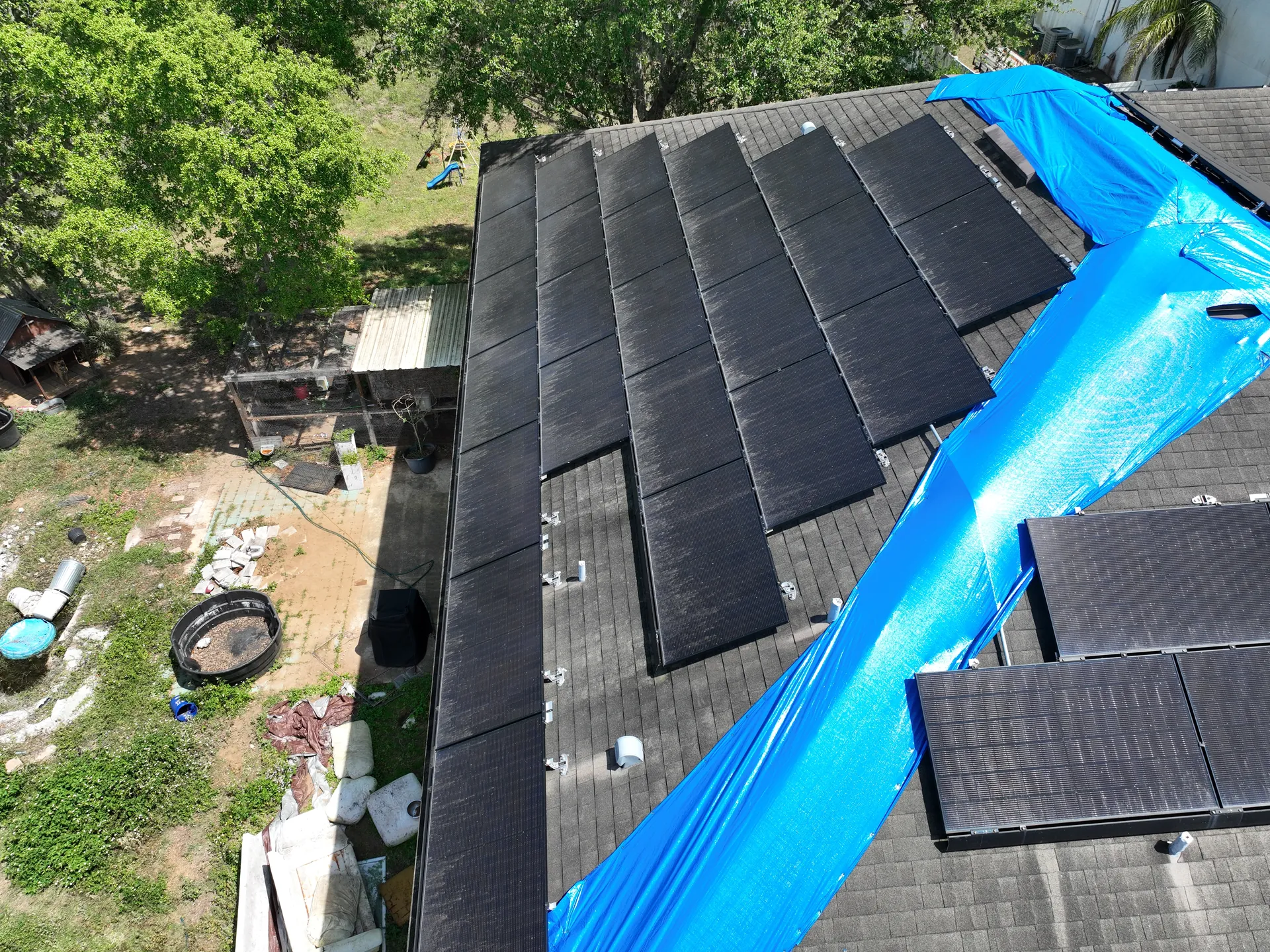
If solar panels are on the roof
Do not touch the array or its wiring. In a study for the fire service, UL found that parts of a solar array stay energized as long as light hits it, and that no single switch shuts a whole array down.
UL also found a wet tarp can become energized if it touches live equipment, and that a damaged array can put current into racks, flashing and gutters.
Tell your insurer and the roofer that panels are on the roof. If the leak sits under the array, the panels come off for the roof work and go back on after, which our solar panel removal and reinstall service handles. Our guide to replacing a roof with existing solar panels explains who does what.
Once the room is safe and drying, request a roof assessment and tell us where the water shows up and whether panels are on the roof.
Sources checked
Checked Nov. 6, 2026.
- EPA: Mold, moisture and your home
- Ready.gov: Floods
- Florida Statutes, s. 627.70132
- Florida Statutes, s. 489.147
- Florida DFS: Post-disaster claims (PDF)
- Florida DFS: Contractor FAQs
- Florida DFS: Disaster resources
- OSHA: Fall prevention
- Red Cross: Checking your home's structure
- UL: Solar PV hazard study (PDF)