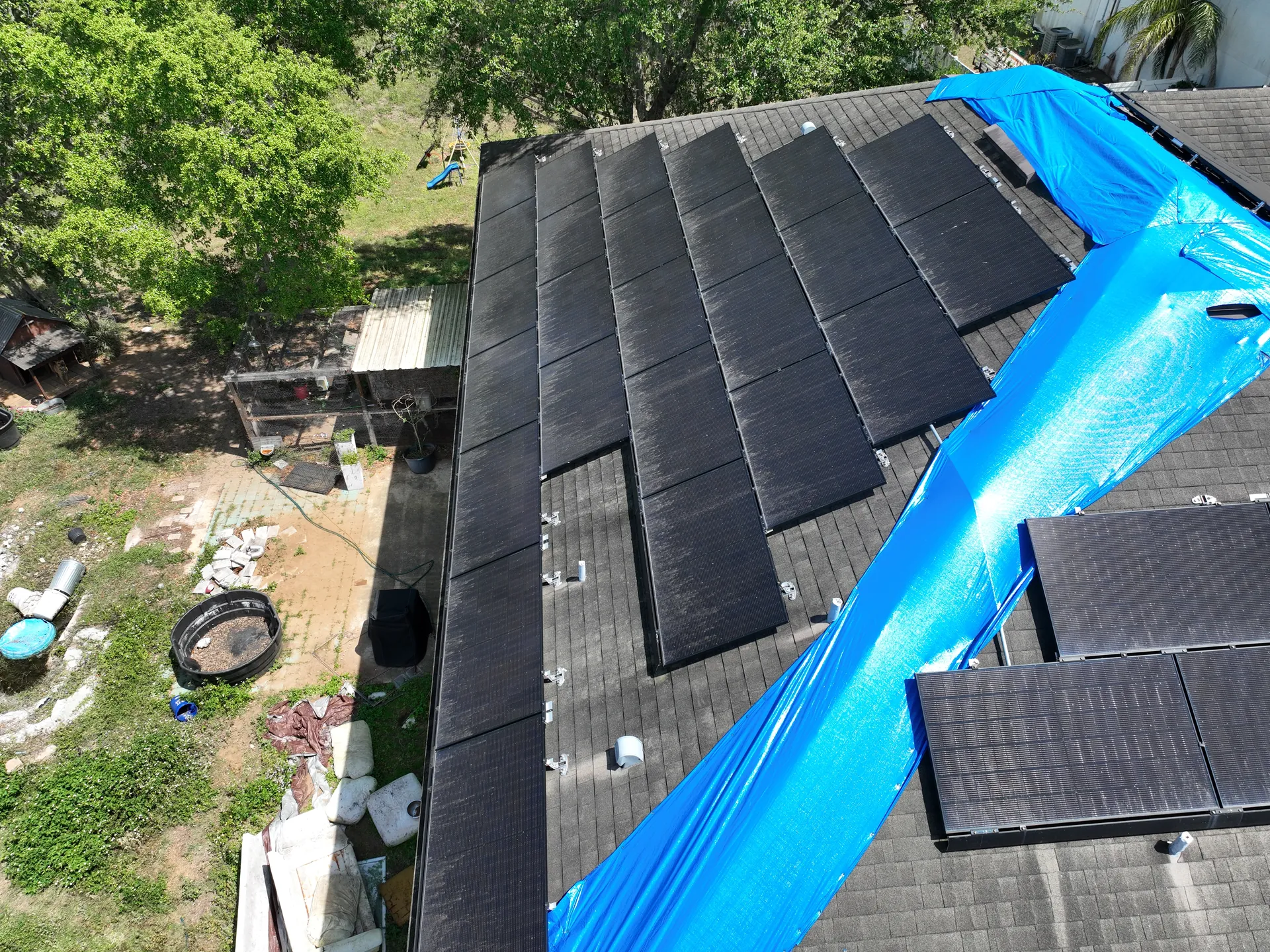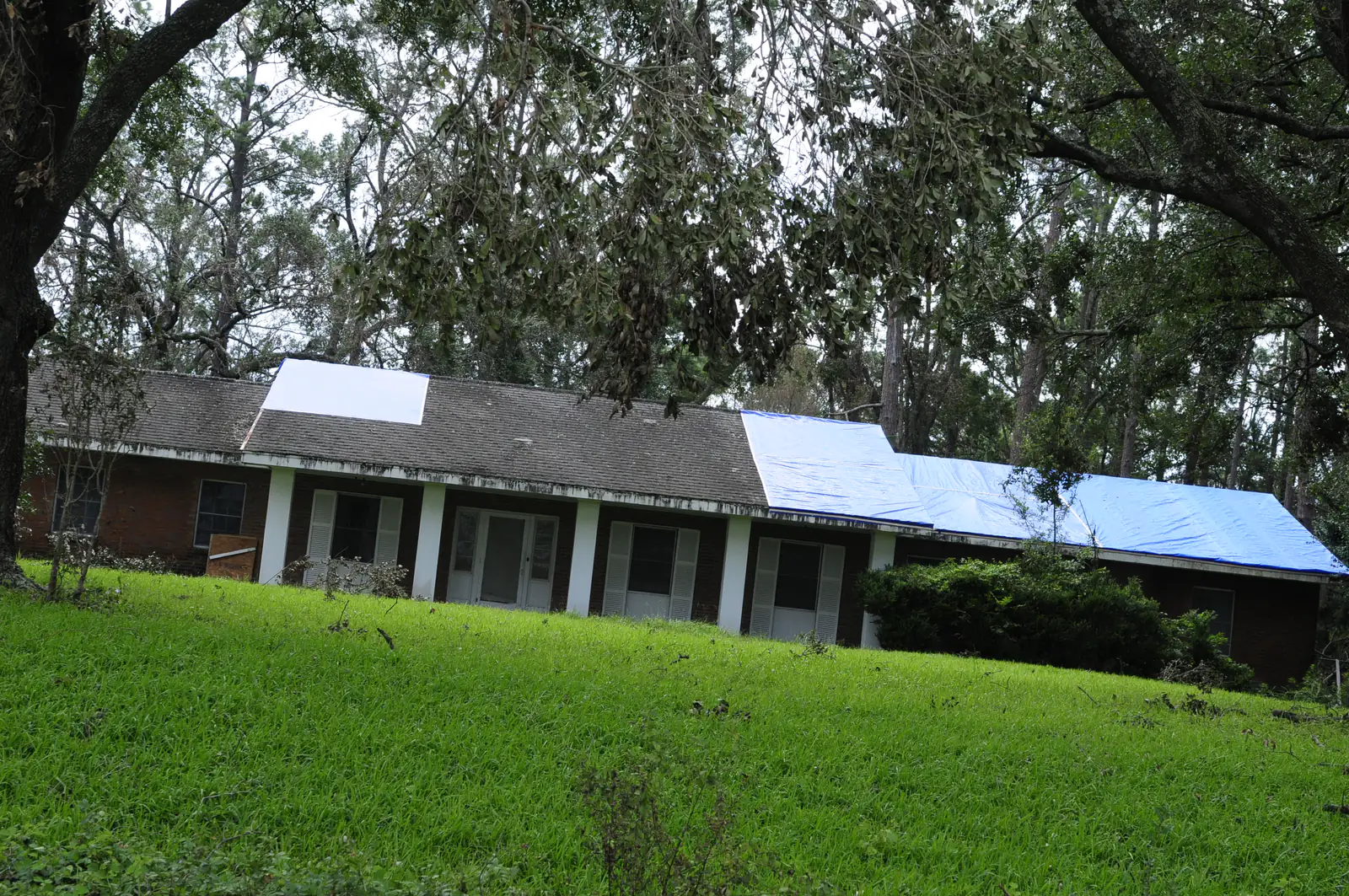
The short answer
- A temporary roof cover comes from a roofer, FEMA's Operation Blue Roof or your own tarp. None of them is a repair.
- Blue Roof is free but runs only when activated, and it skips flat roofs and clay, slate or asbestos tile.
- Florida's Department of Financial Services says to photograph the roof before and after the cover goes on and keep receipts.
- After a declared emergency, a temporary repair can end the 10-day window to cancel a roof contract.
In this guide
A storm-damaged roof in Florida gets a temporary roof cover one of three ways: a roofer installs it, the federal Operation Blue Roof program installs it at no charge, or you put up a tarp yourself. Which one fits depends on how bad the damage is, what the roof is made of and whether the program is running in your county.
All three buy time. None is a repair. FEMA says the plastic sheeting its crews install is designed to last 30 days.
Three ways to get a temporary roof cover
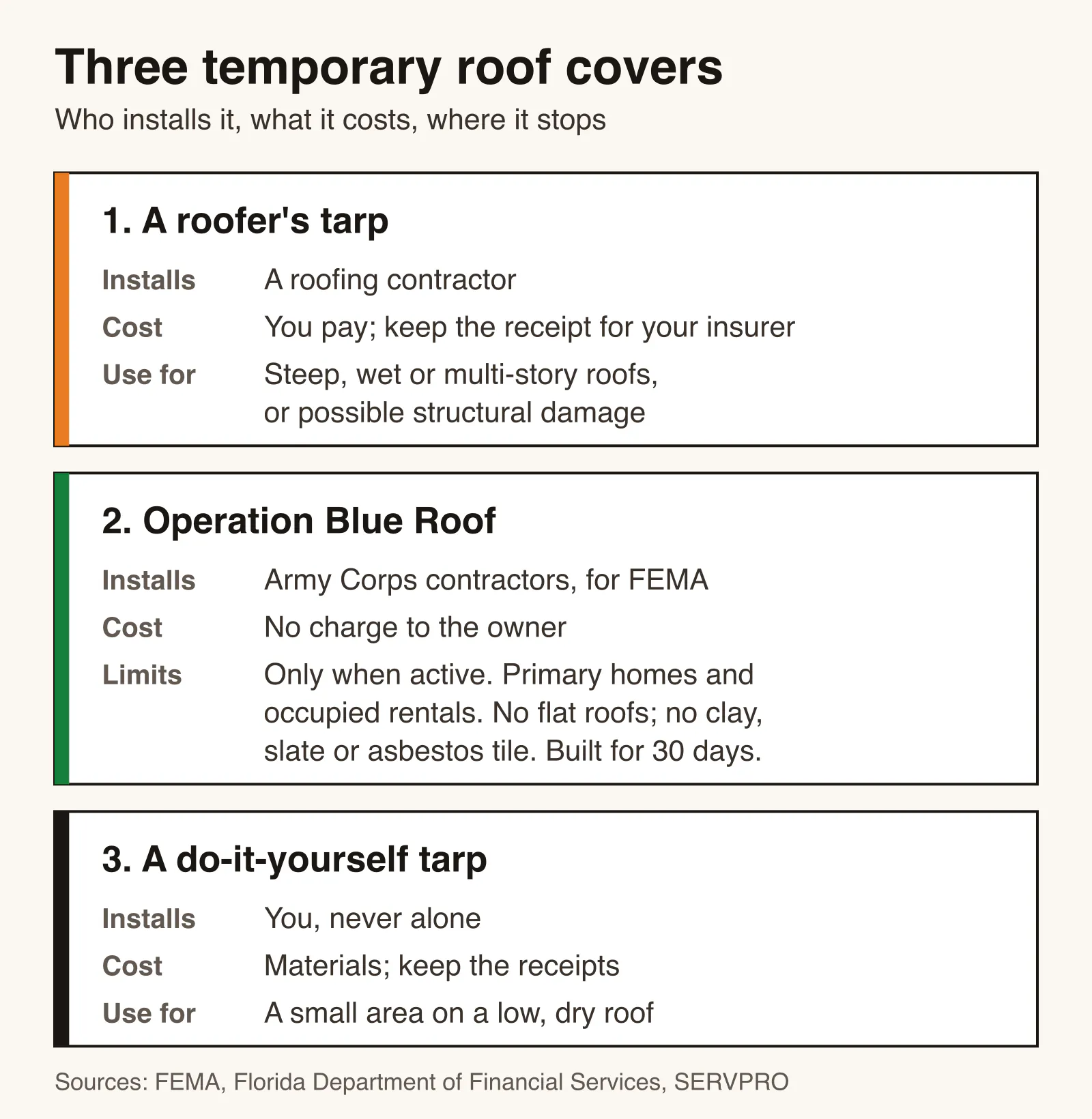
Call a roofer when the roof is steep, wet or more than one story, or when the framing may be damaged. SERVPRO, a restoration company, says emergency tarping "is usually best left to trained professionals."
Sign up for Operation Blue Roof when it is active for your storm and your roof qualifies. FEMA says there is no charge, so treat a request for payment to get on the list as a warning sign.
Tarp it yourself only for a small area on a low, dry roof you can reach safely. SERVPRO's rule is to never do roof work alone or in dangerous conditions.
How does Operation Blue Roof work in Florida?
FEMA offers the program through the U.S. Army Corps of Engineers to eligible homeowners and landlords. Contractors working for the Corps fasten reinforced blue plastic sheeting to the roof with strips of wood. "There is no charge to the homeowner or landlord," FEMA's fact sheet says.
The program is not always on. Florida's Department of Financial Services lists it among storm resources with the words "when active." When it runs, the Corps covers roofs in the hardest-hit counties first.
FEMA's rules, as of Nov. 11, 2026:
- The home is a primary residence or a permanently occupied rental. Vacation rentals are out.
- The building has less than 50 percent structural damage and will be habitable once covered.
- Flat roofs and roofs of clay, slate or asbestos tile do not qualify. That leaves out many Florida tile roofs.
- Major storm debris has to be cleared first. Crews remove only minor debris.
- The owner signs a Right of Entry form that lets Corps contractors onto the property. A tenant can sign with a letter from the landlord.
Sign-up is at Right of Entry centers in the affected area or by phone at 1-888-ROOF-BLU (1-888-766-3258). FEMA recommends arranging permanent repairs within 30 days if possible.
What does a proper roof tarp look like?
From the ground, check four things:
- It goes over the peak. Danny Lipford, founder of Today's Homeowner, says a tarp should cover the peak of the roof so water cannot seep underneath.
- It reaches past the damage. SERVPRO puts the margin at three feet or more on all sides.
- It is held by boards. Lipford uses 1×2 boards nailed every 16 inches through the tarp and into the roof decking. He runs them down the slope, because boards laid sideways can dam water.
- Someone looks at it again after every round of wind or rain, which SERVPRO advises to make sure it is still secure.
Nails put new holes in a roof. For a short stretch, SERVPRO lists sandbags as a way to hold a tarp without nails, though it warns they can shift in high winds.
What does your insurer need?
Florida's Department of Financial Services tells homeowners to make emergency repairs that protect the property from further damage, "such as placing a tarp on your roof," and adds: "Take photos before and after the repairs and keep receipts." The adjuster may explain how to submit those receipts for reimbursement.
Two Florida laws matter here, both checked Nov. 11, 2026:
- You have one year to give notice. Under section 627.70132 of the Florida Statutes, a property claim is barred unless the insurer gets notice within one year of the date of loss. For a hurricane, that is the day of landfall.
- A tarp can close your cancellation window. Section 489.147 lets a homeowner cancel a roof contract signed within 180 days of a declared state of emergency, for a home in the declared area, within 10 days or by the "official start date," whichever comes first. A temporary repair made in compliance with the Florida Building Code counts as a start date. Read what you sign before a contractor's crew puts up a tarp.
The department also says to call your insurer before signing a repair contract and to check the contractor's license at MyFloridaLicense.com. Its consumer helpline, 1-877-693-5236, is open from 8 a.m. to 5 p.m. Eastern, Monday through Friday.
After the tarp, book the repair
Book the permanent repair while the cover is still tight and the 30 days have not run out. If you are in the Panhandle, our Hurricane Isaias damage checklist for Pensacola covers the rest of the property, and our guide to what drives a roof replacement quote in Tampa helps if a patch will not be enough.
If solar panels sit over the damaged area, ask about panel removal and reinstall as part of the repair.
With photos and receipts in hand, request a roof repair assessment in Tampa or in Pensacola. Check that the paperwork names who holds the roofing license for the job.
Sources checked
- FEMA: Frequently Asked Questions About Operation Blue Roof (last updated Jan. 21, 2025)
- Florida Department of Financial Services: What to Expect After Filing a Homeowners Claim (June 2025)
- Florida Department of Financial Services: Disaster Preparedness
- Florida Statutes, s. 627.70132
- Florida Statutes, s. 489.147
- Today's Homeowner (Danny Lipford): How To Attach a Tarp to a Leaking, Storm-Damaged Roof (March 13, 2025)
- SERVPRO: How to Tarp a Roof Properly
- Florida DBPR license search
Sources reviewed Nov. 11, 2026.