The short answer
- Peak hours change the price only on an optional time-of-use plan; standard FPL, TECO and Duke home rates do not vary by hour.
- FPL's peak is weekdays noon to 9 p.m. from April through October; Duke's is 6 to 9 p.m. on weekdays all year.
- Homes that can move EV charging and timed loads tend to gain; homes running AC hard on weekday afternoons tend not to.
In this guide
The off-peak hours for electricity in Florida are nights, weekends and six major holidays on the optional time-of-use plans from FPL, Tampa Electric and Duke Energy Florida. The expensive hours fall on weekdays, mostly in the afternoon and evening, plus some winter mornings.
Those hours only matter if you sign up for one of these plans. On the standard home rates at all three utilities, a kilowatt-hour costs the same at any hour of the day. The standard price steps up with how much power you use in a month, after the first 1,000 kWh, not with the clock.
What are the off-peak hours for electricity at FPL, TECO and Duke?
Off-peak is every hour outside the weekday peak windows in this table, which comes from each utility's tariff sheets as of Nov. 6, 2026.
Scroll to compare all columns
| Plan | Peak hours (weekdays only) | Cheapest hours |
|---|---|---|
| FPL time-of-use rider (RTR-1) | April to October: noon to 9 p.m.; November to March: 6 to 10 a.m. and 6 to 10 p.m. | All other hours |
| Tampa Electric Energy Planner (RSVP-1) | May to October: 1 to 6 p.m.; November to April: 6 to 10 a.m.; plus up to 134 "critical" hours a year | 11 p.m. to 6 a.m. (11 p.m. to 5 a.m. on winter weekdays) |
| Duke Energy Florida time-of-use (RST-1) | All year: 6 to 9 p.m.; December to February: also 5 to 10 a.m. | Midnight to 6 a.m. every day (midnight to 3 a.m. December to February) |
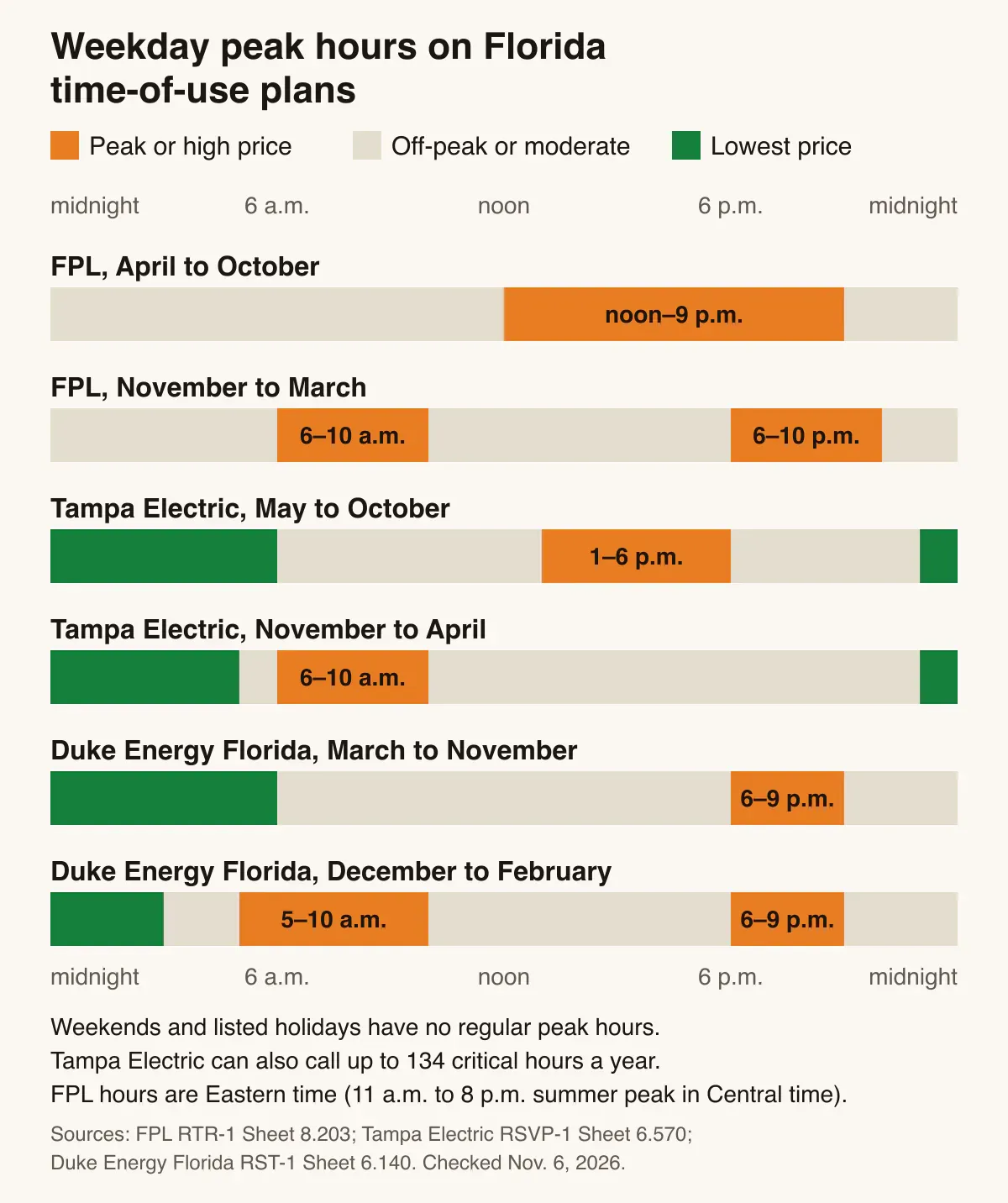
None of the three plans has regular peak hours on Saturdays or Sundays, and each tariff treats New Year's Day, Memorial Day, Independence Day, Labor Day, Thanksgiving and Christmas as off-peak days.
FPL's tariff states its hours in Eastern time, so in the Panhandle, FPL's Northwest Florida page shows the summer peak as 11 a.m. to 8 p.m. local time.
Tampa Electric's plan has four price levels. It says its low price applies 27.7% of the time, a moderate price 58.9% and the high price 13.4%. Tampa Electric calls the critical level itself, on any day, and the tariff caps it at 134 hours a year.
How big is the gap between peak and off-peak prices
All figures are per kilowatt-hour before taxes and fees.
- FPL puts its peak price at about 26 cents and its off-peak price at around 9 cents, and it says that estimate varies by location.
- Tampa Electric says its low price is 11.044 cents, against 14.235 cents on the standard rate for a home using 1,200 kWh a month. Adding up the per-kWh charges in its tariff puts the high level near 21.9 cents and the critical level near 55.8 cents.
- By the same tariff math, Duke Energy Florida's plan comes to about 17.9 cents on-peak, 14.4 cents off-peak and 10.8 cents in the overnight discount hours. Its standard rate runs about 13.6 cents for the first 1,000 kWh from March through November.
At Duke, ordinary off-peak hours cost a little more than the standard rate's first 1,000 kWh, so most of any gain has to come from the midnight-to-6 a.m. window and from staying out of 6 to 9 p.m.
Who tends to come out ahead, and who pays more
FPL says customers have to use less power during peak hours to save on its plan, and its two sample households show who does.
Homes that tend to gain:
- An electric vehicle charged overnight. FPL's sample customer who may save charges only off-peak.
- Big loads on timers. Tampa Electric installs control devices on the water heater, the pool pump and a Level 2 EV charger for Energy Planner customers.
- An empty house on weekday afternoons, with the thermostat at 78 degrees or higher during peak hours. FPL's sample saver also uses more than 1,000 kWh a month.
Homes that may pay more:
- Someone home all weekday afternoon with the AC set below 78 degrees. FPL says its sample customer in that spot would not save.
- Smaller users. FPL's sample non-saver uses less than 1,000 kWh a month.
- A household that runs most of its cooking, laundry and cooling between 6 and 9 p.m., the window Duke prices highest every weekday of the year.
Switching back is not instant. FPL requires a one-year commitment and a new meter. The utility says enrollment takes about three months. Tampa Electric lets customers cancel Energy Planner after 12 months, and the plan needs central air conditioning that works with its equipment; window units do not qualify. Duke lets first-time customers return to the standard rate at any time during the initial term.
FPL will compare your usage with its peak periods in a rate analysis, which is worth asking for before a one-year commitment.
Can a battery move solar power into peak hours?
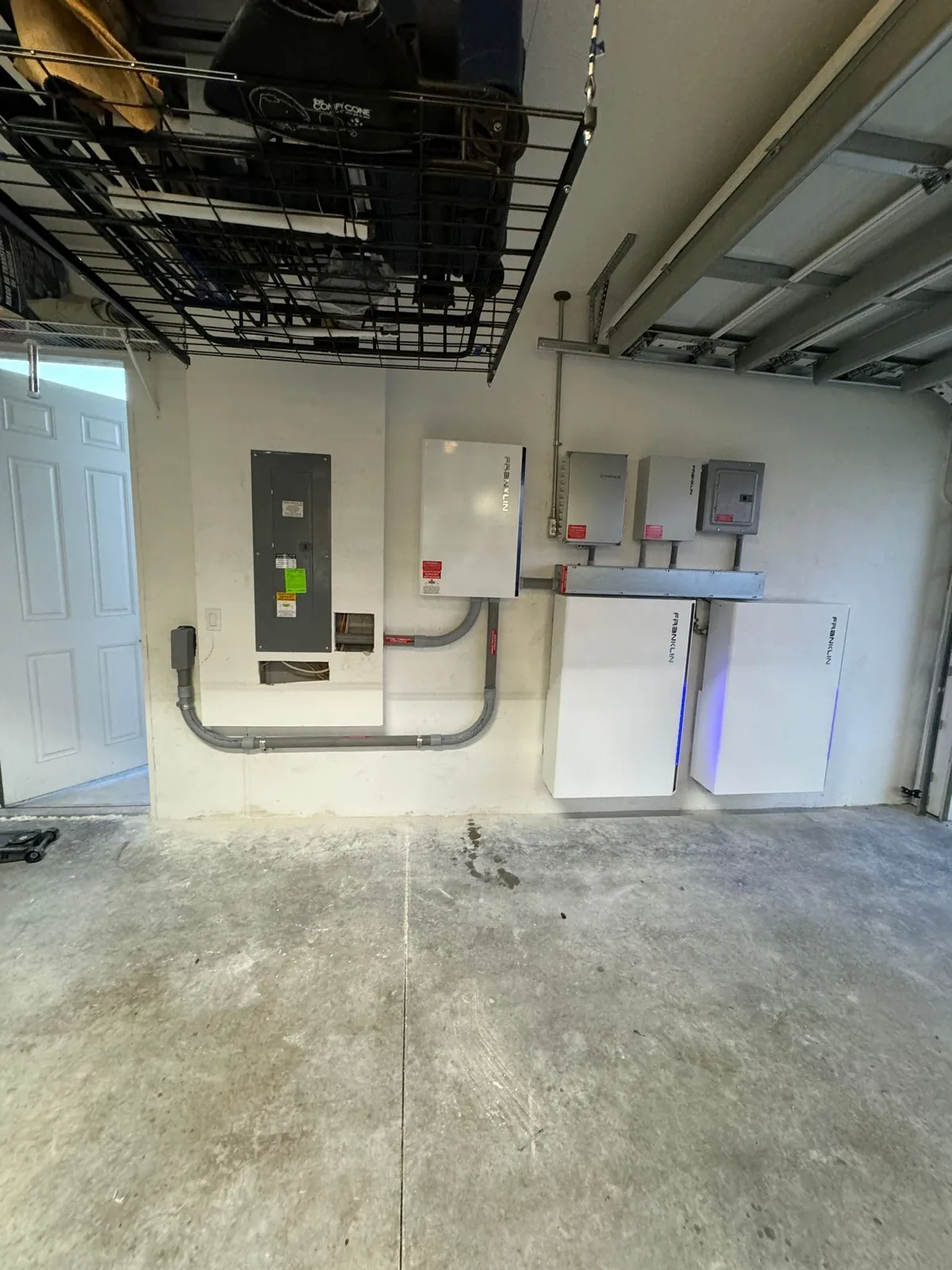
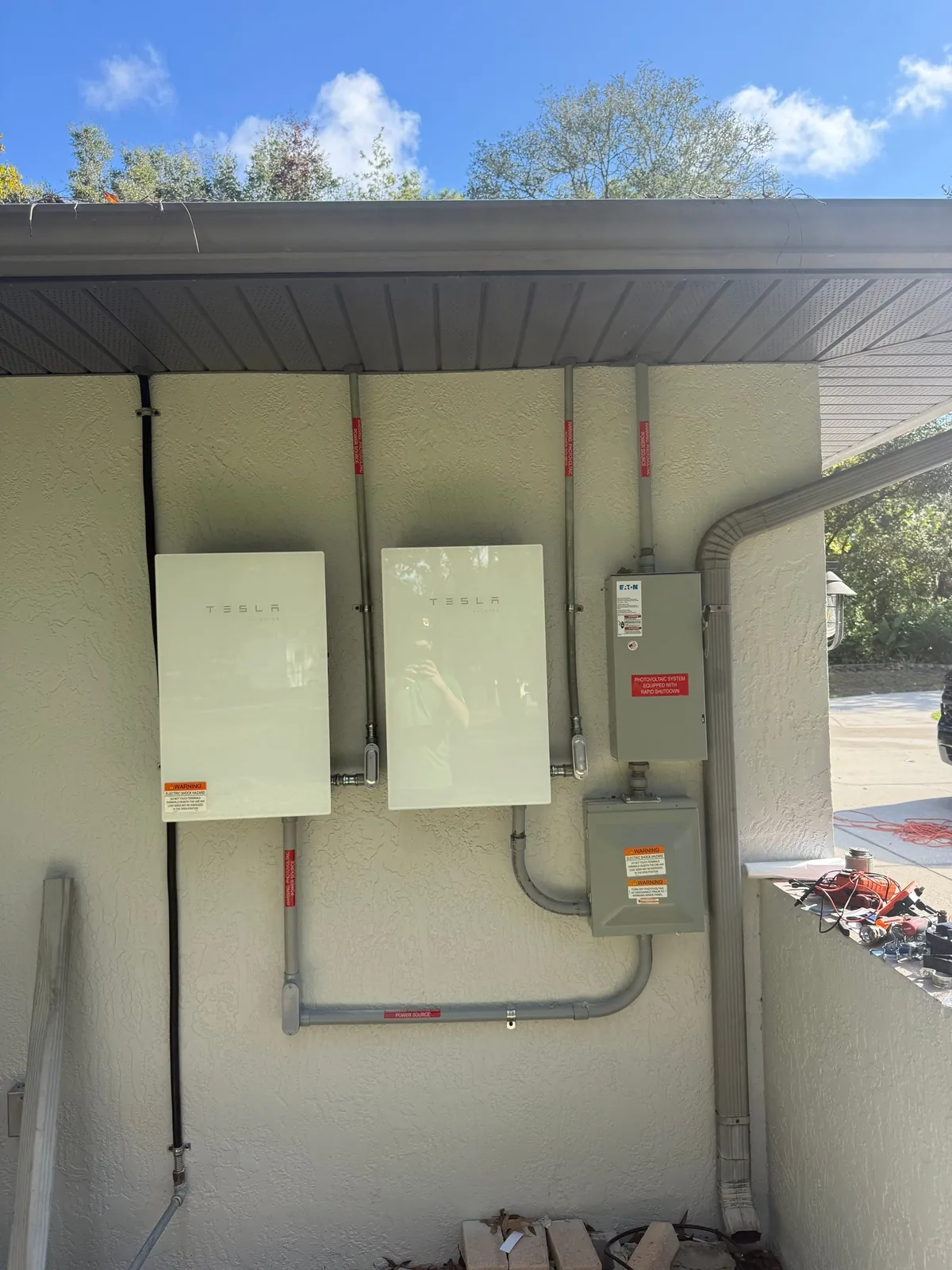
Yes. A home battery can store midday solar and run the house during the expensive window. Battery maker Enphase describes that use for homes, and the U.S. Energy Information Administration describes the same daily cycle for batteries on the power grid.
How well it lines up depends on the plan:
- Duke's 6-to-9 p.m. peak starts as panels fade, so a battery charged during the day can cover it.
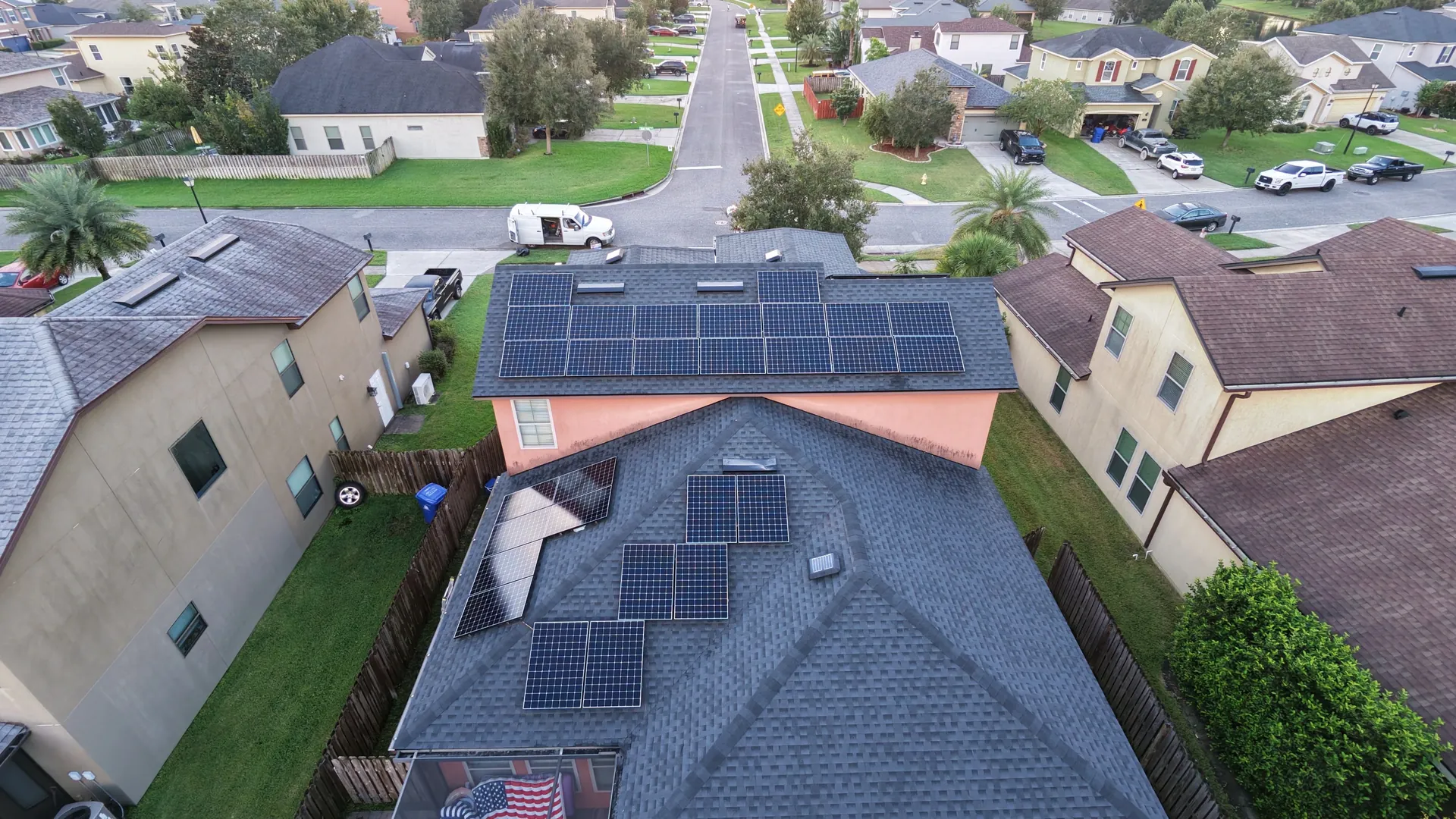
- On FPL in summer, panels produce through much of the noon-to-9 p.m. peak, and the battery can take over in the evening.
- On FPL in winter, the 6-to-10 a.m. peak comes before panels make much power, so the battery would have to hold charge from the day before.
- Tampa Electric says Energy Planner is not available to customers with net-metered solar. For those homes, a battery's value is backup power and how they use net-metering credits rather than hourly prices.
Whether stored power covers the cost of a battery depends on the battery's price, usable capacity and losses, and on when your home uses power. Our net metering guide explains how exported solar is credited, and the battery backup guide covers what a battery can run in an outage.
Before you enroll in any of these plans, check when your home uses power in your utility account and how much of it lands in your plan's peak window. If you are weighing storage, bring the same usage history to a solar battery assessment.
Sources checked
- FPL tariff, Section 8: RS-1 and RTR-1
- FPL: Time-of-use rates
- FPL Northwest Florida: Time-of-use rates
- Tampa Electric tariff, Section 6: RSVP-1
- Tampa Electric: Energy Planner
- Tampa Electric: January 2026 rate insert
- Duke Energy Florida: RST-1
- Duke Energy Florida: BA-1 billing adjustments
- Duke Energy Florida: RS-1
- Florida Rule 25-6.065: net metering
- U.S. Energy Information Administration: battery cycling
- Enphase: Time-of-use rates explained
Sources checked Nov. 6, 2026.