
hurricane-rated solar
Hurricane-Rated Solar Mounting in Cape Coral: What to Ask Before You Sign
By UnionGrid TeamUpdated 6 min read
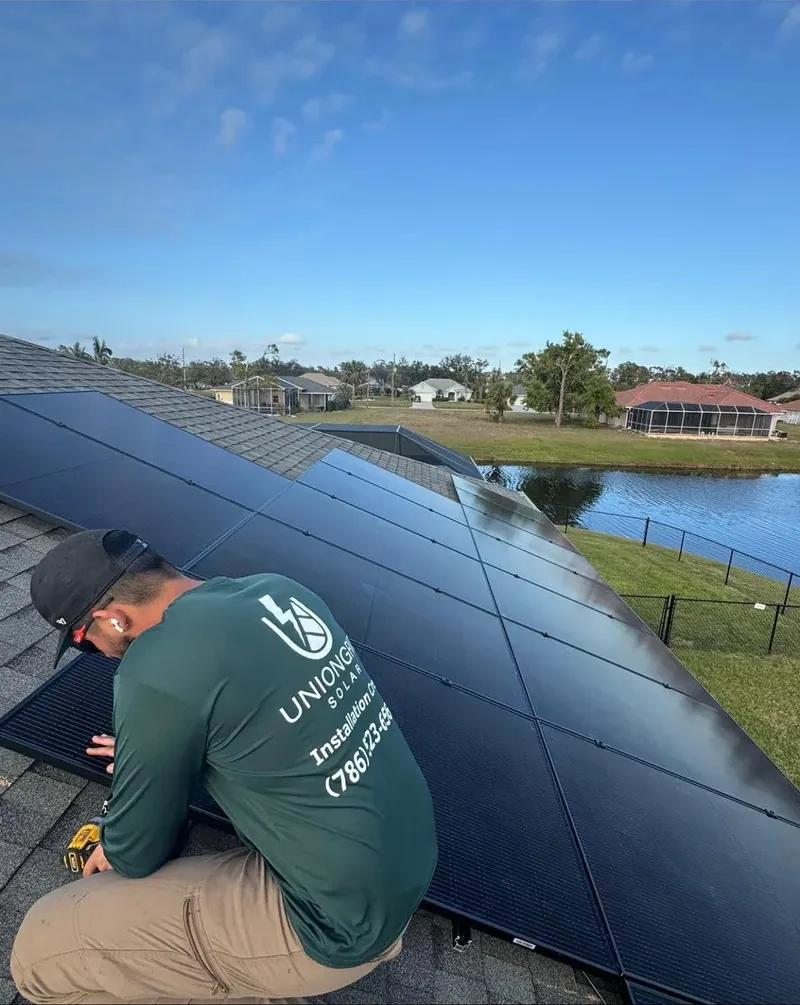
If you live in Cape Coral, you already know the drill every summer: watch the tropics, check the shutters, top off the gas cans. So when you start pricing out solar, the first question shouldn't be "how much will I save?" It should be "will this thing stay on my roof when a Category 3 comes through?"
That's not fear-mongering. It is a practical design question in Southwest Florida. A rooftop array changes the wind loads transferred through its modules, clamps, rails, attachments, roof covering, and structure. Code compliance depends on that complete load path, the permitted design, and installation that matches it; no contractor should promise that a system is storm-proof.
This post walks through what "hurricane-rated solar" actually means in Cape Coral and the specific questions to ask an installer before you sign anything.
What "hurricane-rated" really means here
"Hurricane-rated" gets thrown around loosely in sales pitches. What matters legally and structurally is the ultimate design wind speed your system is engineered for, and whether that engineering is documented in your permit package.
Cape Coral publishes residential and photovoltaic permitting resources through its permit document center. The applicable wind criteria depend on the current code, risk category, mean roof height, roof geometry, exposure, component documentation, and project-specific calculations. Review the approved permit set for the property rather than relying on a generic number in sales copy.
Here's the key point: a module pressure rating alone does not establish that the installed array complies. The product documentation, clamps, rails or rail-less system, attachment method, fasteners, roof zones, structural connection, and waterproofing details must work together as shown in the approved documents.
So when someone tells you their system is "hurricane-rated," the follow-up is simple: rated to what wind speed, and can you show me the engineering stamp for my address?
The questions to ask before you sign
Print these out. A reputable installer will answer every one without flinching.
1. "What ultimate design wind speed are you engineering my system to?"
You want a specific number tied to your address, not "don't worry, it's built for Florida." The number should match what the Florida Building Code requires for your location in Cape Coral. If the answer is vague, that's your signal to slow down.
2. "Will I get a signed and sealed engineering package with the permit?"
Cape Coral publishes a residential photovoltaic permit guideline, and the required submittal depends on the project. Ask for the issued permit, approved plans, product and installation documentation, any calculations or signed-and-sealed design required for that job, and the final inspection record. Confirm document requirements with the city rather than accepting a generic packet from a different address.
3. "How are you attaching to my roof, and how far apart are the attachment points?"
Attachment type, location, quantity, and spacing should follow the approved design and manufacturer instructions. More penetrations are not automatically better; the correct pattern is the one supported by the project calculations, roof construction, product documentation, and permit.
4. "Which licensed contractor is responsible for the roof work?"
This one is big. When a solar company attaches an array to your roof, you need a clear written answer about who handles the penetrations, flashing, waterproofing, and warranty. Ask for the contractor name and license number for each scope, then verify them through Florida's DBPR portal. UnionGrid can coordinate the scopes, but the proposal and permits should still identify the licensed party responsible for each part of the work.
5. "What happens to my roof warranty?"
Improper or undocumented attachments can affect warranty coverage. Confirm compatibility and responsibility in writing with the roof manufacturer or warranty provider, solar contractor, and appropriately licensed roofing contractor. The contract should say who owns each penetration, leak response, removal/reinstall task, and warranty claim.
6. "How old is my roof, and should we address it first?"
Be honest with yourself here. If a qualified inspection finds substantial deterioration, storm damage, or limited remaining service life, mounting a long-lived solar system on top may create avoidable work. You'll pay to remove and reinstall the panels when the roof is replaced. Condition, material, warranty, and inspection findings matter more than an age-only cutoff.
Why the canals and the coast change the math
Cape Coral includes waterfront, open, and built-up conditions that may affect the exposure used in wind-load calculations. A design professional determines the applicable exposure and pressures from the code criteria and actual surroundings; a canal address alone is not a substitute for that analysis.
A project-specific design accounts for exposure, roof pitch, roof zones, building height, structure, and the selected mounting system. Two nearby houses can therefore require different layouts. Ask how the attachment plan was derived and how the crew documents that the installation matches the approved plan.
Batteries and storm resilience
While you're thinking about storms, it's worth thinking past the roof. Solar panels alone don't power your home during an outage — most grid-tied systems shut down when the grid goes down, for safety. If keeping your fridge, AC, and medical equipment running through a multi-day outage matters to you, that's a conversation about battery storage.
Outage duration and backup needs vary. If storage may be added later, ask whether the proposed inverter, service equipment, physical layout, and critical-load plan support that path and what additional work would still be required.
Net metering, briefly
Export crediting is determined by the serving utility's current tariff and interconnection agreement. Monthly netting, rollover, fixed charges, system limits, and annual reconciliation can differ, especially between investor-owned, municipal, and cooperative utilities. Confirm the utility and tariff for the address before treating exports as savings.
Red flags to walk away from
- Pressure to sign today. Storm-grade engineering doesn't come with a countdown clock.
- No mention of a permit or engineering stamp. Non-negotiable in Cape Coral.
- No clear licensed contractor for the roofing scope or written answer on who warranties roof penetrations.
- A quote with no wind-speed number tied to your address.
- Financing pitches that dominate the conversation before anyone has looked at your roof. The roof and the engineering come first.
How UnionGrid approaches it
We start with the roof, not the spreadsheet. UnionGrid can coordinate a roof assessment and explain whether the roof needs attention before panels go up. The project documents should identify the appropriately licensed contractor for each scope. The solar design then uses the site-specific wind criteria in the permit package, with attachment and flashing details that can be checked during inspection.
If the roof needs work first, UnionGrid can coordinate the roof scope with the solar schedule. The proposal and permits should separately identify the appropriately licensed roofing contractor and UnionGrid's licensed electrical scope. Existing arrays may also require a documented panel removal and reinstall scope.
The bottom line
"Hurricane-rated" solar in Cape Coral should not be treated as a marketing badge. Look for site-specific design criteria, approved permit documents, inspection records, product instructions, and a clear license holder for each scope. Ask the six questions above and do not let a generic wind claim replace the paperwork for your address.
Official sources checked
- City of Cape Coral Permit Document Center
- Florida Building Commission code resources
- Florida DBPR contractor license search
Reviewed August 21, 2026. Permit, code, product, utility, and insurance requirements can change; verify the current documents for the property before signing.
Ready to talk specifics for your home? Get a free quote or explore our Cape Coral solar installation page to see how we work. Your roof — and your peace of mind next hurricane season — are worth the extra questions.
Frequently asked questions
What wind speed does solar mounting in Cape Coral need to be rated for?
The permitted design must use the wind criteria that apply to the property and current code. Those criteria also depend on the structure, roof geometry, exposure, risk category, equipment, and project calculations. Ask to see the values used in the approved permit documents rather than relying on a generic number.
Does adding solar panels void my roof warranty?
Improper attachments can affect a roof warranty. Confirm that the proposed attachment and flashing method is compatible with the roof and that the written proposal identifies the appropriately licensed contractor responsible for each scope, the penetrations, and any related warranty claim.
Should I replace my roof before installing solar?
Not based on age alone. Have a qualified contractor inspect its condition, remaining service life, damage, material, and warranty. If replacement is already needed, doing it before solar can avoid a later panel removal-and-reinstall project.
Will my homeowners insurance be affected by hurricane-rated solar?
Only your insurer can confirm how a proposed system affects eligibility, premium, coverage, deductible, and claims. Contact the carrier before signing, describe the exact system and roof work, and ask which permit, inspection, engineering, equipment, and contractor documents it requires.
Related reading
Cape Coral Solar Installation
See how UnionGrid designs and installs residential solar for Cape Coral homes.
Learn moreSolar Battery Storage in Cape Coral
Plan selected-load backup with battery storage sized for the home's stated needs.
Learn moreCape Coral Roof Repair
Roof issues before solar? Start with a qualified roof assessment.
Learn moreHurricane-Rated Solar Mounting in Fort Myers
A closer look at wind-load engineering for Southwest Florida solar.
Learn moreReady to talk about your project?
Tell us what you need and our team can help you take the next step with solar, roofing, battery storage, or roof-related solar work.