The short answer
- Stay off the roof. Photograph the damage, get open areas covered and call your insurer before signing a repair contract.
- A roof built or re-roofed under the 2007 Florida Building Code or later can be patched; only the repaired part must meet today's code.
- On older roofs, repairing more than 25% of a roof section in 12 months means the whole section is replaced or recovered.
- The roofing permit record shows which rule covers your roof. Ask the city or county building department for it.
In this guide
Missing roof shingles after a storm are usually a repair job, and Florida law now leans that way too. As of Nov. 10, 2026, a roof built or re-roofed under the 2007 Florida Building Code or any later edition can be patched, and only the patched part has to meet today's code.
Older roofs get no such break. On those, the state's 25% rule can turn a large repair into a new covering for the whole roof section, which is why a roofer's first question is often when the roof was permitted.
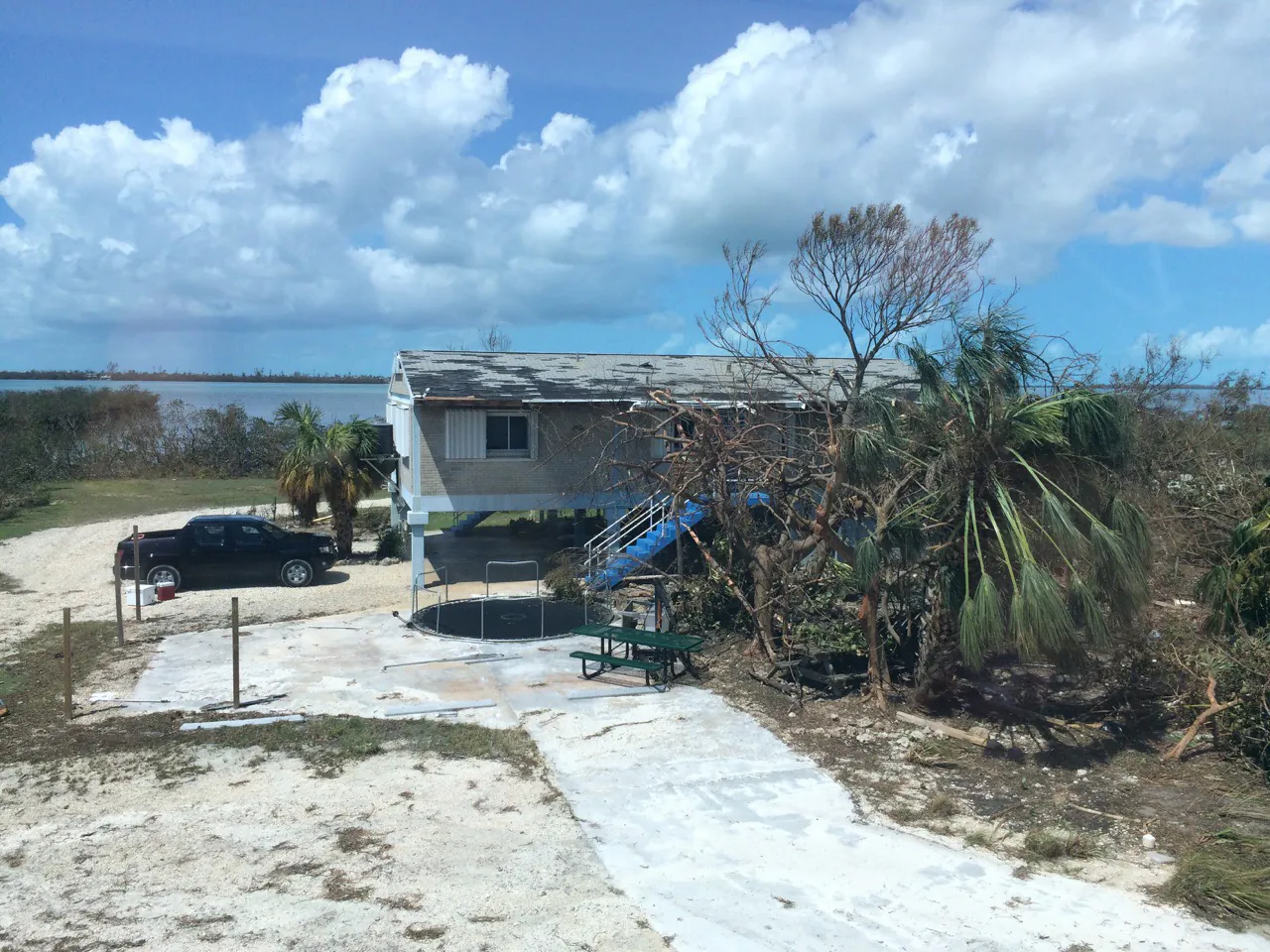
The question is back after Hurricane Isaias, which came ashore near Destin on Oct. 9 as a Category 2 storm. Pensacola recorded winds of 117 mph, Insurance Journal reported. Our Isaias damage checklist for Pensacola covers the rest of the property.
What should you do first about missing roof shingles?
Stay off the roof and work from the ground:
- Photograph the damage. Take wide shots of each slope and close-ups of the bare spots. Write down the date of the storm.
- Check inside. Look for new ceiling stains and, from the attic hatch, damp insulation.
- Get open areas covered. The Florida Department of Financial Services tells homeowners to make emergency repairs that prevent further damage, "such as placing a tarp on your roof," to take photos before and after, and to keep receipts. Leave the ladder work to a roofer.
- Call your insurer before you sign a repair contract. The department says to confirm any managed repair terms or preferred vendors in your policy first. Under section 627.70132 of the Florida Statutes, a claim is barred unless the insurer gets notice within one year of the date of loss. For a hurricane, that date is the day of landfall.
Are a few missing shingles an emergency?
With shingles gone, the underlayment and the wood sheathing under it are all that stand between the rain and your attic, according to the U.S. Department of Energy's Building America Solution Center. Water that gets past them can saturate insulation and ceiling drywall, and the center warns that ceilings can collapse.
Treat it as urgent when you can see bare wood, a ceiling is stained or rain is in the forecast. A tarp is a short-term cover: FEMA says the reinforced plastic sheeting installed under its Operation Blue Roof program is designed to last 30 days, and it recommends permanent repairs within that time.
What is Florida's 25% rule?
The rule is section 706.1.1 of the Florida Building Code's Existing Building volume. It says no more than 25% of a roof area or roof section may be repaired, replaced or recovered in any 12-month period, unless the roof covering on that entire system or section is replaced or recovered to meet the current code.
A 2022 law, Senate Bill 4-D, added an exception for newer roofs. Section 553.844(5) of the Florida Statutes says that when a roof or roof section was "built, repaired, or replaced in compliance with the requirements of the 2007 Florida Building Code, or any subsequent editions of the Florida Building Code," only the repaired portion must meet the code in effect, even when 25% or more is being repaired. Cities and counties may not amend the exception.
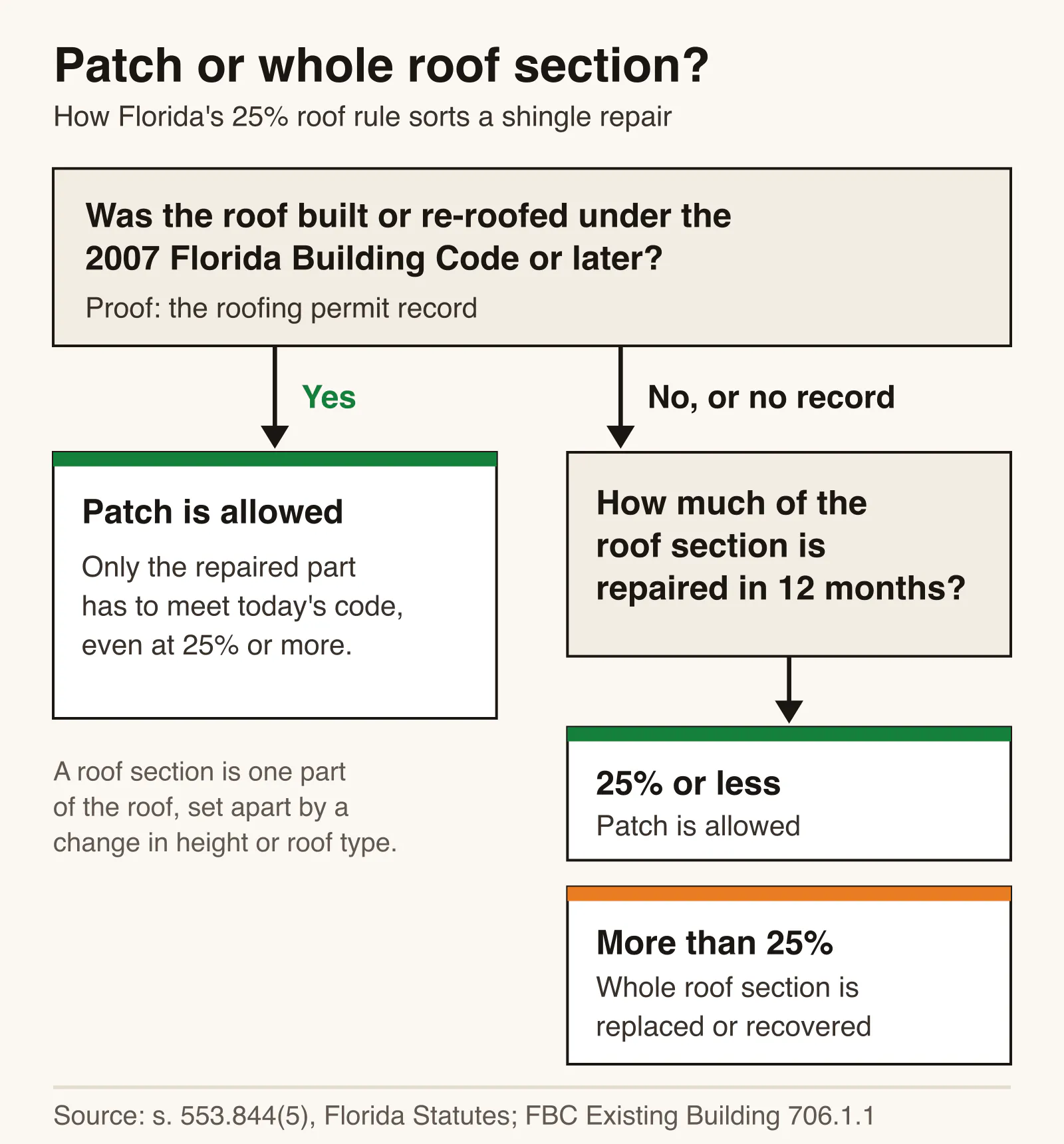
The 25% rule still decides between a patch and a new roof covering, but only on a roof that predates the 2007 code or cannot be shown to comply with it.
A roof section is one part of the roof, set apart by things such as a change in height or roof type, J.S. Held's Mike Rimoldi writes in a summary of the code. Both slopes of a simple pitched roof count as one section. Bare patches that add up to 25% or less of that section can be repaired on either kind of roof.
How do you find out which rule covers your roof?
The permit record decides. The 2007 code took effect March 1, 2009, so roofers and insurance engineers treat a roofing permit issued after that date as the working test.
The statute names the code and gives no date. The Florida Roofing and Sheet Metal Contractors Association (FRSA) cautions that permit records are the only reliable proof of which code applied.
Ask your city or county building department for the last roofing permit on the house. Our Pensacola permits guide shows how one area splits that work between offices.
A new code edition, the 9th, takes effect Dec. 31, 2026, according to FRSA. The Florida Building Commission's analysis of changes lists none to section 706.1.1, and the statute applies under either edition.
What should a repair quote for missing shingles include?
Ask for these in writing:
- The date of the roof's last permit, and whether the roofer is relying on the 2007-code exception.
- The damaged area as a share of the roof section, with photos.
- A check of the underlayment and deck under the bare spots.
- Hand-sealing of loose shingles next to the repair. University of Florida engineers advise checking shingle adhesion, especially at the edges.
- The name and license number of the roofing contractor responsible for the work, plus proof of liability and workers' compensation insurance. The Department of Financial Services says to confirm the license with the state, and the search at MyFloridaLicense.com looks one up by name or number.
When do missing shingles point to a new roof?
Age and pattern count for more than the number of shingles. The UF engineers found that after the first four years, shingles tended to come partly unsealed, particularly around the exposed corners, and a shingle that has lost its seal resists wind less.
Raise replacement with the roofer when:
- shingles are missing from several slopes, or from the same area again after a repair;
- no permit shows the 2007 code or later, and the damage is near 25% of a section.
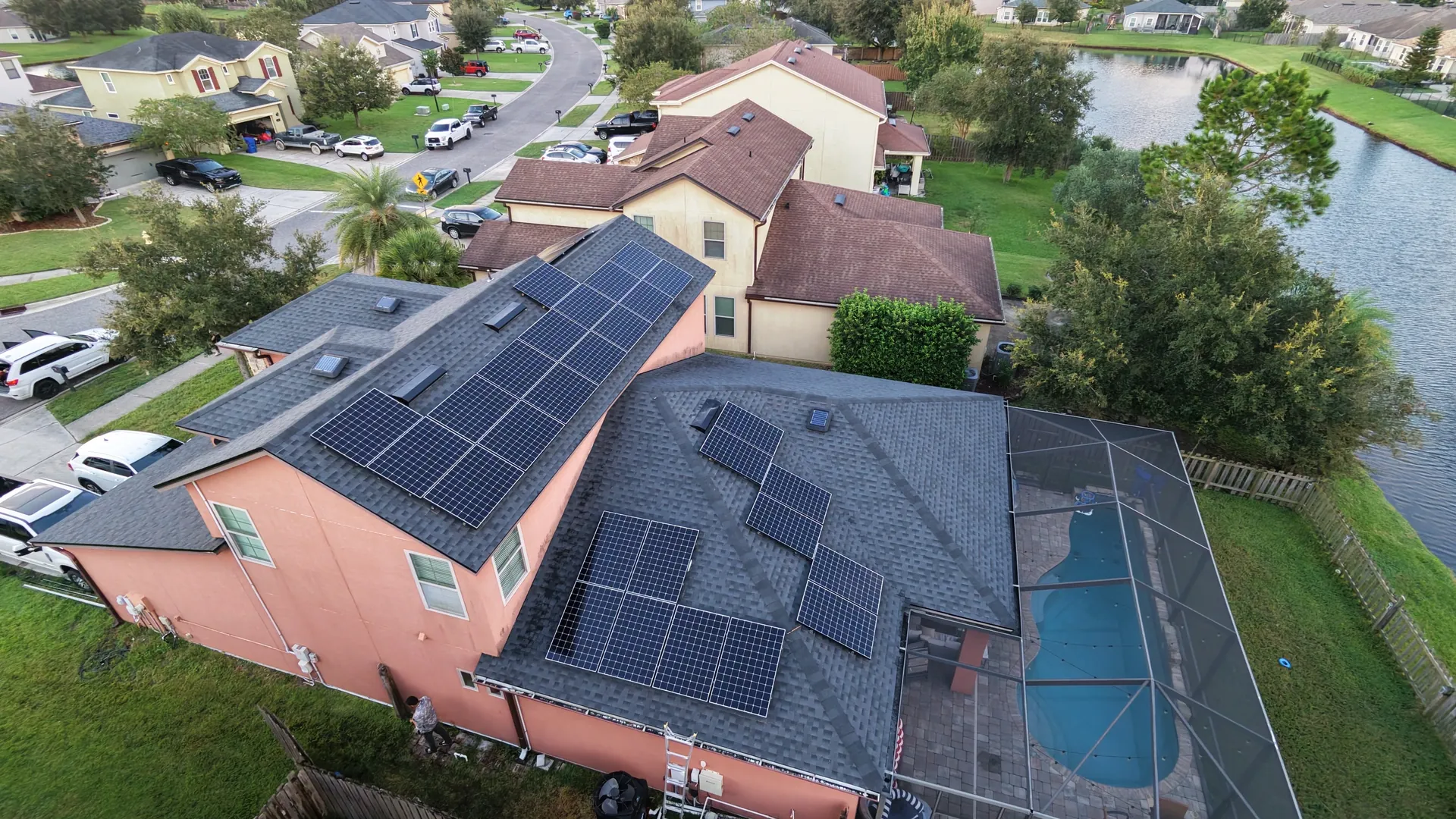
Our guide to what drives a roof replacement quote in Tampa covers that decision. If solar panels sit over the damaged area, plan for panel removal and reinstall as part of the job.
With photos and the permit date in hand, request a roof repair assessment in Tampa, or use the Pensacola, Fort Myers or Sarasota page. Check that the paperwork names who holds the roofing license for the job.
Sources checked
- Florida Statutes, s. 553.844(5): the exception for roofs built under the 2007 code or later
- Florida Building Code, Existing Building, 8th Edition (2023), section 706.1.1
- Florida Building Commission: Analysis of Changes for the 9th Edition (2026), Existing Building
- FRSA, Florida Roofing: Current and Coming Changes to the "25% Rule" (March 2023)
- FRSA: Changes in the 2026 9th Edition of the Florida Building Code (February 2026)
- J.S. Held: Florida Building Code's 25% roofing rule
- Florida Department of Financial Services: What to Expect After Filing a Homeowners Claim (June 2025)
- Florida Statutes, s. 627.70132: notice of a property insurance claim
- Florida DBPR: license search
- U.S. Department of Energy, Building America Solution Center: Asphalt Shingle Roofs
- University of Florida: researchers identify ways to prevent shingle blow-off in hurricanes (2014)
- FEMA: Frequently Asked Questions About Operation Blue Roof
- Insurance Journal: 'Unusual' Isaias Brings Winds, Downed Trees But Fewer Claims Than Expected in Florida (Oct. 13, 2026)
Sources reviewed Nov. 10, 2026.