
solar warranties
Solar Panel and Installation Warranties: What's Actually Covered
By UnionGrid7 min read
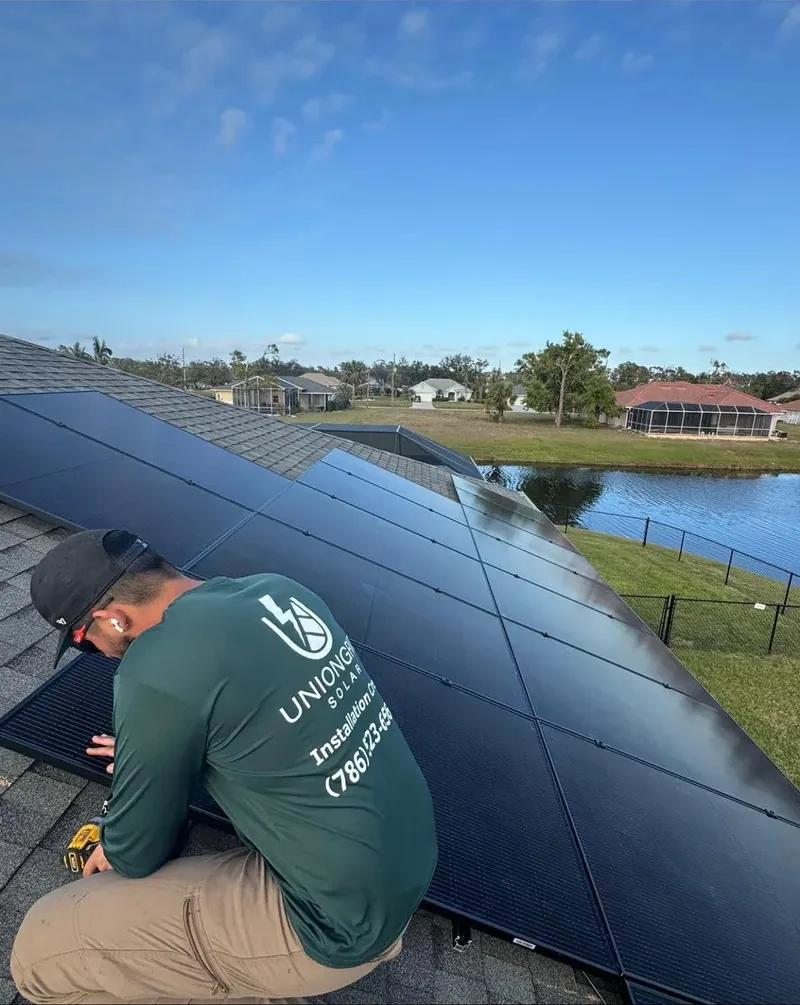
If you have ever tried to read a solar warranty, you know the feeling. There are several documents, they come from different companies, and they all use the word "warranty" to mean slightly different things. So when a salesperson says a system is "warrantied for 25 years," it is fair to ask: which part, from whom, and against what?
This is a plain-English walk through how solar coverage actually breaks down. We are a Florida electrical contractor, not a warranty administrator, so treat this as a framework for reading your own paperwork — not a substitute for the specific documents attached to your specific proposal.
Equipment, workmanship, and optional production coverage
These are separate categories to check in a proposal. A production estimate is not automatically a guarantee, and the coverage actually offered depends on the written contracts.
1. The equipment warranty (from the manufacturer). This covers the hardware itself against defects. It is issued by whoever built the part, not by your installer. And it is not one warranty — it is several, because a solar system is several products:
- Panel product warranty. Covers the panel against manufacturing defects — delamination, junction-box failure, that kind of thing.
- Panel performance (or "power") warranty. This is the one that sounds like a lifetime promise but isn't quite. Solar panels lose a small amount of output every year as they age. A performance warranty says the panel will still produce at least a stated percentage of its original rating after a given number of years. It is a promise about gradual decline, not a promise the panel will run forever.
- Inverter warranty. The inverter is the component that converts DC to AC, and it usually carries its own term — which must be checked for the proposed model instead of inferred from the panel warranty. If you want a refresher on why this part matters, see what a solar inverter does.
- Battery warranty (if you have storage). Batteries are typically warrantied on a combination of years and throughput or retained capacity. The terms look nothing like a panel warranty, so read them on their own.
For each equipment warranty, check whether the remedy includes parts, shipping, diagnosis, removal, and reinstall. Do not assume an installer warranty fills any gap; ask which agreement covers each cost.
2. The workmanship warranty (from the installer). This addresses specified installation defects. Ask whether mounting, wiring, connections, roof penetrations, and corrective labor are included. The cause of a problem and the contract terms determine which party handles it.
Workmanship terms are set by each company independently. There is no universal industry number, and any post that quotes you one without naming the specific contractor is guessing. Ask your installer, in writing, exactly what their workmanship warranty covers, how long it lasts, and whether it includes the labor to handle a manufacturer's equipment claim.
3. The production guarantee (sometimes, from the installer or a monitoring provider). A production guarantee promises your system will generate at least a certain amount of energy — usually measured in kilowatt-hours over a year or a multi-year window — with some remedy if it falls short. If you are fuzzy on why energy is measured in kWh rather than the kW rating stamped on the panel, our explainer on kW vs. kWh untangles that.
Not every company offers a production guarantee, and the ones that do write very different terms. Some exclude shading, weather years, and utility outages. Some require you to keep monitoring active and report shortfalls within a window. A production guarantee is only as good as its fine print, so if it matters to you, get the target number, the measurement method, the exclusions, and the remedy spelled out.
Where the roof fits in
This is the part homeowners in Florida ask about most, and it is worth being precise, because it involves two different trades and two different kinds of coverage.
Where mounting hardware penetrates the roof, its waterproofing details must suit the roof and the mounting system. How those penetrations are made and waterproofed is workmanship — the responsibility of the party that installed the array. If a leak traces back to a mount that wasn't flashed correctly, that is a workmanship conversation.
The roof covering itself — the shingles, the underlayment, the decking — is a different matter. An electrical contractor license is not a roofing license. Verify the contractors named in your proposal through the Florida DBPR license search. When a project involves roofing work, the appropriately licensed roofing party has to be identified separately in the project documents, and that party carries whatever roofing warranty applies to the roof covering. We coordinate these scopes so they line up, but we don't blur the line between an electrical license and a roofing license, and neither should your paperwork.
The practical takeaway: on any roof-plus-solar project, confirm in writing which company is responsible for the waterproofing at each penetration and which company stands behind the roof itself. Two clear answers beat one vague one. If you are weighing the timing of a roof and an array together, when to bundle vs. separate walks through the tradeoffs.
There is one more roof-related scenario that trips up warranties: removing and reinstalling panels years later so a roof can be repaired or replaced. If that work isn't done to the manufacturer's specifications and the installer's standards, it can jeopardize both the equipment and the workmanship coverage on a system you already paid for. That is exactly why panel removal and reinstall is treated as its own careful scope rather than something a general handyman knocks out in an afternoon.
Exclusions and service requirements to check
Read exclusions for damage caused by incorrect installation, incompatible equipment, misuse, or later roof work. Also check any maintenance, monitoring, registration, and claim-notification requirements. These terms differ between products and contracts; a problem with one claim does not necessarily cancel every part of a warranty.
A warranty should not be described as automatically void simply because another company services the equipment. The FTC's consumer warranty guidance explains the general restriction on requiring particular parts or services to preserve consumer warranty coverage, subject to exceptions. Keep records and distinguish damage caused by work from the choice of service provider.
Before removal and reinstall, ask each provider how the proposed scope affects its coverage and who pays for damage or corrective work. If a claim is denied, request the applicable terms and the reason in writing.
Reading the fine print before you sign
You do not need to be a lawyer to read a solar warranty well. You need to ask the same handful of questions of every document and refuse to accept "don't worry about it" as an answer.
For each piece of equipment, ask: Who issues this warranty, how long is the term, and does it cover parts, labor, and shipping — or only parts? Get the actual product model numbers so you can look up the manufacturer's published warranty yourself rather than relying on a summary slide.
For workmanship, ask: How long, what's included, and what happens to this warranty if I sell the house or if my installer goes out of business? Transferability and business continuity matter more than most buyers realize, because these are long-lived systems.
For any production guarantee, ask: What is the guaranteed number, how is it measured, what's excluded, and what's the remedy if we fall short? If those four answers aren't in writing, the guarantee is a feeling, not a promise.
And for anything touching the roof, ask: Which licensed party is responsible for the roof covering, and which is responsible for the mount waterproofing? Make sure the roofing party is named where it needs to be.
A good installer will hand you these documents without being chased for them. If you would like a second set of eyes on the specific warranty terms in a proposal you have already received, that is exactly the kind of thing our team is glad to walk through — ask us for a quote or get in touch and bring your paperwork. We would rather you understand what you are buying than sign something you'll have questions about in year seven.
Keep equipment coverage, installation coverage, any production guarantee, and roofing coverage as separate entries in your project records. For each, record the provider, term, remedy, exclusions, and contact process. That makes the promises in a proposal easier to compare and use.
Sources checked
Reviewed September 20, 2026. Confirm the requirements and product documents that apply to your project before work begins.
Frequently asked questions
What's the difference between an equipment warranty and a workmanship warranty?
An equipment warranty addresses specified hardware defects under the manufacturer's written terms. Panel output or performance coverage may be a separate warranty. A workmanship warranty addresses specified installation problems under the installer's terms. Do not assume either covers every part, labor charge, leak, or loss of production; obtain both documents and compare their scope.
Does a solar warranty cover roof leaks around the panels?
Coverage depends on the cause, the responsible party, and the written terms. Ask who handles a leak attributed to solar mounting and who handles a defect in the roof assembly. Confirm any penetration or waterproofing coverage in writing, including its term, exclusions, and claim process.
What is a production guarantee and do I need one?
A production guarantee is a separate promise — usually from the installer or a monitoring provider — that your system will generate at least a stated amount of energy over a set period, with some remedy if it falls short. Not every company offers one, and the terms vary widely. If it matters to you, get the exact kilowatt-hour target, the measurement method, allowed exclusions like shading or weather, and the remedy in writing before you sign.
What can void a solar warranty in Florida?
Damage caused by improper repairs, incompatible additions, misuse, or removal and reinstall may fall outside coverage, depending on the terms and applicable law. Using another service provider does not automatically erase all consumer warranty rights. Keep records and ask the warrantor to identify the specific coverage or exclusion relevant to the proposed work.
How long do solar warranties usually last?
Terms vary by manufacturer, product, and installer, so there is no single universal number. Panel product warranties, panel performance warranties, inverter warranties, battery warranties, and installer workmanship warranties are all set independently and can differ substantially. The only reliable answer is to read the specific documents for the specific products your installer proposes and confirm each term in writing.
Related reading
What a Solar Inverter Does
Understand the component whose coverage should be checked separately from the panels.
Learn moreSolar Panel Removal and Reinstall in Tampa
What to plan and document when panels come off and go back on for roof work.
Learn moreRoof and Solar: When to Bundle vs. Separate
Timing the roof and the array so warranties and licensing line up cleanly.
Learn moreGet a Free Quote
Have UnionGrid review the specific warranty terms for the products in your proposal.
Learn moreReady to talk about your project?
Tell us what you need and our team can help you take the next step with solar, roofing, battery storage, or roof-related solar work.