The short answer
- The panels sit on rails above the roof; the risk is the bolts through it and how each hole is sealed.
- Refuse caulk alone. Florida's code requires solar roof penetrations to be flashed and sealed, following the mount maker's instructions.
- Get the mount model, the flashing method, the roof's condition and the licensed roofing party in writing before you sign.
In this guide
They can, if the installer seals the roof mounts with caulk alone instead of the flashing or tested mount the hardware maker calls for.
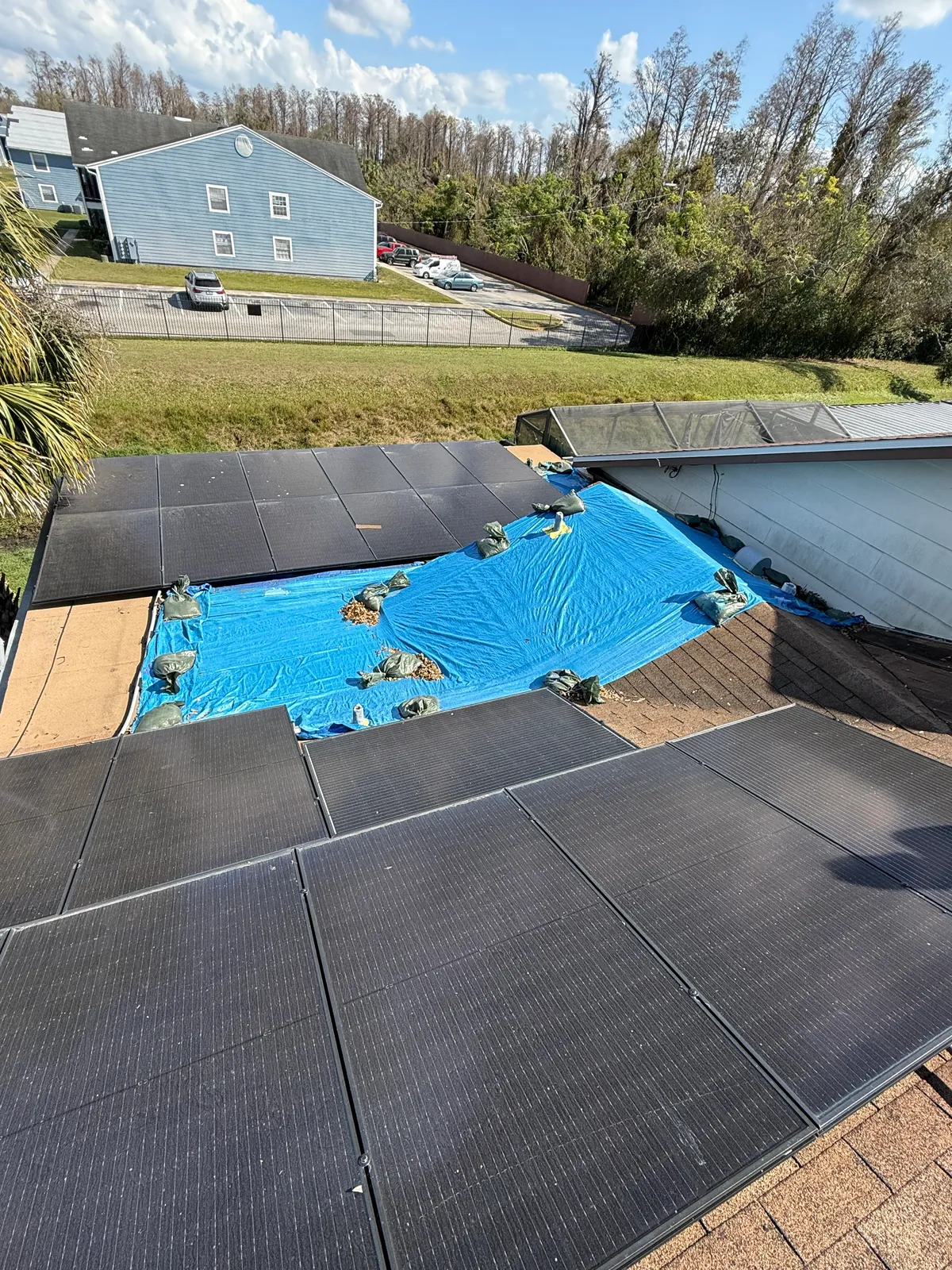
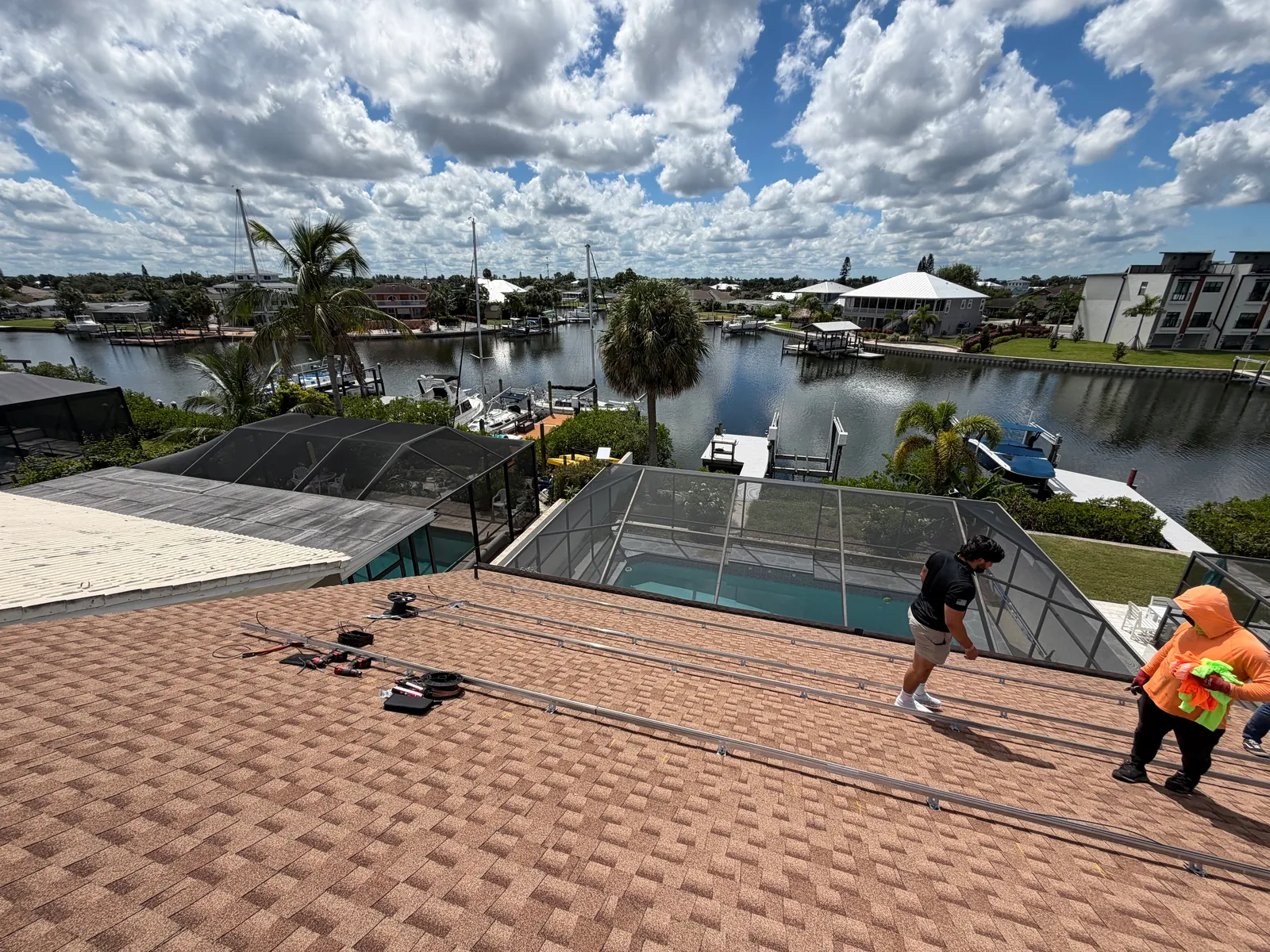
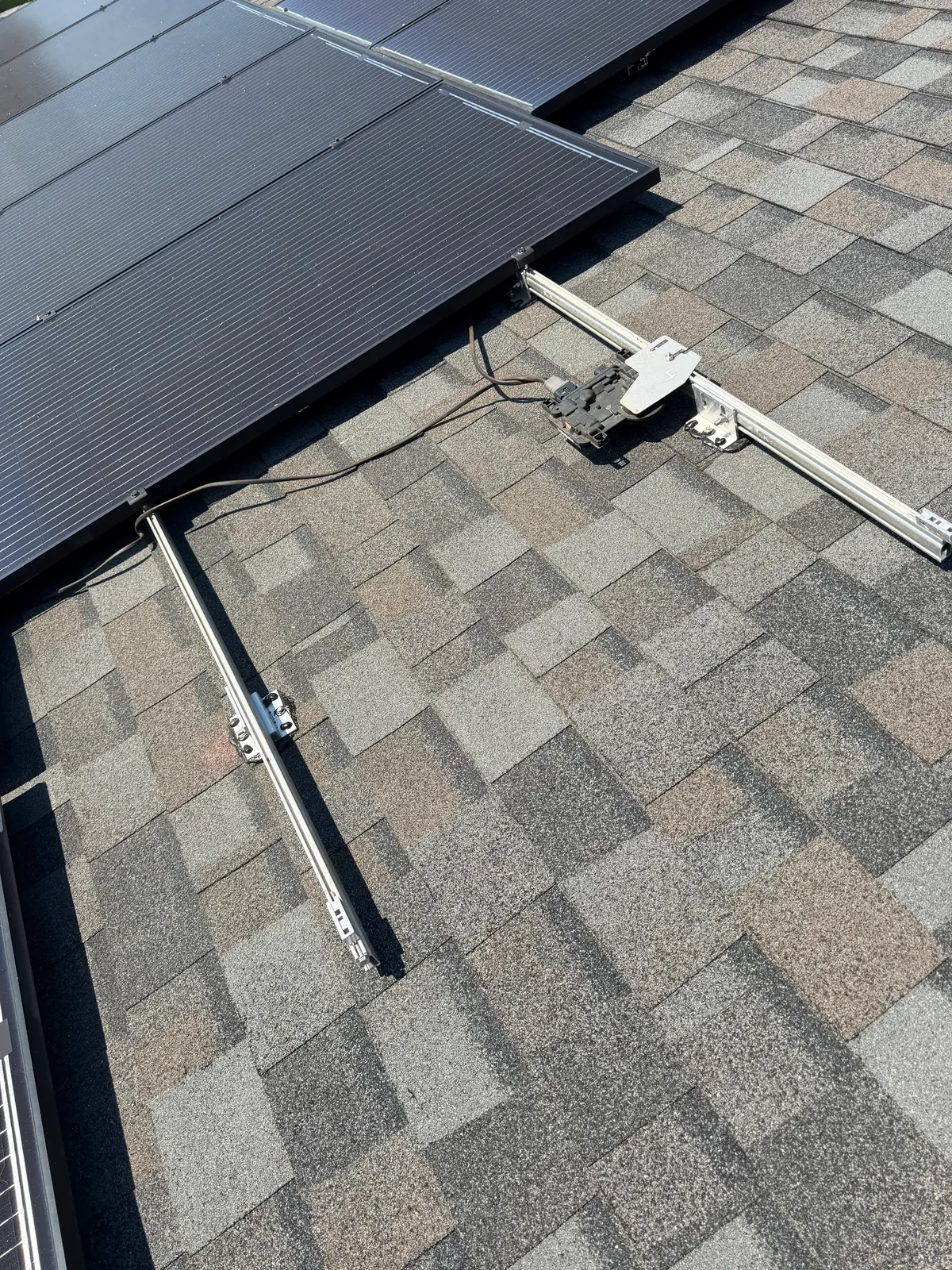
The panels sit on rails above your shingles. Whether solar panels can damage your roof comes down to the bolts that hold those rails, and how each hole is sealed.
Wind can push rain up under shingles, and water can wick sideways, Jeff Spies, then of mount maker Quick Mount PV, wrote in Solar Power World in 2015. Over time, he wrote, a leak at an attachment can rot the sheathing and rafters.
Florida's building code is blunt about it. The 2023 Florida Building Code, Residential, in force as of Nov. 6, 2026, says roof penetrations for solar "shall be flashed and sealed" and that the system must follow the maker's installation instructions.
The code's 9th Edition takes effect Dec. 31, 2026, for permits submitted on or after that date.
What the caulk-only shortcut looks like
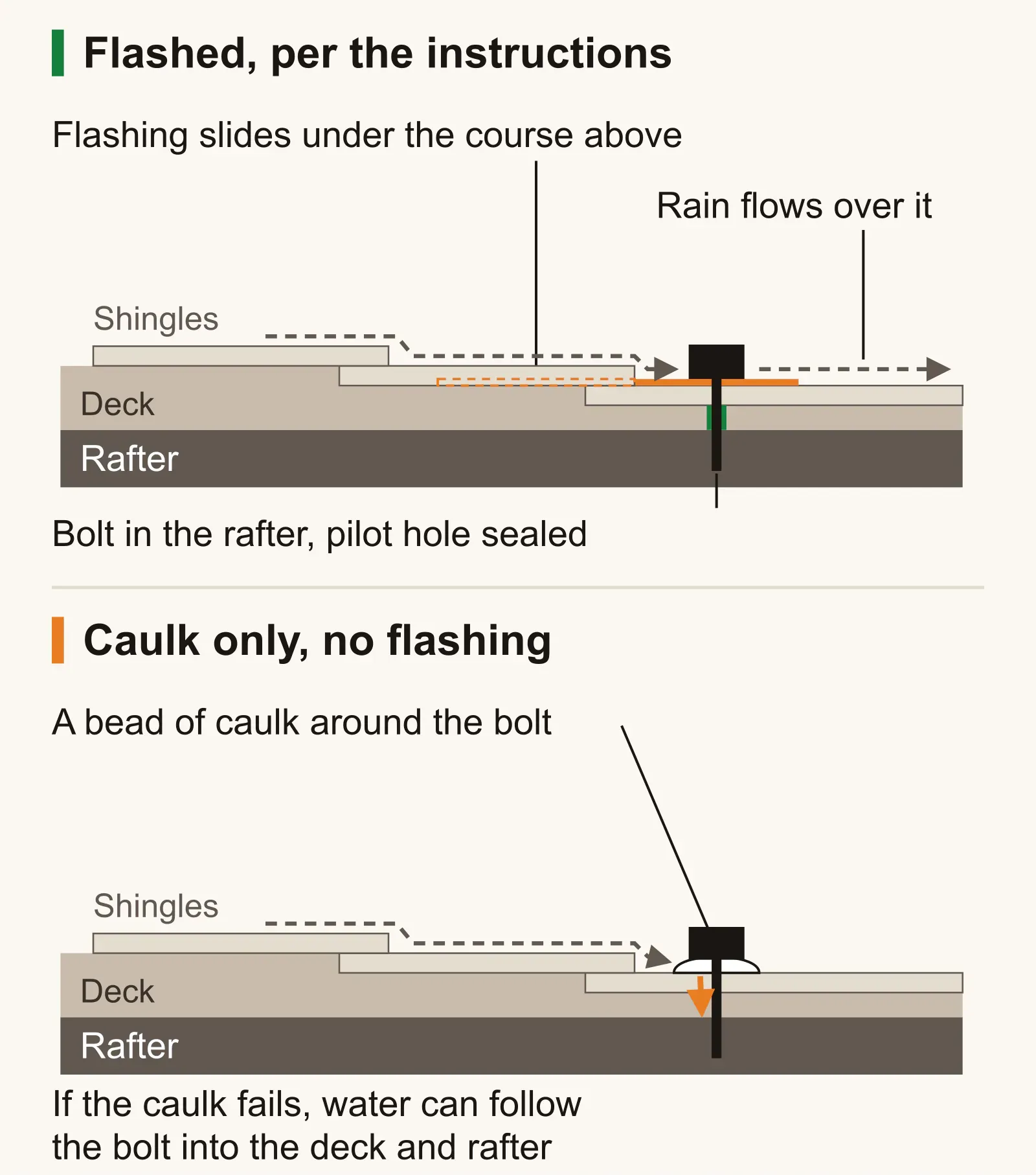
A flashed shingle mount goes in by a set order. IronRidge's FlashFoot2 manual has the crew find the rafters, drill 1/4-inch pilot holes, fill them with sealant, then slide the flashing up under the next course of shingles so rain runs over the metal and not into the hole.
Owens Corning, the shingle maker, lists the same steps in a January 2026 bulletin. Its flashing goes under the row of shingles directly upslope and reaches at least 1 inch onto the shingle below. Any nail holes opened on the way get sealed before the flashing goes in.
Not every good mount uses metal flashing. The same bulletin approves three flashless mounts that stick down with a pre-applied adhesive. Unirac sells a mount sealed with injected sealant, and its product page says it is approved for Florida's High Velocity Hurricane Zone.
Those are tested products, sold with their own installation manuals.
The shortcut is a bolt through the shingles with caulk smeared over it and nothing under the course above. "Sealant by itself has poor long-term waterproofing reliability," Spies wrote.
Misses count as well. Every test hole drilled while hunting for a rafter is one more hole to seal. IronRidge's Florida approval drawings rate its anchors only for bolts set in the center third of a rafter.
On a tile roof, the seal sits under the tile. IronRidge seals its tile-hook flashing with mastic, a layer of reinforcing fabric and more mastic. Its manual says that method meets TRI guidelines.
Where else can solar panels damage your roof?
Foot traffic is the next risk. Owens Corning warns that steep pitches and hot weather make shingles easier to scuff, and damaged shingles have to be replaced. It says breaking the seal between shingles goes best on mornings or cool days.
Removal is another. Adhesive flashless mounts damage the shingle if they are pulled up, so that shingle has to be replaced. That is one reason to plan removal and reinstall as its own scope.
Wire runs can leak as well. FEMA's hurricane guidance says conduits and pull boxes for solar should be installed to keep wind-driven rain out of the building.
Then there is the roof underneath. The Department of Energy says panels last about 25 to 30 years. FEMA cites roofing-industry guidance that the roof should last at least as long as the array, which is why a roof inspection before solar comes first. A roof that wears out before the array means paying for panel removal and reinstall when it is replaced.
What to check in the solar proposal
| Ask for | Why |
|---|---|
| The mount's make, model and installation manual | Florida's code requires installation by the maker's instructions. |
| The flashing or approved flashless seal for your roof type | Penetrations must be flashed and sealed. |
| Bolts into rafters, with missed holes sealed | Anchor ratings assume the bolt is in the rafter. |
| The roof's age and condition, in writing | The roof should last at least as long as the array. |
| Who answers for the penetrations | Leak coverage depends on the written terms. |
| Who does the roof work | Florida licenses roofing and solar contractors separately. |
Section 489.105 of the Florida Statutes defines roofing contractors and solar contractors as separate categories, as of Nov. 6, 2026. The state's license search shows who holds which.
Our warranty guide covers who handles a leak near the array.
UnionGrid coordinates roof-and-solar projects, and the project documents must name the appropriately licensed roofing party separately from the solar and electrical scope.
What Florida storms add
Florida's code requires rooftop arrays and their supports to be designed for wind loads under ASCE 7, a national engineering standard.
On IronRidge's Florida approval, a licensed engineer or architect must work out those loads for each project. The mount was tested under TAS 100(A), a wind-driven rain test. Ask for the permit's engineering for your address rather than a number from a brochure.
After Hurricanes Irma and Maria in 2017, FEMA advised having a professional roofing contractor flash roof penetrations. After a severe wind storm, its advisory says to have a contractor check the array, secure loose panels and look for roof damage from wind-borne panels or debris.
Do solar panels protect your roof?
They shade it. In a 2011 UC San Diego study led by Jan Kleissl, a ceiling under panels ran 5 degrees Fahrenheit cooler than one under bare roof, and about 38% less heat reached the roof. The study did not measure how long a roof lasts.
Before you sign, ask for the mount's model and manual, and get the roof checked first. Request a roof assessment with your roof's age, any past leaks and the solar proposal in hand.
Sources checked
Checked Nov. 6, 2026. Confirm the code edition, mount instructions and licenses for your property before work begins.
- Florida Building Code, Residential, 2023 (8th Edition), Section R324: solar energy systems
- Miami-Dade Permitting and Inspection Center: Florida Building Code 9th Edition takes effect Dec. 31, 2026
- Florida Statutes s. 489.105: contractor definitions
- Florida DBPR: contractor license search
- FEMA Recovery Advisory 5: rooftop solar panel attachment, design, installation and maintenance (April 2018)
- U.S. Department of Energy: replacing your roof and adding solar (July 28, 2021)
- U.S. Department of Energy: homeowner's guide to going solar
- IronRidge: FlashFoot2 installation manual
- IronRidge: Florida product approval drawings, XR Flush Mount with FlashFoot2
- IronRidge: All Tile Hook flashing installation manual
- Owens Corning: Technical Bulletin TB-10026725-B, solar mounts and shingle warranties (January 2026)
- Unirac: FLASHLOC COMP product page
- UC San Diego: solar panels keep buildings cooler (July 18, 2011)
- Solar Power World: how to prevent water intrusion on rooftop solar arrays (June 16, 2015)